
Canadian Defence Signals
Payloads, production lines and pressure tests
Editorial briefing snapshot
The Bottom Line
defence-production award aimed at gallium-arsenide components.
These records sit at different proof thresholds. A purchased sensor creates an integration path; an RFI defines a problem; capital and floor space create capacity; and a proposed award outlines a qualification route. AMALGAM DART and the RAF's fielded Giraffe 1X radars show the later stages: systems tested in a binational operating problem or delivered into an active defensive architecture.
In context
A Halifax space company has bought a hyperspectral payload, the Coast Guard has asked industry how landing craft could support two future polar icebreakers, and new financing is moving into Canadian flight-test, uncrewed-aircraft and aerospace-production capacity. A Montreal materials company has also been selected to receive a proposed U.S.
In this edition
Galaxia buys a hyperspectral satellite payload
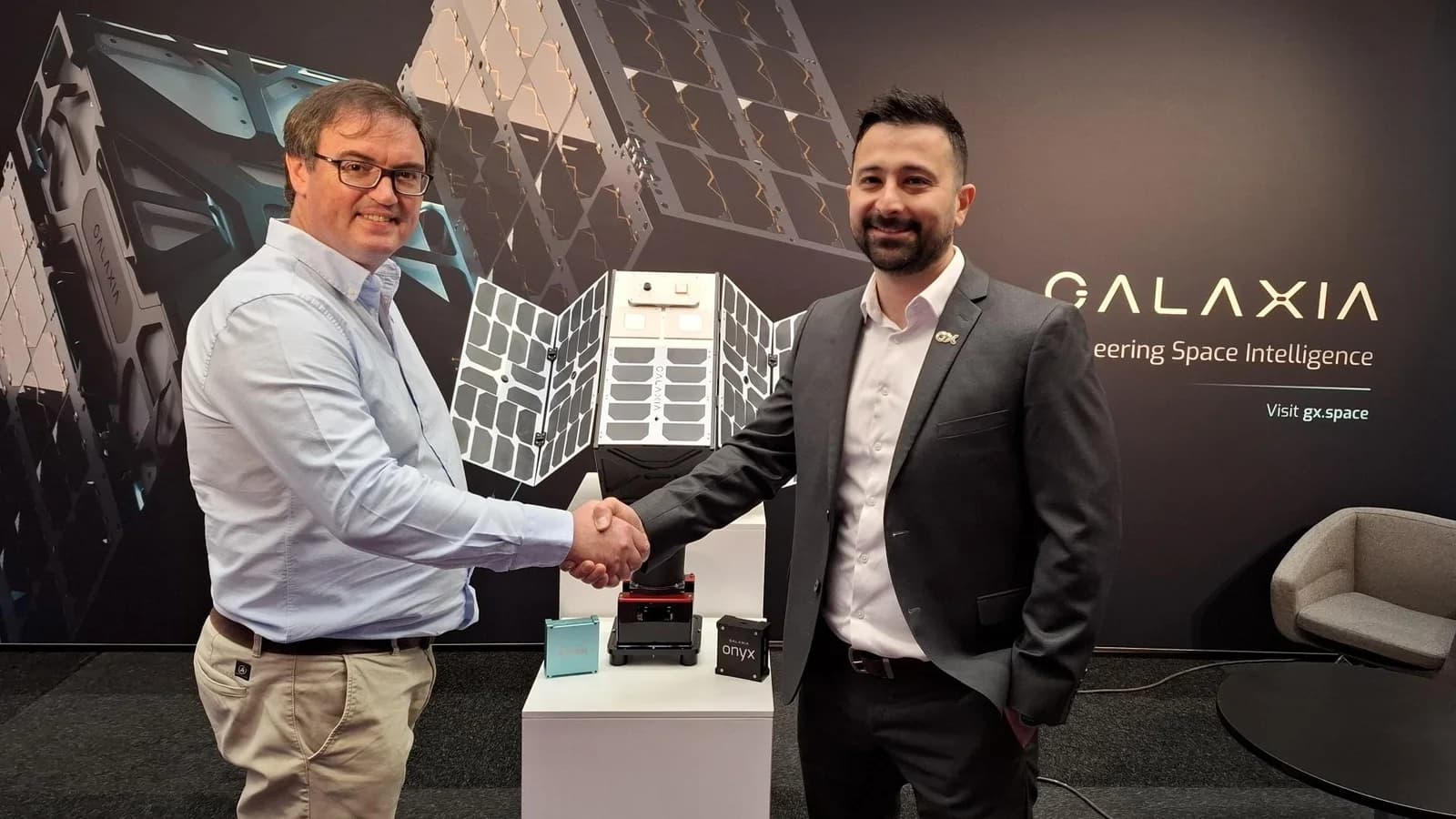
Galaxia has bought a flight-proven HyperScape100 hyperspectral imager, giving the Halifax company a concrete payload around which to build a future Earth-observation mission.
Galaxia has moved from a broad Earth-observation proposition to a named piece of flight hardware. Simera Sense says the Halifax company acquired one HyperScape100 hyperspectral imager, with 32 user-selectable bands drawn from a library of 400. The partners describe commercial, civil and defence applications and a path for integrating hyperspectral imaging into Galaxia's satellite mission offerings.
The purchase narrows the supply-chain question but does not complete the mission. The public record does not identify a satellite bus, launch, customer, integration test, contract value or operating date. Track the payload's integration and qualification milestones, then verify a booked launch or named mission before treating it as an on-orbit Canadian sensing capability.
What the public record says
Galaxia and Simera Sense announced a partnership on September 3, and Simera Sense says Galaxia acquired one HyperScape100 hyperspectral imager with 32 user-selectable spectral bands from a library of 400.
Why this may matter
A named payload purchase makes Galaxia's proposed sensing layer more concrete and exposes the next dependencies: bus integration, qualification, launch access and a customer mission.
Evidence limits
The sources do not disclose price, satellite bus, integration status, qualification plan, launch provider, orbit, customer, mission date or measured performance in a Galaxia mission.
Practical next step
Track the integration and environmental-test record, then confirm a launch booking and named operating mission.
Original sources (2)
- Simera Sense: Galaxia takes next step in Earth observation with purchase of Simera Sense hyperspectral imager (opens in a new tab)Payload purchase and HyperScape100 configuration details
- Galaxia Mission Systems: Galaxia partners with Simera Sense to advance hyperspectral Earth observation (opens in a new tab)Partnership announcement and stated mission applications
Coast Guard defines a polar landing-craft need
The Canadian Coast Guard is asking industry how landing craft could move cargo and supplies between its two future Polar Icebreakers and shore in Arctic and ice-infested waters.
A new request for information makes one polar-logistics problem visible before a procurement is defined. The Coast Guard is seeking market input on landing craft that could deploy from two future Polar Icebreakers and move cargo and supplies between ship and shore in Arctic and ice-infested waters. Industry can propose an existing craft, a modification, adaptation of a proven commercial product, or a new design and build.
That breadth creates room for marine design, boatbuilding, launch-and-recovery and Arctic-operability expertise, but the notice is only a market-sounding step. It sets no purchase quantity, value, award path or final requirement. Inspect the technical annex and track the follow-on procurement record before treating any solution path as selected.
What the public record says
CanadaBuys published a September 3 request for information seeking landing-craft options for two Polar Icebreakers, including existing, modified, adapted commercial or newly designed craft.
Why this may matter
The RFI exposes an actionable Arctic ship-to-shore logistics problem and gives Canadian marine suppliers an early view of the solution space without creating an award.
Evidence limits
The notice does not establish a final specification, acquisition strategy, quantity, budget, evaluation, bidder eligibility, contract, award or delivery schedule.
Practical next step
Inspect the attached requirements and track the notice through any amended requirement, solicitation or contract-history entry.
Original source (1)
- CanadaBuys: Landing Craft Motorized for Polar Icebreakers (opens in a new tab)Tender notice description, response deadline and solution pathways
ITPS finances its flight-test expansion
ITPS Canada has secured a C$90 million credit facility to finance new and expanded flight-test, tactical-training, engineering and aircraft-support capacity in Ontario.
Capital is now attached to ITPS Canada's expansion plan. The company says a C$90 million senior secured facility, led by RBC and Export Development Canada and carrying an upsize option, will support a new North Bay site, expansion in London and a new engineering facility. ITPS links the plan to flight-test education, tactical training, aircraft support and engineering across its group.
The financing is a capacity input, not evidence that the intended fleet or throughput exists. ITPS says North Bay is planned for up to 20 L-39 aircraft by the end of 2027 and six M-346 aircraft starting in 2029. Verify construction, aircraft deliveries, staff growth and training output against those dates before counting the announced capacity as available.
What the public record says
ITPS Canada announced a C$90 million senior secured credit facility with an upsize option, led by RBC and EDC, to support facilities and corporate requirements in North Bay and London.
Why this may matter
The financing supplies a credible mechanism for scaling Canadian flight-test and tactical-training infrastructure, while leaving delivery and operating output to be demonstrated.
Evidence limits
The release does not disclose drawn amounts, pricing, construction milestones, aircraft purchase completion, fleet delivery, enrolment, training throughput or a new government customer.
Practical next step
Track facility construction and verify L-39 and M-346 deliveries, instructor capacity and actual training output against the stated schedule.
Original source (1)
- ITPS Canada: ITPS Canada secures $90M credit facility (opens in a new tab)Facility size, lenders, uses and expansion milestones
Robotics Centre backs Kanata UAS production
Robotics Centre has secured C$5 million in BDC financing for a Kanata manufacturing move and development of its Shuriken, Kukri and Longbow uncrewed-aircraft lines.
Robotics Centre has paired a manufacturing move with named financing. The company says a C$5 million Business Development Bank of Canada facility will support space, equipment, inventory, engineering and workforce at 365 March Road in Kanata, although part of the amount depends on milestones. The stated product set includes Shuriken, Kukri, Longbow and related payload work.
A separate company release describes Longbow as a 50-kilogram maximum-take-off-weight quadcopter aimed at ISR carriage, Arctic surveillance and forward or medical resupply, with low-rate initial production targeted for mid-2027. Those are design intentions and a company-reported test, not verified capacity. Track milestone drawdowns, qualification, repeatable production and customer orders before treating the move as delivered scale.
What the public record says
Robotics Centre announced C$5 million in BDC financing, partly milestone-dependent, for a Kanata facility, equipment, inventory, engineering and workforce tied to several UAS and payload lines.
Why this may matter
The combined financing and facility record gives a concrete route toward domestic UAS manufacturing, with production cadence and customer evidence still outstanding.
Evidence limits
The sources do not disclose current output, order book, unit cost, independently measured performance, qualification status, funded milestone schedule or confirmed production customer.
Practical next step
Track the financing milestones, verify Longbow qualification and inspect any production, customer, delivery or operational-test record before mid-2027.
Original sources (2)
- Robotics Centre: Robotics Centre secures BDC financing to support growth and uncrewed systems manufacturing (opens in a new tab)Financing amount, milestone condition, facility address and intended uses
- Robotics Centre: Robotics Centre's new heavy-lift UAV — Longbow (opens in a new tab)Aircraft description, stated uses, test claim and production target
StandardAero opens its Winnipeg MRO expansion

StandardAero has opened a 70,000-square-foot Winnipeg expansion for CF34 and CFM56 engine maintenance, adding physical capacity to a long-standing Canadian aerospace site.
Aerospace capacity has gained a visible physical increment in Winnipeg. StandardAero says its newly opened 70,000-square-foot expansion increases the site's footprint by about 40 per cent and supports CF34-3, CF34-8 and CFM56-7B maintenance, repair and overhaul. Manitoba separately records a C$3 million provincial contribution, while the company reports roughly 1,500 employees across eight Winnipeg facilities.
The engine families create civil and military relevance. The CFM56-7B also powers the P-8A, but the opening is not a Canadian P-8 award. Floor area does not reveal throughput, workshare, customer mix, turnaround or accepted output. Verify engine induction and delivery volumes, staffing and named defence work before translating the expansion into available sustainment capacity.
What the public record says
StandardAero announced the opening of a 70,000-square-foot Winnipeg expansion, about 40 per cent more footprint, for CF34-3, CF34-8 and CFM56-7B engine MRO work.
Why this may matter
The facility adds domestic aerospace-maintenance infrastructure, but its defence significance depends on the engines, customers, throughput and accepted work that actually move through it.
Evidence limits
The sources do not disclose added annual throughput, new contracts, customer mix, employee increase, engine inductions, turnaround performance or Canadian military workshare.
Practical next step
Track staffing, engine induction and delivery volumes and confirm any named defence sustainment work performed in the expanded facility.
Original sources (2)
- StandardAero: StandardAero celebrates official opening of its expanded facility in Winnipeg (opens in a new tab)Facility size, footprint change, supported engine families and workforce statement
- Government of Manitoba: Manitoba government celebrates StandardAero expansion in Winnipeg (opens in a new tab)Provincial contribution and expansion figures
5N Plus selected for proposed GaAs award
Montreal-headquartered 5N Plus says it was selected to receive a proposed US$7.3 million U.S. defence-production award for gallium-arsenide electro-optical component production in Utah.
A proposed production pathway now has a named selection. Montreal-headquartered 5N Plus says it was selected to receive a proposed US$7.3 million award to establish U.S. production of gallium-arsenide electro-optical components at its Utah site. Lockheed Martin is identified as the initial customer, and the planned sequence moves through qualification before controlled low-rate production.
The selection could connect a Canadian-headquartered supplier to an allied defence-production base, while award execution and actual output remain ahead. It does not show completed qualification, accepted components, production rate or an operational system. Future space-solar and high-frequency uses are possibilities stated by the company, not delivered scope. Track the final award, qualification and accepted customer deliveries before counting the capacity as established.
What the public record says
5N Plus says it was selected to receive a proposed US$7.3 million award for gallium-arsenide electro-optical component production in Utah, with Lockheed Martin as the initial customer.
Why this may matter
The selection identifies a proposed route from specialized material expertise to an allied component supply line, with award execution, qualification and accepted production still decisive.
Evidence limits
The release does not confirm award execution, qualification completion, production start, output volume, accepted deliveries, Canadian production workshare or an operational end system.
Practical next step
Track contract execution, qualification completion, low-rate-production start and accepted deliveries to the named initial customer.
Original source (1)
- 5N Plus: 5N+ selected to establish domestic production of GaAs electro-optical components (opens in a new tab)Award amount, production location, initial customer and planned qualification sequence
AMALGAM DART tests binational air defence
NORAD and U.S. Northern Command have concluded AMALGAM DART after exercising binational warning, command-and-control, fighter and cruise-missile-defence functions.
An operating exercise has connected several layers of continental air defence. NORAD says Canadian and U.S. forces used AMALGAM DART from August 24 to September 1 to exercise aerospace warning and control, integrated air and missile defence, mixed-fighter operations, command and control, air-battle management and cruise-missile defence. Canadian participation included 3 Wing Bagotville and 21 Aerospace Control and Warning Squadron in North Bay.
The event is stronger evidence of integration activity than a plan or announcement, but the release is silent on performance. It provides no intercept results, deficiencies, sensor tracks, timelines or lessons learned. Track any official after-action material and resulting procurement, training or architecture changes before treating participation as proof that the exercised system met its objectives.
What the public record says
NORAD says Canadian and U.S. forces exercised aerospace warning and control, integrated air and missile defence, mixed-fighter operations, command and control and cruise-missile defence from August 24 to September 1.
Why this may matter
The exercise demonstrates that binational air-defence elements were brought together around a live operating problem, while outcome evidence remains undisclosed.
Evidence limits
NORAD does not disclose measured performance, intercept outcomes, deficiencies, readiness ratings, sensor data, tactical lessons or resulting procurement decisions.
Practical next step
Track official after-action material and inspect whether identified lessons lead to architecture, training, sensor or procurement changes.
Original source (1)
- North American Aerospace Defense Command: NORAD and USNORTHCOM conclude exercise AMALGAM DART (opens in a new tab)Exercise dates, participating Canadian units and exercised functions
RAF fields Giraffe counter-UAS radars
Saab has delivered Giraffe 1X radars into the Royal Air Force's wider counter-drone architecture, supplying a concrete allied example of rapid sensor integration for deployed defence.
An allied counter-UAS requirement has reached the delivery stage. Saab says it supplied Giraffe 1X radar systems to the Royal Air Force for detection and tracking within a wider counter-drone architecture, including protection of deployed operations in the Middle East. The company characterizes the delivery as a response to an operational requirement rather than a future proposal.
For Canada, the useful benchmark is architectural: a modular sensor was acquired as one part of a detect-to-engage system, not as a complete answer on its own. The announcement withholds quantity, value, acceptance evidence, detection performance and combat outcome, and it establishes no Canadian role. Compare the integration sequence and evidence thresholds with Canadian counter-UAS work, then verify results from the end-to-end architecture.
What the public record says
Saab says it delivered Giraffe 1X radars to the Royal Air Force for detection and tracking within a wider counter-drone architecture used to protect deployed operations.
Why this may matter
The delivery is a useful allied example of moving a modular sensor into an operating counter-UAS architecture, with end-to-end effectiveness still unreported.
Evidence limits
The release does not disclose quantity, value, acceptance test, detection range, operational result, architecture partners, engagement performance or any Canadian involvement.
Practical next step
Compare the RAF integration path with Canadian counter-UAS requirements and track official acceptance or operational-performance evidence.
Original source (1)
- Saab: Saab delivers Giraffe 1X radars to UK for counter-drone defence (opens in a new tab)Delivery, operational-requirement context and role in the wider counter-drone architecture
Carry the signal forward
Continue in True North Map
Follow the edition into the organizations, technologies, Defence needs and Mission areas already connected to its record.