
Canadian Defence Signals
Procurement powers, production capacity and the delivery test
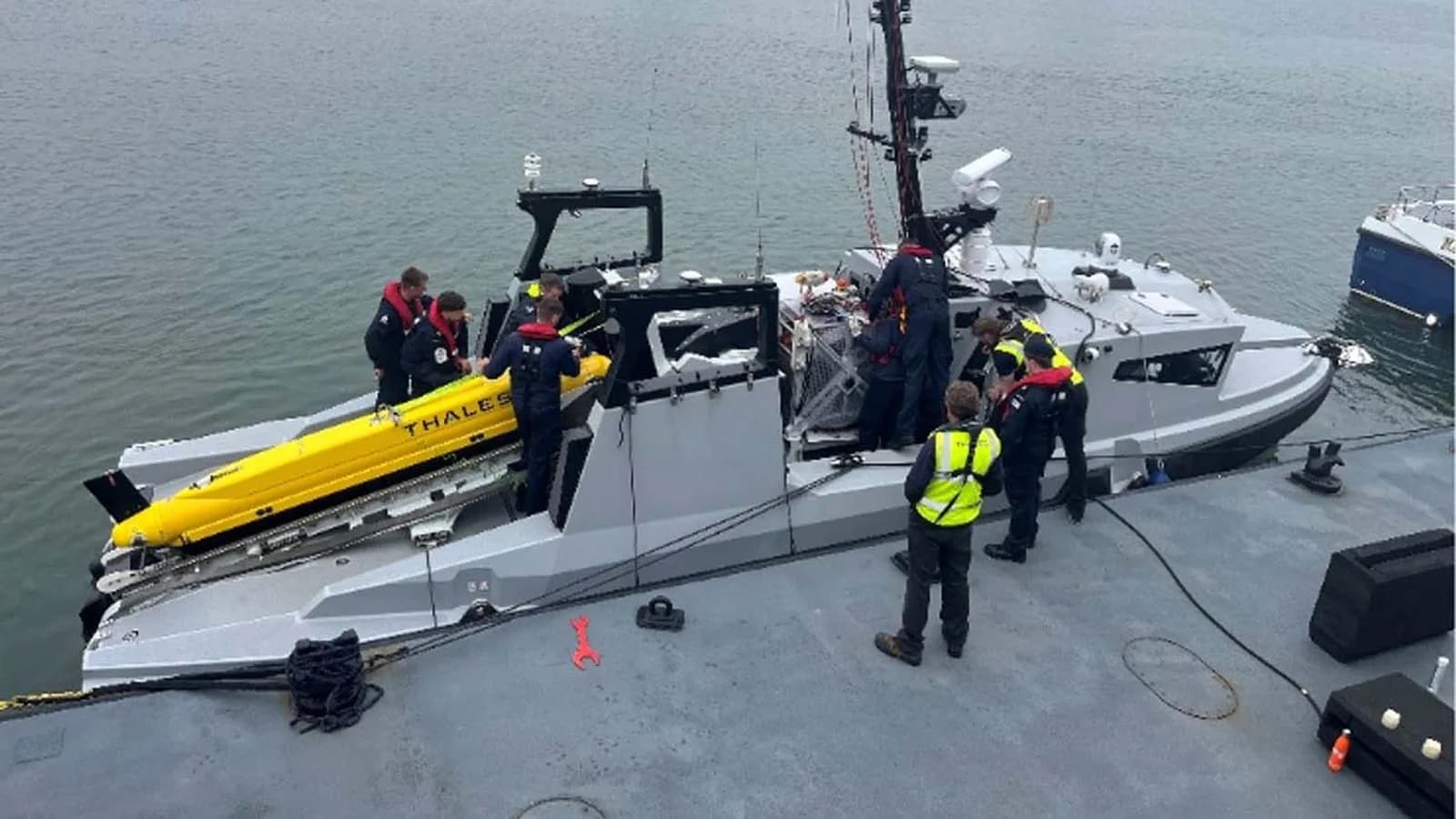
Editorial briefing snapshot
The Bottom Line
The actionable windows are specific: the drone marketplace’s October 15 industry session and November 6 submission deadline, COVE’s November 13 payload challenge, and NRC’s October 12 consultation. Exail’s newly released financial appendix and Field Aviation’s court file also change how two important supplier developments should be read.
In context
Canada’s proposed procurement corporation would change commercial powers and acquisition handoffs, and the drone marketplace has reopened qualification. Supplier results, factory investment and maritime trials provide a separate view of the work needed to deliver capacity.
In this edition
A proposed procurement corporation changes the powers—and the handoffs
Bill C-40 proposes a Crown corporation with procurement and investment powers. The legislation is pending, while military requirements and acceptance remain with the operational organizations.
Canada introduced Bill C-40 on October 6 to establish the Canadian Corporation for Defence Investment, operating as the Defence Investment Agency. The proposed Crown corporation would combine major acquisitions with commercial tools including loans and advances. Guarantees and equity investments require Finance approval; some other financing arrangements require Governor in Council authorization. Those are proposed powers, not evidence that the agency has already financed a supplier.
The institutional handoff matters as much as the corporate form. DND, the Canadian Armed Forces and the Canadian Coast Guard would retain responsibility for capability requirements, operational priorities and acceptance criteria. The DM/CDS message anticipates a changed relationship between the agency and Assistant Deputy Minister (Materiel) as major acquisitions move into the new organization. The Defence Production Act also retains authorities for the Public Services and Procurement minister.
The bill proposes changes to the competitive-procurement framework and exceptions, but it had only received first reading as of this review. Faster decisions are the government’s intended outcome; no elapsed-time improvement is established by introducing legislation. For suppliers, the practical issue is who owns the requirement, acquisition decision, financing agreement and final acceptance—and how those responsibilities will meet during a program.
What remains open
The bill is not law, and the inspected sources do not supply a complete operational transfer timetable.
What comes next
Parliamentary amendments and the published transfer arrangements should clarify authority, approvals and supplier interfaces before these proposed powers become operating practice.
Evidence and assessment for A proposed procurement corporation changes the powers—and the handoffs
What the sources establish
The government introduced Bill C-40 on October 6. Parliament’s current record shows introduction and first reading completed, with second reading still ahead.
True North Map assessment
The proposed commercial powers widen the agency’s tools. Clear handoffs to requirement owners and acceptance authorities will determine how suppliers experience the change.
Original sources (4)
- Defence Investment Agency: Introduction of legislation to strengthen Canada’s defence sector (opens in a new tab)Direct record · Proposed mandate; commercial tools; retained DND/CAF/CCG responsibilities; oversight
- Department of National Defence: DM/CDS message: Modernizing defence procurement (opens in a new tab)Direct record · New relationship between DIA and ADM(Mat); capability requirements and acquisition responsibilities
- Parliament of Canada: Bill C-40: LEGISinfo (opens in a new tab)Direct recordStatus; latest activity: introduction and first reading October 6; second reading not completed
- Parliament of Canada: Bill C-40, first reading (opens in a new tab)Direct record · Clauses 8–11: mandate and financing approvals; Part 2 amendments to Defence Production Act
The drone marketplace reopens—with a deadline that overrides the portal
Round 2 submissions must arrive by November 6 at 14:00 EST. The notice explicitly tells suppliers to disregard the portal’s displayed response deadline.
The Defence Drone Initiative Marketplace has reopened qualification to Canadian suppliers. The umbrella notice describes a broad scope spanning uncrewed systems, counter-UxS, communications and data, integration, testing, training and experimentation. Joining the supply arrangement is an eligibility step for future work; it does not itself place an order.
The actionable detail sits in the current Round 2 notice. All supporting documentation and bid submissions are due November 6 at 14:00 EST. Both the umbrella and round notices expressly override the CanadaBuys and Ariba displayed closing times; the umbrella still carries a 2031 portal date. An industry engagement session is scheduled for October 15 at 11:00 EDT, with mandatory registration through the contact identified in the notice.
There are six parallel submission events, A through F, because each event can accept 100 bids. Suppliers should submit only one bid. The six events are not six different opportunities to submit the same qualification. Late submissions may be considered in future qualification rounds. Detailed bid documents are accessed through the linked SAP Business Network opportunity; the notice should guide the deadline and route, while the actual solicitation governs compliance.
What remains open
The detailed solicitation package was not inspected in this public review. No individual supplier’s eligibility or bid compliance has been assessed.
What comes next
Interested suppliers should inspect the linked solicitation, register for the October 15 session and work to the explicit November 6 deadline.
Evidence and assessment for The drone marketplace reopens—with a deadline that overrides the portal
What the sources establish
The current umbrella notice and six Round 2 notices specify November 6, 14:00 EST; the Round 2 pages add the October 15 engagement session and one-bid instruction.
True North Map assessment
The useful route is qualification into a procurement pool, with a near-term information session and a deadline hidden behind inconsistent portal metadata.
Original sources (2)
- Defence Investment Agency via CanadaBuys: W8703-270055 Defence Drone Initiative Marketplace (opens in a new tab)Direct recordDescription: Round 2 deadline overrides portal; marketplace scope
- Defence Investment Agency via CanadaBuys: W8703-270055 Defence Drone Initiative Marketplace — RFSA — Round 2-A (opens in a new tab)Direct recordDescription: deadline, October 15 industry event, six events and one-bid instruction; amended October 8
Exail’s delayed results expose the cash cycle behind maritime growth
Exail reports stronger operating earnings alongside a €29.8 million operating cash outflow and substantial accounting restatements.
The financial question carried forward from Exail’s September results delay now has a substantive answer. Its October 9 release reports first-half revenue of €275 million and current EBITDA of €63 million, up 43%. The improvement reflects maritime-program ramp-up and larger navigation-system volumes.
The cash-flow appendix changes the reading. Working capital absorbed €67.5 million; net cash from operating activities was negative €29.8 million. The €38 million highlighted in the release is cash flow before working capital. Exail says an October €117 million invoice collection has begun reversing that pattern. It also invested roughly €25 million in tangible and intangible assets during the half-year.
A review of the 2022 iXblue acquisition arrangements brought retrospective accounting corrections: a €329 million commitment relating to ICG’s financing and €126 million of share-plan liabilities at June 30. They arise from existing settlement rights and their accounting treatment. The company says the corrections leave historical cash flows and current EBITDA unchanged. It reports a consolidated €87 million net loss and €503 million available cash; January’s undated-bond issue supplied €254 million of proceeds. The ICG buyback commitment sits separately from the gross financial-debt figure.
Canadian teams assessing maritime or navigation partners gain a more useful view of how expanding production is financed and when customer payments arrive. Stronger operating volumes, a working-capital cash draw and non-cash corrections can coexist. These results establish no Canadian allocation or delivery guarantee. The board approved the statements on October 8; the statutory auditors’ limited review was still being finalized at publication. Thales’s proposed acquisition of the Gorgé family stake remains subject to approvals, with completion expected in the third quarter of 2027.
What remains open
The statutory auditors’ limited-review report was still pending, and no Canadian program allocation is disclosed.
What comes next
The forthcoming half-year financial report and October 14 Q3 activity release can clarify the review outcome and the continuation of operating growth.
Evidence and assessment for Exail’s delayed results expose the cash cycle behind maritime growth
What the sources establish
Exail’s October 9 statements report €63 million current EBITDA, €29.767 million net operating cash outflow and recognition of €329 million ICG-related and €126 million share-plan liabilities.
True North Map assessment
The financing instruments, customer-payment cycle and separately recognized settlement commitments are part of evaluating a growing maritime-system supplier.
Original source (1)
- Exail Technologies: First-half 2026 results: strong revenue growth, very strong growth in current EBITDA (opens in a new tab)Direct record · Original 19-page issuer release: pp2–3 income and review status; p6 cash and restatements; pp11–12 instrument mechanisms; p16 cash-flow table. Tables pp2,6,16 visually verified.
Field Aviation must stay operating to finish one aircraft export
After substantially all assets were sold, an aircraft modification and its entity-specific export permit kept Field Aviation’s Canadian restructuring open until November 17.
An export authorization is keeping a largely completed aerospace restructuring alive. On October 2, Ontario’s Commercial List extended the proposal period and stay for Field Aviation Company Inc. and Field Aviation East Ltd. to November 17. The principal work left is to finish modifying a Draken-owned aircraft and export it. Aviation and export rules require Field Canada to remain an operating entity until that happens.
The asset transfers are further along than the continuing court file might suggest. The proposal trustee reports that transactions with De Havilland Aircraft of Canada and PAL Aerospace closed July 31, the Voyageur transaction has also closed, and Wells Fargo’s secured and restructuring loans were repaid. The U.S. parent and U.S. operating subsidiaries are outside these Canadian proceedings.
A signed October 1 extension with Draken supplies the bridge: an immediately payable US$165,023 invoice and continued wages and testing-cost funding through November 17. That agreement resolves the funding extension still under negotiation in the trustee’s September 30 report. For buyers and program partners, the case illustrates why acquiring aerospace assets and preserving the authorizations to complete a customer program require separate attention.
What remains open
The October 2 order does not establish that flight testing or authorized export has been completed.
What comes next
The next court-file update before the November 17 stay expiry should establish completion, export or a further extension.
Evidence and assessment for Field Aviation must stay operating to finish one aircraft export
What the sources establish
The October 2 court order grants a 45-day extension to November 17; the accompanying endorsement identifies aircraft completion and authorized export as the remaining operating requirement.
True North Map assessment
A sale can move assets while a legacy legal entity still holds the permit needed to finish and deliver a customer’s aircraft.
Original sources (4)
- Ontario Superior Court of Justice (Commercial List), via AlixPartners: Endorsement of Justice Cavanagh, October 2, 2026 (opens in a new tab)Direct record · PDF p. 2, paragraphs 1–4
- Ontario Superior Court of Justice (Commercial List), via AlixPartners: Stay extension and Proposal Trustee approvals order, October 2, 2026 (opens in a new tab)Direct record · PDF p. 2, paragraph 2
- AlixPartners Restructuring, Inc.: Third Report of the Proposal Trustee, September 30, 2026 (opens in a new tab)Direct record · Printed pp. 6–9: entity boundary, closed transactions, debt repayment, Draken program/export permit
- Ontario Superior Court filed affidavit, via AlixPartners: Affidavit of Denna Jalili, October 1, 2026, with Draken extensions (opens in a new tab)Direct record · PDF pp. 32–34, Exhibit D, October 1 Third Extension Letter; p. 32 visually inspected
FTG’s defence orders reach production, with premiums lifting margins

FTG’s record backlog is accompanied by actual delivery growth and commercial-debt repayment, but expedited pricing accounts for part of the margin gain.
Two classified defence programs that Firan Technology Group qualified for in 2025 are now contributing materially to deliveries and earnings. Its October 7 results show quarterly sales of C$64.1 million, up 34.3%, and bookings of C$90.2 million. The C$220.7 million backlog is 49% above the previous fiscal year-end. These figures make a useful distinction between new qualification, orders and work reaching production.
Management credits better operating performance and throughput, while also reporting significant premiums for expedited delivery. The detailed report ties much of the Circuits segment’s revenue growth to improvements at U.S. sites and short-term pricing premiums. Gross margin rose to 42.9% from 30.3%; the full improvement should not be read as a permanent increase in production efficiency or Canadian plant output.
The cash position also strengthened. FTG repaid all commercial bank loans during the quarter, while C$8.9 million of government loans remain; its reported net cash is C$3.9 million. Management estimates that 84.8% of backlog will convert to revenue by the end of Q3 2027. That provides a delivery horizon against which the current order strength and pricing conditions can be assessed.
What remains open
The classified customers and program allocations are undisclosed. The persistence of short-term pricing premiums remains uncertain.
What comes next
Compare subsequent backlog conversion and Circuits margins with the Q3 2027 delivery estimate, separating throughput improvement from premium pricing.
Evidence and assessment for FTG’s defence orders reach production, with premiums lifting margins
What the sources establish
FTG reported these results for the quarter ended August 28, 2026, in Canadian dollars. Its Q3 report distinguishes firm purchase-order backlog from guaranteed future earnings.
True North Map assessment
Actual shipments and debt repayment give the order surge operating substance; sustained conversion matters more than extrapolating one quarter’s expedited-delivery premiums.
Original sources (2)
- Firan Technology Group Corporation: Firan Technology Group announces Q3 2026 financial results (opens in a new tab)Attributed statement · Third Quarter Financial Highlights; Business Highlights; FTG Circuits segment results
- Firan Technology Group Corporation: FTG Q3 2026 Report (opens in a new tab)Direct recordPrinted pp. 3–6, 10, 12–14, 17: financial results, margins, liquidity, backlog conversion and definitions; p. 10 visually inspected
ATCO’s defence business is slated for a separate public company
The signed transaction would give ATCO’s defence and industrial businesses a separate listing while preserving Sentgraf’s voting control.
ATCO’s defence business would sit in a separately listed New ATCO under the definitive agreement announced October 6 with Emera and Canadian Utilities. Housing and investments, including ports and retail energy, would accompany it. The release identifies ATCO Frontec as the group’s construction and operational-support provider for defence and security. The utilities would combine within Emera.
The proposed ownership split preserves control: Sentgraf would receive all New ATCO voting shares, while existing non-voting holders receive non-voting shares pro rata. Nancy Southern would remain chair and CEO, with headquarters in Calgary.
Closing is expected in Q3 or Q4 2027, subject to shareholder, court and regulatory approvals. The early-2027 joint circular will provide further separation details.
What remains open
Closing and final separation details remain pending.
What comes next
Read the early-2027 joint circular for separation terms and approvals.
Evidence and assessment for ATCO’s defence business is slated for a separate public company
What the sources establish
The original joint announcement confirms the carveout and retained voting control.
True North Map assessment
The agreement identifies a distinct proposed corporate home and controlling shareholder for ATCO’s defence-services business.
Original source (1)
- Emera, ATCO and Canadian Utilities: Emera, ATCO and Canadian Utilities announce a definitive agreement (opens in a new tab)Attributed statement · Terms of Agreement; Unlocking ATCO’s next chapter; Timing and conditions; Next steps; About ATCO
APEX plans a larger Moncton factory and advanced manufacturing equipment

Performance-based provincial support backs a specific factory expansion serving defence and naval customers.
APEX Industries’ Moncton expansion has a defined physical scope: about 35,000 square feet of additional production space, together with the purchase, installation and commissioning of advanced manufacturing equipment. New Brunswick announced up to C$2 million of performance-based support on October 7, with up to 35 full-time positions expected.
The company serves several industries, but CEO Keith Parlee says its contract-manufacturing business has largely migrated toward defence and naval work in recent years. The expansion therefore has a closer defence connection than a general industrial grant, while remaining a project with expected future capacity and jobs.
What remains open
The release gives no commissioning date or equipment specifications.
What comes next
APEX’s equipment installation and commissioning are the milestones that would make the announced production space usable.
Evidence and assessment for APEX plans a larger Moncton factory and advanced manufacturing equipment
What the sources establish
Opportunities NB’s October 7 release supplies the facility and equipment scope.
True North Map assessment
The commissioning milestone will help distinguish planned capacity from available production.
Original source (1)
- Government of New Brunswick / Opportunities NB: New Brunswick participants highlight defence and aerospace capabilities at DEFSEC Atlantic (opens in a new tab)Direct record · October 7 release, paragraphs 1–6: performance-based support, facility area, equipment, jobs and CEO defence/naval attribution
Alberta funding targets microwave production and Arctic flight constraints
Seven PrairiesCan projects total C$8.44 million, with specific manufacturing and Arctic-aircraft work among the recipients. The large base-infrastructure figures are existing investments.
The October 7 Alberta announcement is most useful at project level. PrairiesCan’s backgrounder identifies C$8,439,279 across seven projects, through three different programs. Jones Microwave receives a repayable C$1,789,279 investment to expand manufacturing of high-frequency, high-speed switches used in radar and satellite communications. Pegasus Imagery receives a repayable C$2 million investment for development, validation and production of its next-generation MIDAS ice-alert system for crewed and uncrewed Arctic aircraft.
A C$1.2 million LIFT project supports industry education, investment and mentorship, while C$450,000 supports Foremost’s beyond-visual-line-of-sight test services. Three C$1 million projects support Fidelity Manufacturing, GKD Industries and MRO Electronic Supply, including precision manufacturing, coatings, steel applications and cable assemblies. These are different capacity interventions; the total should not be described as seven defence procurement awards.
The accompanying ministerial release also highlights roughly C$8 billion of ongoing Alberta defence infrastructure work. Those totals include fighter infrastructure and laboratory and air-transport projects already under way. The new regional project decisions are a clearer indicator of where public support is addressing supplier capacity and operating constraints.
What remains open
The announcement does not disclose resulting annual throughput, completed aircraft validation or new customer orders for the funded firms.
What comes next
Production commissioning and validation results will show which supported constraints have been removed and what capacity buyers can use.
Evidence and assessment for Alberta funding targets microwave production and Arctic flight constraints
What the sources establish
The backgrounder specifies seven projects, program allocations and individual recipients; Jones and Pegasus investments are expressly repayable.
True North Map assessment
The project-level uses reveal concrete bottlenecks—microwave manufacturing, aircraft icing, test access and production processes—behind the larger defence-investment headline.
Original sources (2)
- Prairies Economic Development Canada: PrairiesCan investments in defence-related projects (opens in a new tab)Direct record · RDII, RIE and RTRI recipient tables; individual project descriptions
- Department of National Defence: Minister McGuinty highlights Canada’s defence investments in Alberta (opens in a new tab)Direct record · Ongoing infrastructure list; seven regional projects; DDI reopening
COVE’s larger funding bridge comes with a concrete payload challenge

A C$2.58 million program expansion, two naval challenge winners and an open L3Harris payload call give Atlantic firms specific routes into development with primes.
COVE’s October 7 announcement puts C$2,576,667 of non-repayable ACOA funding behind an expanded Innovation Challenge program. The funding comes through Regional Economic Growth through Innovation and will broaden a Thales-led pilot into multiple defence domains and relationships with more primes and Canadian Armed Forces end users. COVE says the pilot has run six challenges and generated four partnerships since 2023.
An open L3Harris challenge shows what participation requires. Its C$200,000 Modular Mission Payload Kits call closes November 13 and is open to Atlantic Canadian small and medium businesses and Indigenous organizations at TRL 4 or higher. The requirement extends beyond a sensor or device: applicants must address power and data interfaces, cyber and data handling, operator training, transport, spares and maintenance. Laboratory and shore demonstrations are acceptable; immediate shipboard integration is not required.
COVE’s October 8 winners announcement supplies the other end of that development pipeline. Curion will advance risk intelligence for shipboard safety, and Halifax-based Elituq Technologies will develop Arctic ice intelligence, with COVE, Thales and Royal Canadian Navy input. Potential access to the AJISS sustainment program remains conditional on development and validation. These are funded opportunities to build operational evidence, rather than announced purchases of deployed systems.
What remains open
The winners release does not disclose validation schedules, acceptance criteria or an AJISS purchase. The open challenge page has no publication date.
What comes next
Prospective L3Harris applicants can use the November 13 deadline to test eligibility and interface readiness; Curion and Elituq will present at COVE Connector on October 29.
Evidence and assessment for COVE’s larger funding bridge comes with a concrete payload challenge
What the sources establish
COVE announced the ACOA expansion October 7 and the Curion and Elituq selections October 8. Its current L3Harris challenge specifies a November 13 application deadline, December 4 selection and January 2027 kickoff.
True North Map assessment
The useful entry point is a complete deployment and sustainment concept that a prime and operator can evaluate, rather than a stand-alone technology pitch.
Original sources (3)
- COVE: COVE receives $2.5M ACOA investment to help Canadian SMEs access defence supply chains (opens in a new tab)Attributed statement · October 7 release: investment, REGI funding mechanism, pilot results and multi-domain expansion
- COVE: Modular Mission Payload Kits for Maritime and Expeditionary Operations (opens in a new tab)Direct recordAdditional Considerations; Key Dates; At a Glance: TRL, eligibility, award and closing date
- COVE: 2026 COVE Naval Technology Innovation Challenge winners announced (opens in a new tab)Attributed statement · October 8 release: selection, development/validation, AJISS conditional pathway, winners and October 29 Connector
Neptis makes the surveillance integration work visible
Exail launches a configurable Oryx-and-C2 surveillance system; the press-tour demonstration establishes a narrower capability than the full mission catalogue.
Exail’s October 9 Neptis launch brings a defence-focused Oryx vessel family together with sensors and command software for maritime surveillance, anti-submarine warfare and infrastructure protection. Its intended operating model puts persistent sensing on distributed uncrewed assets while naval authorities retain decisions and response.
Naval News’s press-tour account supplies a useful distinction: the demonstration covered platform supervision, tactical tracks, preliminary operator assessment and intelligence support. Mission planning, classification, advanced fusion, decision support and interoperability were described as developments tailored to customer requirements. Experience across Exail’s existing USV fleet supplies a foundation; it does not demonstrate every Neptis mission configuration.
The Oryx specification sheet distinguishes H-8, H-9 and O-16 endurance claims of up to 10, 20 and 30 days. It makes endurance dependent on speed, gondola, payload and towing configuration. The 15.75-metre O-16 is advertised with launch-and-recovery arrangements for underwater and aerial assets and transport in two 40-foot high-cube containers. Those details matter when comparing an actual mission package with an attractive persistence headline.
For Canadian maritime integrators, the relevant work lies in payload fit, secure links, operator workload, recovery and connection to the customer’s command system. The launch identifies a potential architecture for that work. No named Canadian customer, funded Canadian workshare or customer acceptance result appears in the inspected sources.
What remains open
The inspected sources do not establish a named Canadian customer or acceptance of the complete advertised mission suite.
What comes next
Customer-specific trials that report secure-network integration, sensor performance and operator workload would show what the configurable architecture achieves in use.
Evidence and assessment for Neptis makes the surveillance integration work visible
What the sources establish
Exail unveiled Neptis on October 9; Naval News reports a press-tour demonstration of supervision, track visualization and operator-led intelligence support.
True North Map assessment
A configuration-level comparison can reveal where Canadian sensing, communications or support expertise might fit, conditional on a customer requirement and integration agreement.
Original sources (3)
- Exail: Exail unveils Neptis, a new model of maritime surveillance built on distributed autonomy (opens in a new tab)Attributed statement · October 9 launch announcement: Oryx family, modular C2, intended missions and heritage metrics; media-resource link.
- Naval News: Exail Introduces Neptis Uncrewed Maritime Surveillance System (opens in a new tab)Original reporting · Full article, Euronaval press-tour demonstration paragraph and final customer-integration paragraph.
- Exail: Oryx Series — Force multiplier for navies (opens in a new tab)Attributed statementDatasheet version 2026-07 V003; page1 specifications and endurance footnote, page2 mission/payload table. Specification table visually verified.
ENVGO and Open Ocean Robotics plan one control environment for different USVs

A new Canadian partnership pairs rapid-response hydrofoiling vessels with persistent solar-powered craft through Open Ocean Robotics’ XplorerView software; the integration has yet to be demonstrated.
A shared control environment is the substantive element in ENVGO and Open Ocean Robotics’ October 7 memorandum of understanding. The companies plan to bring ENVGO’s high-speed hydrofoiling uncrewed surface vessels into XplorerView, the command-and-control platform already used for Open Ocean Robotics’ persistent, solar-powered craft. That would give an operator different types of vessel within one mission and data environment.
The contrast between the craft is useful. ENVGO’s XV2 is a compact, two-metre platform designed to transit quickly and then loiter with sensing payloads. Open Ocean Robotics supplies long-endurance vessels and software that combines mission control, system health and navigation with sensor data. A coordinated fleet could use persistent craft to maintain coverage and task faster craft toward a contact needing closer inspection. That operating concept is an inference from their complementary roles.
The memorandum does not establish that the combined system works. The companies explicitly say integration milestones, interfaces and demonstration objectives will be jointly defined. The next meaningful evidence is a mixed-vessel demonstration, including tasking, data exchange and degraded-communications behaviour, rather than the signing itself.
What remains open
The release does not publish an integration schedule, interface specification or completed joint demonstration.
What comes next
A jointly defined mixed-fleet demonstration would show whether shared tasking and sensor data remain usable across different craft and communications conditions.
Evidence and assessment for ENVGO and Open Ocean Robotics plan one control environment for different USVs
What the sources establish
The companies’ issuer-distributed release announces the DEFSEC Atlantic memorandum and names XplorerView as the proposed common operating environment.
True North Map assessment
The combination could connect persistent observation with faster response while reducing the number of separate control tools an operator must manage.
Original sources (2)
- Open Ocean Robotics and ENVGO, distributed by EIN Presswire: ENVGO and Open Ocean Robotics join forces to deliver sovereign maritime uncrewed solutions (opens in a new tab)Attributed statement · Issuer release: collaboration, jointly defined milestones/interfaces/demonstrations, ENVGO and OOR platform sections
- ENVGO: Defence & Maritime Security — ENVGO (opens in a new tab)Attributed statementBuilt for multiple missions; XV2 specifications; indicative figures/configurations note
Oshen puts regional ocean modelling inside its mission planner
Oshen reports a named dashboard integration and live ocean-temperature reconstruction; forecasting and autonomous adaptive sampling remain next steps.
Oshen says it has integrated elements of MaLCOM, developed by the Met Office and University of Exeter, into its mission-planner dashboard. In its October 8 post, the company reports that C-Star measurements are now feeding live regional sea-surface-temperature reconstruction, with validation and verification underway. The proposed next stage would turn reconstruction into a forecast and move the fleet toward areas of greatest uncertainty. That adaptive sampling loop is future work.
The Canadian comparison is Open Ocean Robotics, whose persistent solar-powered USVs already use the XplorerView operating environment. Its newly announced ENVGO partnership plans to bring faster craft into that shared mission and data environment. Both developments make the software around a fleet consequential: whether an operator can turn sparse observations into a usable regional picture, then task different platforms from it. Oshen provides a specific current integration claim; independent validation and autonomous repositioning results are still missing.
What remains open
Independent accuracy validation and operational adaptive-sampling results are not supplied.
What comes next
A validated reconstruction followed by a demonstrated forecast-driven sampling loop.
Evidence and assessment for Oshen puts regional ocean modelling inside its mission planner
What the sources establish
Oshen names the MaLCOM integration and says live SST reconstruction is undergoing validation.
True North Map assessment
Regional reconstruction could increase the information available from a sparse sensing fleet.
Original sources (2)
- Oshen: Oshen integrates MaLCOM into its mission planner and runs live SST reconstruction (opens in a new tab)Attributed statement · Original post: named MaLCOM dashboard integration, current live SST reconstruction/validation, and future adaptive sampling. Exact publication time from public SocialMediaPosting JSON-LD.
- Open Ocean Robotics and ENVGO, distributed by EIN Presswire: ENVGO and Open Ocean Robotics join forces to deliver sovereign maritime uncrewed solutions (opens in a new tab)Attributed statement · Issuer release: collaboration, jointly defined milestones/interfaces/demonstrations, ENVGO and OOR platform sections
Roshel completes the Centigon step into a wider protection supply chain

Roshel reports transaction completion, joining Canadian vehicle manufacturing with French and Latin American protection operations.
The concrete change in Roshel’s October 2 announcement is completion: Centigon has officially joined the group. Roshel describes an industrial footprint spanning Canadian armoured-vehicle manufacturing, France, Mexico and Colombia.
The acquired capabilities extend along the protection supply chain. Centigon manufactures ballistic glass in Colombia, designs and builds armoured heavy-truck cabs in France, and produces civilian, cash-transport and tactical protected vehicles in Mexico. Its French ballistic range and laboratory are to become a shared group engineering resource.
That gives a Canadian manufacturer access to a broader set of components, test resources and customer-facing operations. The operating consequence will depend on how shared engineering and production are organized and which customer orders use them. The announcement discloses no transaction price, added annual production throughput or new procurement award. Roshel also links its French presence to European procurement ambitions; specific program eligibility and contract opportunities require their own rules and buyer evidence.
What remains open
Purchase price, site throughput and new customer awards are not disclosed in the announcement.
Evidence and assessment for Roshel completes the Centigon step into a wider protection supply chain
What the sources establish
Roshel’s October 2 release says Centigon officially joined the group, bringing France, Mexico and Colombia protection businesses and a shared French ballistic laboratory.
True North Map assessment
Ownership now connects Canadian vehicle assembly with glass, cab and testing capabilities in other markets; customer orders and operating integration will show how much additional capacity results.
Original source (1)
- Roshel: Centigon Joins Roshel Group Following Completion of the Transaction (opens in a new tab)Attributed statement · October2 completion announcement; protected-mobility paragraph identifies Colombia glass, France truckcabs/laboratory and Mexico vehicle operations.
Kepler and Axiom separate working orbital compute from the next encryption test

Two Axiom compute nodes are operating on Toronto-based Kepler’s relay network; the successful post-quantum workload migration was performed on the ground, with the orbital test still ahead.
Axiom Space’s October 6 update gives a more precise view of the compute infrastructure flying on Kepler Communications’ optical relay constellation. Axiom says it operates two Resilient Compute nodes and has confirmed communications between the nodes and with the ground. Separately, it migrated a workload protected by post-quantum cryptography in a ground demonstration. An orbital demonstration of that protection is the next milestone.
That distinction matters for mission data. Processing near a sensor could reduce the amount that must cross a scarce downlink and support operations through intermittent connectivity. The current tranche uses 2.5 Gbps optical links described as compatible with the U.S. Space Development Agency’s Tranche 1 standard. Compatibility supports an interoperability proposition; it does not establish a government award, certified security or an operationally proven post-quantum service.
For Canada, the concrete connection is Kepler’s Toronto headquarters and existing relay infrastructure. The company’s October 5 appointment of a U.S. president places government and commercial adoption alongside its technical progress. Kepler launched ten satellites in its first optical tranche in January; its figure of 33 satellites refers to cumulative launches, not 33 optical relays. The Canadian capability to investigate is hosted connectivity and compute for new mission payloads, with end-to-end security, service assurance and the planned orbital cryptography test still requiring evidence.
What remains open
No on-orbit PQC demonstration, independent performance results or new defence customer award is disclosed. The planned 2028 links up to 100 Gbps are future capacity.
What comes next
The orbital PQC demonstration would establish whether the ground migration can be reproduced across the actual space infrastructure.
Evidence and assessment for Kepler and Axiom separate working orbital compute from the next encryption test
What the sources establish
Axiom reports two operational orbital nodes, node-to-node and node-to-ground communications, and a separate ground-based PQC workload migration.
True North Map assessment
A Toronto-based relay provider now supports orbital compute assets that can process data before downlink. The security claim remains at a different demonstration stage from the communications claim.
Original sources (3)
- Axiom Space: Axiom Space, Kepler Ready Orbital Computing for Quantum Era (opens in a new tab)Attributed statement · Opening operational update; optical-link paragraph; final paragraph on next milestone
- Kepler Communications: Kepler Appoints Caitlin Marsh as President of Kepler U.S. to Lead Next Phase of Growth (opens in a new tab)Attributed statement · First two release paragraphs; 2028 expansion paragraph; About Kepler
- Kepler Communications: Kepler Successfully Launches First Tranche of Optical Relay Satellites (opens in a new tab)Attributed statement · Release first paragraph and commissioning statement
The U.S. Army scales a shared data layer while integration remains a separate job
Anduril’s NGC2 expansion starts with a US$162.8 million base period; US$1.8 billion is the potential five-year value. The common-data award leaves a distinct role for system integration.
Anduril’s October 5 announcement moves the U.S. Army’s Next-Generation Command and Control programme from division experimentation toward corps fielding. The initial US$162.8 million base period expands the common data layer to I Corps; options could bring the five-year value to US$1.8 billion. Connecting widely separated Pacific units through disrupted communications is the next scale of problem.
The award does not make Anduril the sole supplier of every layer. Lockheed Martin’s October 8 account identifies its separate role as vertical integration lead for the 25th Infantry Division, combining common-data products from Anduril, Palantir and Raft with mission applications and other systems. DefenseScoop also corrected its award story on October 8 after Lockheed said it had never competed to lead the common data baseline. That correction changes the competitive reading of the headline.
Canada’s published Land Command Support System tactical C2 modernization provides a relevant comparison: a C$1 billion–C$4.99 billion planning range, definition in progress, and implementation approval anticipated in 2028/29. Those are planning figures, not a current award. The U.S. distinction between a common data foundation and integration of operational mission threads matters for Canadian sensors, applications and communications suppliers: interoperability is work to demonstrate across the system, and connectivity or hardware problems found in field exercises remain consequential after a contract is signed.
What remains open
The full option value is not committed base funding. The inspected sources do not establish Canadian participation.
What comes next
Corps fielding will test the architecture across Pacific distances and intermittent networks; the useful evidence is which mission threads and endpoints remain connected under those conditions.
Evidence and assessment for The U.S. Army scales a shared data layer while integration remains a separate job
What the sources establish
Anduril announces a US$162.8 million base period with options up to US$1.8 billion. Lockheed identifies a separate 25th Infantry Division integration role.
True North Map assessment
The architecture creates distinct responsibilities for the data baseline and for integrating mission systems. A large software award does not remove the engineering and field validation needed around it.
Original sources (4)
- Anduril Industries: Anduril Continues to Scale Next-Generation Command and Control Across the Army (opens in a new tab)Attributed statement · Opening contract paragraph and Scaling to corps-level operations section
- Lockheed Martin: Lockheed Martin Continues to Accelerate NGC2 Converged (opens in a new tab)Attributed statement · Collaborating to Win and Bridging the Gap Between Requirement and Reality; rendered lines 291–297
- DefenseScoop: Army awards Anduril contract worth up to $1.8B over five years to expand NGC2 (opens in a new tab)Original reporting · Contract paragraphs; original field reporting; explicit Oct 8 5:15 PM correction; rendered lines 58–71
- Department of National Defence: Projects by Defence Capability Investment Area: Decision Support Tools (opens in a new tab)Direct recordLCSS Tactical C2 Information System Modernization table row; rendered lines 27–41; modified 2025-12-01
Fanshawe’s RCAF contract adds a civilian credential to technical training
A C$34.4 million, four-year contract brings Transport Canada-approved academic training into the RCAF’s technician pipeline, starting in January 2027.
Fanshawe College will deliver aircraft maintenance, avionics and structures training at the Canadian Forces School of Aerospace Technology and Engineering in Borden. The October 2 announcement describes a C$34.4 million contract over four years, beginning in January 2027. Academic instruction follows a Transport Canada-approved curriculum; RCAF instructors retain military-specific training and standards.
The planned intake is up to 282 students annually. Maintenance and avionics students take four semesters over 16 months toward diplomas. The structures certificate uses fall and winter intakes and is intended to take about half the time of the conventional program. Civilian-recognized education helps connect military training with the wider aerospace workforce, but a college credential is not automatic professional licensing.
The operating consequence is a more structured route to qualified technicians who sustain aircraft availability. The contract establishes the training arrangement and planned capacity; it does not yet establish graduation rates, military qualification completion or an improvement in fleet readiness.
What remains open
Student completions and the effect on technician shortages have not yet been demonstrated.
What comes next
The first cohorts’ completion and military qualification results will indicate how much usable technician capacity the arrangement adds.
Evidence and assessment for Fanshawe’s RCAF contract adds a civilian credential to technical training
What the sources establish
DND announced the four-year training contract, January 2027 start, annual planned intake and division between academic and military instruction.
True North Map assessment
The technician pipeline gains a civilian academic credential while the RCAF keeps military standards and qualification responsibilities.
Original source (1)
- Department of National Defence: The RCAF partners with Fanshawe College to deliver training (opens in a new tab)Direct record · Contract value and term; January start; planned annual intake; program structure; military instructors
Goose Bay’s heating project moves into construction under an existing contract
The October groundbreaking advances a C$187 million energy-performance contract awarded in December 2025. Completion and projected savings remain ahead.
Construction has begun on a new central heating plant at 5 Wing Goose Bay. The October 2 announcement marks delivery progress within MCW Custom Energy Solutions’ C$187 million energy-performance contract, awarded in December 2025. It is not a new C$187 million award.
The project replaces diesel heating with electricity, adds 20 MW of capacity through Newfoundland and Labrador Hydro, and upgrades controls and metering. Completion is scheduled for December 2030. DND projects annual cost savings of C$8.6 million, or 77%, and greenhouse-gas reductions of roughly 19,000 tonnes, or 94%. Those are expected outcomes rather than measured operating results.
The wider pipeline merits attention from infrastructure and controls suppliers: DND plans nine more energy-performance contracts over three to five years, worth more than C$650 million. Trenton, Montreal, Cold Lake and a second Petawawa project are in development. The announcement does not make that entire pipeline an open solicitation. For Goose Bay, the immediate issue is construction and utility integration on the way to a functioning plant.
What remains open
The savings are projections, and the announcement does not provide procurement dates for the wider nine-project pipeline.
What comes next
Construction and utility-connection milestones will show progress toward the scheduled December 2030 operating plant.
Evidence and assessment for Goose Bay’s heating project moves into construction under an existing contract
What the sources establish
DND reports groundbreaking, the December 2025 award, added electrical capacity and a December 2030 completion schedule.
True North Map assessment
Base readiness also depends on utilities and controls. This milestone shows an existing infrastructure contract moving toward physical delivery.
Original source (1)
- Department of National Defence: Construction begins on central heating plant at 5 Wing Goose Bay (opens in a new tab)Direct record · Groundbreaking; prior award; utility capacity; projected savings; project pipeline
H2 Analytics receives support to develop its exercise platform

A C$800,000 federal investment supports a project worth more than C$4.2 million to expand H2 Analytics’ EASE training platform.
FedDev Ontario’s October 1 announcement identifies a C$800,000 investment in Ottawa-based H2 Analytics, supporting a project worth more than C$4.2 million. The company will upgrade EASE, its Exercise Architect Simulation Engine, for more complex security and crisis-response exercises. The development includes artificial-intelligence features, multilingual use and expansion into international markets.
The distinction for defence readers is between support for a training supplier’s product development and a customer order for a proven training outcome. The announcement funds work on the platform; it does not disclose a new CAF training contract or independent validation of its AI features. More complex simulated scenarios can be useful, but the relevant evidence will be whether instructors can design, run and assess exercises effectively with the developed product.
What remains open
The original release does not state repayment terms, a new defence customer award or independently validated AI performance.
What comes next
A documented deployment or evaluation can establish which new capabilities are available and how instructors assess their training value.
Evidence and assessment for H2 Analytics receives support to develop its exercise platform
What the sources establish
FedDev Ontario announces a C$800,000 investment and identifies the larger EASE development and market-expansion project.
True North Map assessment
The funding backs a Canadian exercise-software supplier’s development pathway, with practical value dependent on instructor use and assessed training outcomes.
Original source (1)
- Federal Economic Development Agency for Southern Ontario: Investment powers Ottawa’s next-generation security training technology (opens in a new tab)Direct record · Investment amount; project value; EASE upgrades and market expansion
MINERVA’s Valcartier breaching demonstration has an October 16 deadline
A public MINERVA registration notice gives Canadian industry a near-term opportunity to see a field breaching demonstration.
A public MINERVA registration notice invites Canadian industry to a field demonstration on breaching at 2nd Canadian Division Support Base Valcartier on Wednesday, October 28. The notice names the Canadian Army as organizer, with support from the Innovation for Defence Excellence and Security program, and closes registration at 10:00 a.m. Eastern on Friday, October 16.
The form requests organization and attendee details. It supplies an attendance route and deadline, without technical proposal instructions or an award mechanism. The Army’s broader MINERVA page describes these events as bringing soldiers, industry, researchers and government together to develop uncrewed capabilities. Earlier field demonstrations addressed reconnaissance, Arctic operations, casualty evacuation and resupply.
For builders considering breaching applications, observing the problem with operators could help clarify movement, integration and practical constraints before developing a solution. The current general event index has not yet listed this October demonstration, so the registration notice is the specific public source for the dates.
What remains open
The official event index does not yet list this October demonstration. The registration notice gives no detailed scenario or evaluation criteria.
What comes next
Interested organizations can review the public notice before its October 16 registration deadline.
Evidence and assessment for MINERVA’s Valcartier breaching demonstration has an October 16 deadline
What the sources establish
The full bilingual registration form states October 28 for the demonstration and October 16 at 10:00 a.m. ET for registration.
True North Map assessment
Seeing the task on a military range could improve the questions a supplier asks about operational constraints and integration.
Original sources (2)
- MINERVA / Canadian Army invitation, hosted on Microsoft Forms: MINERVA — Valcartier breaching demonstration registration (opens in a new tab)Attributed statementRendered full bilingual invitation and registration form; read-only browser capture
- Canadian Army / Department of National Defence: Meet the MINERVA Initiative team (opens in a new tab)Direct recordRendered full official page: purpose, past demonstrations, upcoming events and August 27 modification date
NRC materials consultation remains open through October 12
NRC’s current consultation page gives October 12 as the closing date, extending the window observed in the previous run.
NRC’s advanced materials and manufacturing consultation is still open, with submissions closing October 12. The page was modified October 2.
Industry participants of all sizes can contribute alongside universities, laboratories, governments and associations. NRC is gathering technological maturity, innovation challenges and future digital needs to shape a research strategy. For defence manufacturers, this offers a near-term route to explain a specific material, scale-up or production constraint to a public research organization.
The online form takes about 15 minutes and must be completed in one session. Individual responses are confidential; participants are to receive an executive summary after the consultation. This is an input window rather than a funding competition or a committed research project.
What comes next
Complete the one-session consultation form by October 12 with a specific technological or production challenge and its commercial consequence.
Evidence and assessment for NRC materials consultation remains open through October 12
What the sources establish
NRC’s page, modified October 2, lists an open consultation ending October 12 and accepts industry, academic and other institutional input.
True North Map assessment
Suppliers can still contribute concrete materials or manufacturing constraints before NRC closes the consultation.
Original source (1)
- National Research Council Canada: Share your thoughts on the future of advanced materials and advanced manufacturing in Canada (opens in a new tab)Direct recordCurrent status and closing-date paragraph; page modified2026-10-02; participant eligibility, confidentiality and form rules.
Carry the signal forward
Continue in True North Map
Follow the edition into the organizations, technologies, Defence needs and Mission areas already connected to its record.