
Canadian Defence Signals
Upstream gates are deciding which capabilities can move
Editorial briefing snapshot
The Bottom Line
A newly detailed US$821 million War Data Platform task order, a Marine Corps enterprise-AI hackathon and rising Royal Navy monitoring activity extend the pattern into integration, adoption and operations.
These developments show capability paths being set before a platform reaches procurement or fielding. Launch slots, accountable portfolio owners, budget authority, supplier assurance, data interfaces, user workflow and ready-force capacity now decide what can move, connect and persist. For Canadian teams, the useful question is which upstream gate is outside their control and what evidence or relationship can reduce that dependency.
In context
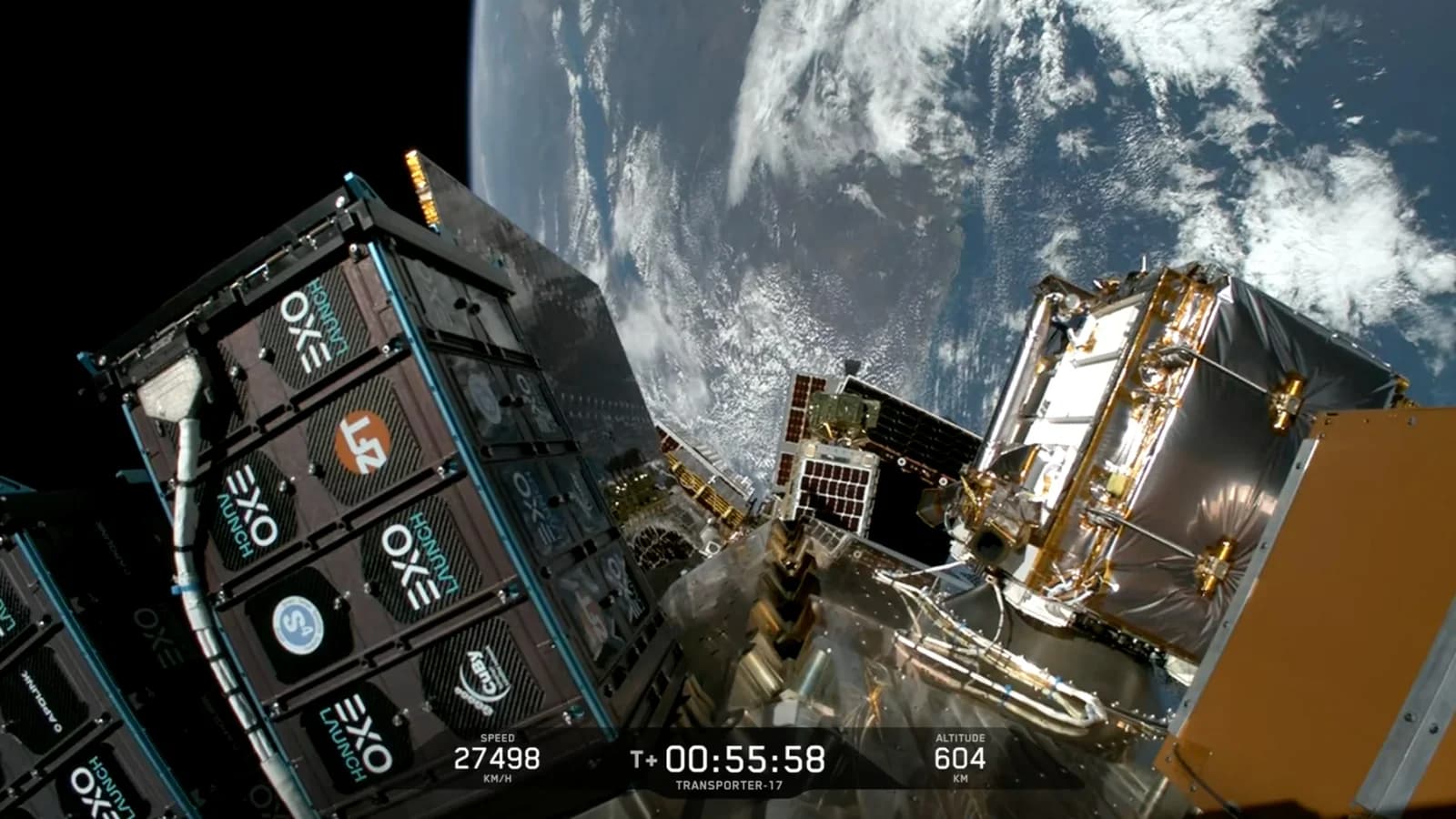
Reports that SpaceX has closed new rideshare bookings beyond late 2028 put Canadian payload schedules against domestic launch programmes targeting the same year. Washington then added three upstream controls: new leaders for military-space acquisition and intelligence satellites, a Senate stopgap that keeps Pentagon funding at fiscal 2026 levels and blocks new programme starts, and an industry consultation on contractor data and audit rules.
In this edition
Military space acquisition gets new integrating owners
The U.S. Senate confirmed leaders for Space Force acquisition and the National Reconnaissance Office, filling two roles that connect portfolio choices to a proposed US$71.1 billion military-space budget.
Two confirmed leaders now own important seams in U.S. military space. SpaceNews reports that the Senate confirmed Erich Hernandez-Baquero as assistant secretary of the Air Force for space acquisition and integration and Roger Mason as National Reconnaissance Office director. Hernandez-Baquero becomes the first Senate-confirmed space acquisition executive since January 2025 as the administration proposes US$71.1 billion for military space in fiscal 2027.
Appointments do not prove faster delivery or resolve programme overlap. They do establish accountable owners for portfolio integration, resilient architectures and acquisition decisions across organizations that Canadian space firms watch closely. Access rules, programme priorities and allied participation remain unsettled. The Canadian implication is to identify which U.S. portfolio owner can validate a contribution and what evidence that office expects before a partnership claim becomes a funded path.
What the public record says
SpaceNews reports Senate confirmation of Erich Hernandez-Baquero for space acquisition and integration and Roger Mason for the National Reconnaissance Office, alongside a proposed US$71.1 billion fiscal 2027 military-space budget.
Why this may matter
Named portfolio owners matter because they can align requirements, architectures and acquisition authority that otherwise leave allied suppliers navigating disconnected offices.
Evidence limits
The record does not establish their first decisions, programme reallocations, allied-access policy, acquisition timelines, architecture changes or how the proposed budget will survive Congress.
Practical next step
Identify the portfolio office relevant to each Canadian contribution and track its first architecture, acquisition and allied-participation decisions.
Original source (1)
- SpaceNews: Senate installs new chiefs for U.S. military space acquisition, spy satellites (opens in a new tab)Confirmation, role, budget and stated-priority paragraphs
Stopgap funding would hold back new defence starts
A U.S. Senate stopgap would fund government through December 11, hold Pentagon accounts at fiscal 2026 levels and prevent new programmes while omitting several requested defence exceptions.
A Senate stopgap would trade shutdown risk for acquisition delay. Breaking Defense reports that the chamber passed a continuing resolution 90-6-1 to fund government through December 11. For the Pentagon, the measure retains fiscal 2026 funding levels and bars new programme starts. It omits most requested defence exceptions, including authority connected to five multiyear munitions contracts and a proposed US$1 billion battleship programme.
The bill is not final because the House version differs and both chambers must reconcile it. The signal is therefore a live planning constraint, not enacted law. Suppliers can have validated technology and demand yet still wait for programme authority or production flexibility. Canadian teams exposed to U.S. schedules should identify which milestones depend on a new start, an anomaly or multiyear authority before assuming a fiscal 2027 contract date.
What the public record says
Breaking Defense reports Senate passage of a continuing resolution through December 11 that keeps Pentagon funding at fiscal 2026 levels, prohibits new programme starts and leaves out most requested defence anomalies.
Why this may matter
Budget continuity can preserve operations while blocking the authority that starts programmes or expands production, making legislative timing an upstream delivery gate.
Evidence limits
The House and Senate have not reconciled their bills; final duration, defence exceptions, account-level effects, programme delays and any multiyear authorities remain unsettled.
Practical next step
Map each U.S.-dependent opportunity to the new-start, anomaly or multiyear authority it needs and watch the House-Senate reconciliation before assigning a contract date.
Original source (1)
- Breaking Defense: Senate passes stopgap funding bill (opens in a new tab)Vote, duration, Pentagon funding level, new-start restriction and omitted-anomaly paragraphs
The Pentagon is asking which supplier controls add friction
The U.S. War Department opened an industry consultation on streamlining data and audit requirements tied to contractor business systems under its acquisition-transformation work.
Supplier-assurance rules are entering the acquisition reform agenda. In an official open letter, the U.S. War Department asked defence-industrial and acquisition stakeholders for input on data and audit requirements associated with contractor business systems. The request frames those controls as a potential source of delay and administrative burden while retaining the need for government oversight.
A consultation is not a rule change, and the public notice does not define which controls will be removed or how assurance will be preserved. It does show that supplier data environments, audit evidence and business-system readiness sit on the capability path. Canadian firms pursuing U.S. work should not assume simplification. They should identify the records and system controls that delay qualification, then provide evidence on where a narrower requirement could reduce friction without weakening accountability.
What the public record says
The War Department's August 7 open letter requests industry and acquisition-community input on streamlining data and audit requirements related to contractor business systems.
Why this may matter
Supplier qualification can become a delivery bottleneck when business-system evidence and audit requirements are disconnected from the risk or value of the work.
Evidence limits
The department has not identified the controls in scope, consultation deadline, decision process, replacement safeguards, implementation schedule or effect on Canadian and other foreign suppliers.
Practical next step
Identify the contractor-system control that creates the longest qualification delay and verify what narrower evidence could preserve oversight while reducing that delay.
Original source (1)
- U.S. War Department: War Department Releases Open Letter to Defense Industry Stakeholders (opens in a new tab)Official release summary and linked open-letter purpose
An $821 million data layer still needs measurable integration
New contract details put the War Data Platform's five-year ceiling at US$821.3 million and assign Accenture Federal Services to integrate more than 700 U.S. defence data sources.
New contract details put ownership and scale around the U.S. War Data Platform. DefenseScoop reports that Accenture Federal Services received a June 25 single-award task order with a US$821,270,264 ceiling, one base year and four options. The platform is intended to provide a core data layer across more than 700 sources. The disclosure moves the story beyond a general award announcement into an identifiable integration contract.
A ceiling is not expenditure, and source count is not interoperability. The report also records concern about outcome measures and transparency. Canadian defence-data programmes should treat the event as a benchmark for accountable integration: name the owner, interfaces, authoritative datasets, user decisions, service levels and measurable adoption. Without those measures, a large common layer can centralize technical activity without proving faster or better operational decisions.
What the public record says
DefenseScoop reports a US$821,270,264 ceiling, a one-year base plus four options and an Accenture Federal Services role integrating more than 700 data sources for the War Data Platform.
Why this may matter
A common data layer creates capability only when contract ownership, interfaces, authoritative sources, user decisions and performance measures are explicit.
Evidence limits
The public record does not disclose obligations, interface milestones, authoritative-source governance, user adoption, latency and quality targets, security boundaries or operational outcomes.
Practical next step
Compare the contract's first measurable integration outcomes with one Canadian defence-data programme and identify which interface, owner or user decision remains undefined.
Original source (1)
- DefenseScoop: Pentagon's War Data Platform integration plans draw scrutiny (opens in a new tab)Award date, ceiling, term, source-count and accountability paragraphs
Marines put enterprise AI against registered user problems
The U.S. Marine Corps scheduled an October 26-30 hackathon at the Naval Postgraduate School to build AI tools against registered requirements for immediate deployment or refinement.
Marine Corps organizers are connecting AI experimentation to named user demand. DefenseScoop and an official Marine administrative message describe an October 26-30 hackathon at the Naval Postgraduate School. One track will use the GenAI.mil platform, while an advanced-development track supports broader approaches. Teams are expected to work from registered requirements and produce tools suitable for immediate deployment or continued refinement.
The event does not establish safety, accreditation, user adoption or operational effect. It does establish a transition test that many innovation events lack: a known problem, an enterprise environment, an intended user and a post-event path. Canadian defence AI programmes can compare their own challenges against those conditions. A prototype should not count as progress unless a decision owner, approved data boundary, evaluation measure and deployment route are present before the event starts.
What the public record says
The Marine Corps scheduled a five-day Naval Postgraduate School AI hackathon with GenAI.mil and advanced-development tracks tied to registered requirements and intended deployment or refinement.
Why this may matter
AI adoption is more credible when experimentation begins with a registered user problem, an approved environment, a decision owner and a defined post-event route.
Evidence limits
The record does not publish the requirements, data sets, evaluation criteria, model safeguards, accreditation path, deployment authority, participating vendors or adopted outputs.
Practical next step
Compare one Canadian defence AI challenge against the hackathon's problem-owner, data, evaluation and deployment gates before funding another prototype event.
Original sources (2)
- DefenseScoop: Marine Corps tees up hackathon featuring GenAI.mil (opens in a new tab)Event dates, location, tracks, registered requirements and output paragraphs
- U.S. Marine Corps: Calling Message for Convening of a United States Marine Corps Artificial Intelligence Hackathon (opens in a new tab)Official administrative message linked from the specialist report
North Atlantic monitoring is consuming more ready-force time
The UK says its armed forces monitored Russian vessels for 21 days in July, a 25 percent increase in activations compared with the first seven months of 2025.
Royal Navy activations rose as ships and aircraft monitored Russian movements around UK waters. The Ministry of Defence says forces spent 21 days on monitoring activity in July, a 25 percent increase in activations against the first seven months of 2025. Wildcat and Merlin helicopters supported warships, while HMS Somerset completed a four-month North Atlantic deployment covering more than 24,000 nautical miles and surface and subsurface tasks.
The release does not explain every movement or provide comparable operating-hour and readiness data. It does show surveillance demand consuming ship, aviation, sensor and crew capacity across an allied North Atlantic theatre linked to Canada's approaches. The relevant benchmark is sustained availability, not a single intercept. Canadian planners should track how often monitoring demand activates forces and whether maintenance, crewing and sensor coverage can absorb the tempo without displacing other missions.
What the public record says
The UK Ministry of Defence reports 21 monitoring days in July, a 25 percent activation increase, aviation support and HMS Somerset's four-month, 24,000-nautical-mile North Atlantic deployment.
Why this may matter
Persistent maritime monitoring is a force-generation demand that links sensors, crews, aviation, maintenance and ready ships across the North Atlantic.
Evidence limits
The release does not provide vessel-by-vessel causes, total operating hours, comparable baseline days, readiness rates, maintenance effects, intelligence outcomes or Canadian tasking implications.
Practical next step
Track allied North Atlantic activation days, ready-ship and aircraft availability, and maintenance effects against Canada's own maritime surveillance coverage.
Original source (1)
- UK Ministry of Defence: UK armed forces step up monitoring of increased Russian activity in UK waters (opens in a new tab)July monitoring days, activation comparison, aviation support and HMS Somerset deployment paragraphs