
Canadian Defence Signals
Access and infrastructure are becoming readiness gates
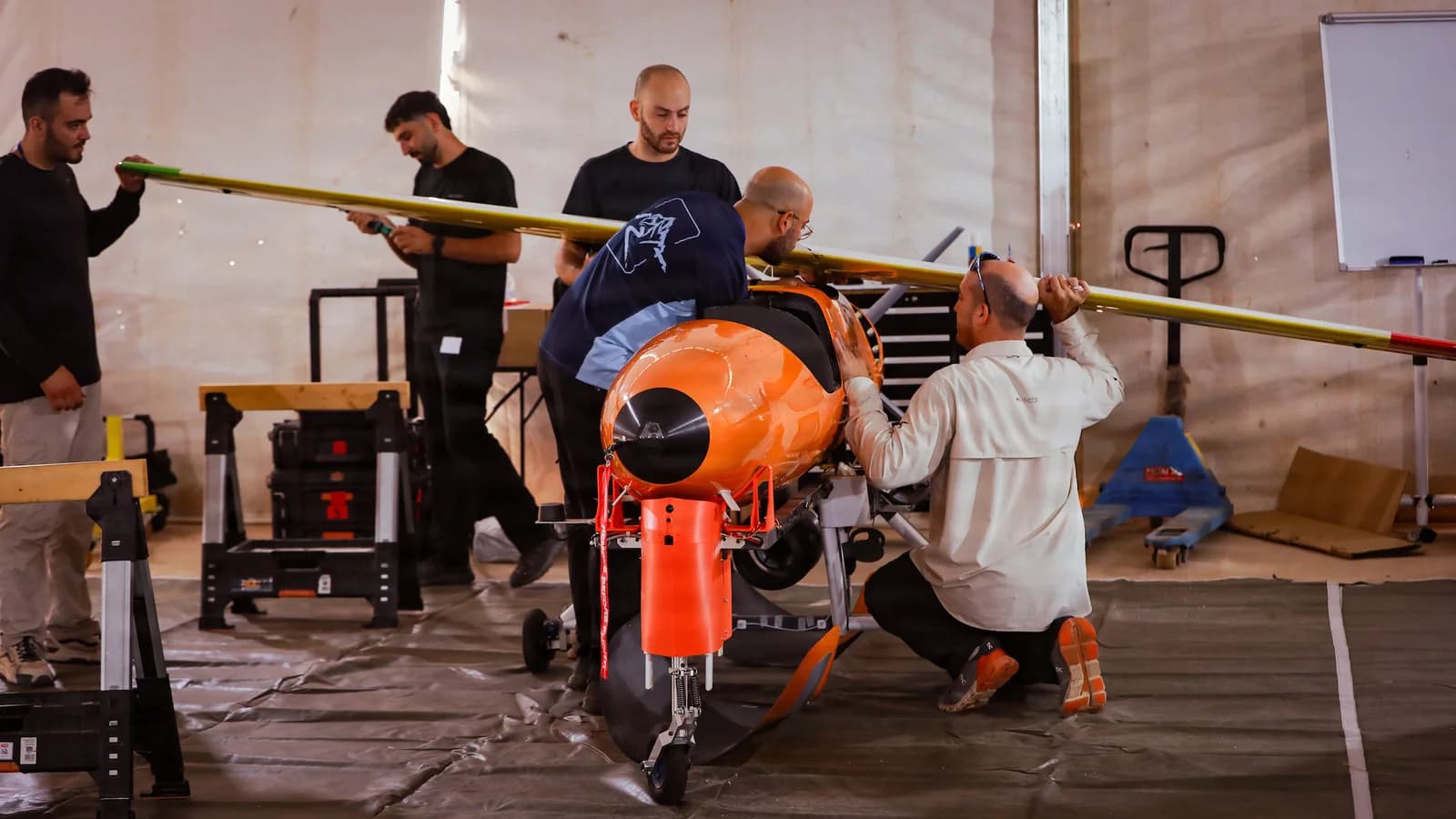
Editorial briefing snapshot
The Bottom Line
Army opened five test ranges through a new reservation service, while the Army National Guard placed enterprise network and cyber operations under a seven-year contract vehicle.
The common movement is from platform ambition to enabling access. Range time, representative test conditions, secure networks, qualified training space, conversion and maintenance capacity, satellite ground infrastructure, shipyard workforce and military housing now determine whether equipment can be tested, fielded and sustained. European and British investments show the same system-level logic at constellation and naval-base scale.
In context
Canada linked a small RPAS developer to defence-readiness support at Suffield, funded a tactical-pilot training centre and an autonomous cyber project in Northern Ontario, and conditionally transferred ten retired Hercules aircraft for domestic firefighting conversion. The U.S.
In this edition
Suffield access puts Canadian RPAS work beside defence users
DND used an Alberta industry visit to connect Landing Zones Canada with defence-readiness support and up to C$415,000 in NRC IRAP assistance for RPAS flight-control work.
Canada is pairing a small-company contribution with proximity to a defence test environment. During the Defence Minister's Alberta visit, DND highlighted Landing Zones Canada alongside work at DRDC Suffield and said the company will receive advisory services and up to C$415,000 through NRC IRAP to advance readiness and RPAS flight-control software. The visit also brought QinetiQ, Amtech Aeronautical and UVAD Technologies into the Suffield discussion.
The useful signal is the access model: technical support, a representative range and contact with defence researchers can turn a software claim into testable evidence. The release does not create a CAF order or publish an experiment plan. Any transition case still needs a named user problem, approved airspace, measurable flight evidence and a decision owner.
What the public record says
DND says Landing Zones Canada will receive advisory services and up to C$415,000 through NRC IRAP for defence-readiness and RPAS flight-control work, in the context of the minister's visit to DRDC Suffield.
Why this may matter
The defensible opportunity is access to a government test-and-user environment that can convert flight-control development into evidence against an operational question.
Evidence limits
The release does not publish the defence experiment, security and airspace conditions, technical milestones, data rights, CAF sponsor, follow-on procurement route or production requirement.
Practical next step
Identify the exact Suffield test question and verify the flight, safety and user evidence Landing Zones must produce before treating the support as a transition path.
Original source (1)
- Department of National Defence: Minister McGuinty concludes Alberta visit focused on innovation and strengthening Canada’s defence capabilities (opens in a new tab)DRDC Suffield, Canadian-industry and Landing Zones Canada funding paragraphs
Army range access turns test time into an accountable gate
The U.S. Army opened a reservation service for four domestic ranges and AMTEC in Morocco, with a public goal of placing mature industry projects on a range within 30 days.
The U.S. Army is treating range access as a delivery constraint. Its new portal covers Camp Grayling, Camp Shelby, Dugway Proving Ground, West Cibola at Yuma and AMTEC in Morocco, with a concierge team intended to match mature, industry-funded projects to available windows. Army Secretary Dan Driscoll set a public goal of access within 30 days, compared with reported waits of 12 to 18 months.
Drones, counter-drone systems, missiles and interceptors are the initial focus, and Camp Grayling is scheduled to host a recurring electromagnetic-environment test. Faster booking does not establish technical maturity or a production award. It does create a measurable access promise that Canada can compare with its own Defence Drone Initiative and range capacity.
What the public record says
DefenseScoop reports that the Army opened five ranges and a concierge reservation portal, with a stated goal of providing a suitable range window within 30 days of a qualified request.
Why this may matter
Test infrastructure becomes an industrial advantage when access time, environmental realism and the path from range evidence to an acquisition decision are explicit.
Evidence limits
The public record does not define acceptance criteria, fees, liability, foreign-company access, range throughput, security rules, test-data ownership, production commitments or actual 30-day performance.
Practical next step
Compare the five-range service with one Canadian test path and identify the access delay, environmental gap and decision handoff that most constrain fielding.
Original sources (2)
- DefenseScoop: Army attempting to cut tech-testing wait times down to 30 days through base access, scheduling website (opens in a new tab)Range inventory, 30-day access goal, concierge process and electromagnetic-test paragraphs
- U.S. Army: Army Range Reservation (opens in a new tab)Live range-reservation service and listed test locations
Northern Ontario funding builds two different readiness enablers
FedNor committed C$2.7 million in repayable RDII support for an allied fighter-lead-in training centre and the continued development of Skadi's Frostbow cyber system.
Northern Ontario is receiving two distinct pieces of enabling capacity under one Regional Defence Investment Initiative announcement. ITPS Canada will receive C$1.5 million to renovate and equip a 21,000-square-foot hangar at North Bay's Jack Garland Airport for Fighter Lead-In Training for NATO and allied pilots. Skadi Cyber Defense will receive C$1,200,909 to continue development and commercialization of its Frostbow AI cyber-defence system.
The training project has a defined facility, user class and delivery activity; the cyber project remains a development claim backed by repayable support, not validated operational performance. The combined event shows how regional policy is funding both physical training throughput and software maturation. Each project still requires separate evidence of demand, acceptance and repeatable delivery.
What the public record says
FedNor announced C$1.5 million for ITPS Canada's 21,000-square-foot tactical training hangar and C$1,200,909 for Skadi Cyber Defense's Frostbow development and commercialization work.
Why this may matter
Regional defence funding is most decision-useful when facility throughput and software performance are measured separately instead of being bundled into one capacity claim.
Evidence limits
The release does not publish training contracts, annual student throughput, aircraft access, Frostbow test results, cyber accreditation, military customers, procurement commitments or commercial revenue.
Practical next step
Verify the training centre's contracted user pipeline and inspect Frostbow's independent test and accreditation evidence before assigning either project operational-readiness value.
Original source (1)
- Federal Economic Development Agency for Northern Ontario: Government of Canada invests $2.7 million to strengthen Northeastern Ontario’s defence sector (opens in a new tab)ITPS and Skadi project, funding, facility and RDII paragraphs
Retired Hercules aircraft enter a domestic conversion path
Canada conditionally agreed to sell ten retired CC-130H aircraft to Coulson Aviation Canada for conversion, maintenance and operation as aerial-firefighting aircraft.
A retired military fleet is being treated as an industrial input rather than scrap. Public Services and Procurement Canada says ten CC-130H Hercules aircraft are conditionally assigned to Coulson Aviation Canada, which intends to convert, maintain and operate them for aerial firefighting. The RCAF retired twelve H-model aircraft in January; the remaining two are designated for museum or static-display use.
The decision preserves an airframe, engineering and maintenance workload inside a Canadian operator, but the outcome remains conditional on final contract arrangements and Transport Canada civil certification. Sale price, conversion schedule and available firefighting capacity are not public. The useful defence-industrial question is whether Canada can retain transferable heavy-aircraft skills while meeting a separate civil protection need.
What the public record says
PSPC says ten retired CC-130H Hercules aircraft are conditionally sold to Coulson Aviation Canada for aerial-firefighting conversion, maintenance and operation, subject to contract completion and civil certification.
Why this may matter
Asset disposition creates domestic capacity only when certification, conversion engineering, sustainment staffing and operating demand turn stored aircraft into reliable service.
Evidence limits
The government has not disclosed the sale price, individual airframe condition, conversion design, certification timeline, investment requirement, delivery schedule, operating customers or final fleet availability.
Practical next step
Track contract closure and Transport Canada certification, then verify how much conversion and sustainment work remains in Canada and what capacity enters service.
Original source (1)
- Public Services and Procurement Canada: Government of Canada conditionally sells retired CC-130H Hercules aircraft to protect Canadians by strengthening Canada's private sector aerial firefighting capacity (opens in a new tab)Conditional sale, aircraft disposition, intended use and certification paragraphs
IRIS² moves from constellation planning into deployment
The European Commission and SpaceRISE signed an implementation agreement that adds 66 low-Earth-orbit satellites, fixes a 348-satellite architecture and targets first launches in 2029.
Europe has converted its secure-connectivity ambition into a more specific deployment baseline. The European Commission and SpaceRISE concluded negotiations on IRIS², adding 66 low-Earth-orbit satellites and bringing the planned constellation to 348 spacecraft: 330 in low Earth orbit and 18 in medium Earth orbit. The agreement sets the next work around detailed design, satellite and secure-ground-infrastructure construction, launch procurement and service deployment from 2029.
The Commission says the expansion raises secure governmental capacity by 60 percent inside the EU and 54 percent globally. Those are programme projections, not delivered service. For Canada, the benchmark is the complete dependency chain: spacecraft, launch, protected ground segment, authorized users and sustained operations must advance together before sovereign connectivity becomes available capacity.
What the public record says
The Commission says the signed implementation agreement adds 66 LEO satellites, establishes a 348-satellite IRIS² architecture and creates concrete steps toward first launches and services from 2029.
Why this may matter
Secure space connectivity becomes operational only when constellation design, ground infrastructure, launch services, user authorization and service rollout are managed as one system.
Evidence limits
The release does not publish the final target price, satellite delivery schedule, launch providers, detailed ground-site allocation, service-level measures, cybersecurity evidence or realized capacity gains.
Practical next step
Map Canada's priority secure-connectivity requirement against the same dependency chain and identify which ground, terminal, access or assurance gate remains unowned.
Original source (1)
- European Commission: Commission accelerates IRIS² deployment with enhanced security and expanded satellites network (opens in a new tab)Implementation agreement, architecture, capacity, infrastructure and 2029 deployment sections
Rosyth links fleet output to workforce, bases and housing
The UK tied Type 31 work at Rosyth to 2,500 skilled jobs and 400 apprenticeships while confirming major naval-base and military-housing investment as readiness infrastructure.
The UK is presenting naval readiness as a connected production-and-people system. Its Defence Secretary's Rosyth visit linked the Type 31 programme to 2,500 skilled jobs across Scotland and the wider supply chain, including 400 apprenticeships. The same release points to £26 billion for critical naval-base modernization, including £15.1 billion for HMNB Clyde, and £9 billion over a decade to upgrade, rebuild or modernize 40,000 military homes.
These figures combine existing programme commitments rather than announcing a new ship order. Their value is the integrated readiness frame: shipyard throughput depends on trained labour, maintenance infrastructure, waterfront capacity, accommodation and retention. Canadian naval planning can use that frame to test whether infrastructure and workforce measures are attached to fleet delivery rather than tracked as separate policy totals.
What the public record says
The UK Ministry of Defence connects Type 31's 2,500 jobs and 400 apprenticeships with confirmed naval-base investment and a decade-long programme covering 40,000 military homes.
Why this may matter
Fleet capacity is constrained by the weakest supporting system, so yard labour, maintenance throughput, waterfront infrastructure and service-family conditions belong in one readiness assessment.
Evidence limits
The release does not provide Type 31 productivity measures, apprenticeship completion and retention, base-project schedules, housing delivery pace, cost variance or direct effects on fleet availability.
Practical next step
Compare one Canadian fleet programme against workforce, maintenance, waterfront and housing measures, then identify the enabling constraint with no funded delivery metric.
Original source (1)
- UK Ministry of Defence: Scotland is powering Britain's future defence, says Defence Secretary on first visit to Rosyth Shipyard and forces housing (opens in a new tab)Type 31 jobs and apprenticeships, housing renewal and HMNB Clyde investment paragraphs
National Guard network readiness gets one operating contract
GDIT received a US$1.3 billion Army National Guard enterprise network and cybersecurity contract with a one-year base and six one-year options.
The U.S. Army National Guard is consolidating a broad network-readiness workload under the Enterprise Network Operations and Cybersecurity Support contract. Breaking Defense reports a US$1.3 billion award to GDIT with a one-year base and six one-year options. The work covers classified and unclassified network operations and defence, new enterprise IT environments, operations centres, workforce support, technology provisioning and on-site services.
The award makes continuity and cyber defence part of mission readiness rather than a back-office service, but the announced ceiling does not show annual obligations or performance. Other participating federal partners are unnamed. Canadian reserve and domestic-response networks should be compared against the same operating model: accountable owner, secure service boundary, field support, interoperability measures and a tested continuity standard.
What the public record says
Breaking Defense reports that GDIT received the US$1.3 billion ENOCSS contract to operate and defend Army National Guard networks and support enterprise IT modernization over up to seven years.
Why this may matter
Distributed force readiness depends on a continuously defended network service with clear operating ownership, field support and interoperability evidence, not only new applications.
Evidence limits
The public announcement does not disclose obligated value, task-order schedule, other federal partners, service-level targets, zero-trust milestones, staffing, incumbent transition or measured readiness gains.
Practical next step
Inspect the contract's first performance measures and compare them with Canadian reserve-network ownership, field-support coverage and continuity testing.
Original source (1)
- Breaking Defense: GDIT scores $1.3 billion National Guard IT contract (opens in a new tab)Award value, term, network operations and enterprise-support paragraphs