
Canadian Defence Signals
The hidden bottlenecks behind defence delivery
Editorial briefing snapshot
The Bottom Line
Judge momentum by whether design maturity, facilities, people and maintenance capacity are advancing together. Name the dependency, assign an owner and connect it to an acceptance milestone. For suppliers, solving one of those constraints may be a more durable opportunity than attaching a product to the latest announcement.
In context
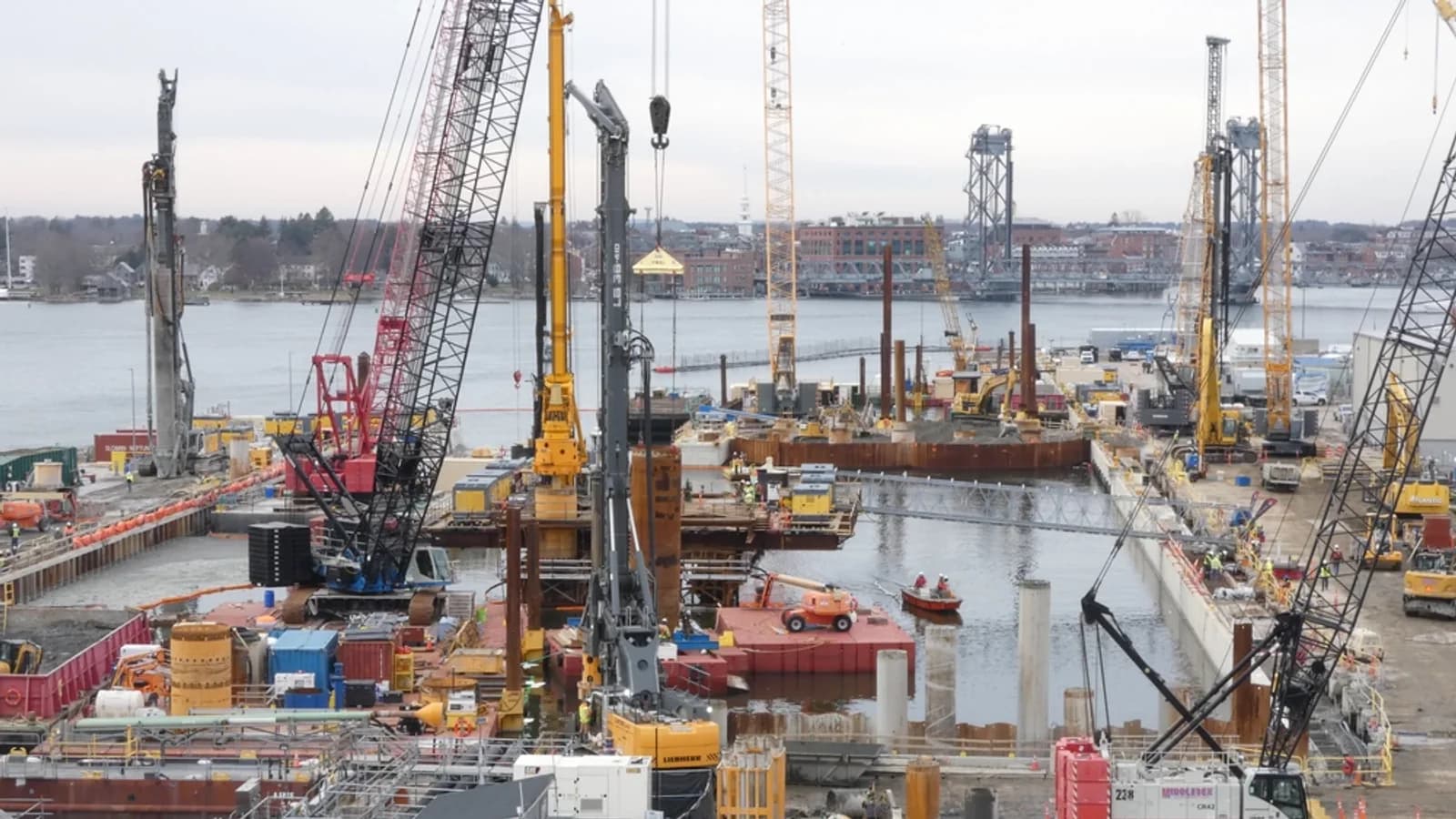
Defence ambition can accelerate while the ability to deliver and sustain it falls behind. The warning is visible in two allied programs: U.S. shipyard modernization that GAO says could stretch across another half-century, and Dutch frigates delayed because the original design could not meet its requirements with adequate stability. Design, facilities and maintenance capacity belong at the centre of the delivery conversation.
This is not an argument for accepting slow progress. It is an argument for directing urgency at the work that determines usable capability. A dock needs the right utilities, equipment and skilled workforce. A ship needs space and weight margins that survive integration. A new aircraft needs maintainers, training and a support system ready to keep it available. If these dependencies arrive late, a platform delivery date can conceal the real readiness problem.
There is constructive evidence too. NAVFAC reports that testing and modelling helped accelerate a completed dry-dock retrofit. Friday’s U.S. contract bulletin also records fully obligated microgrid awards, giving the support-infrastructure theme a concrete funding example. Canada’s GlobalEye negotiations create an opportunity to define the support package early. Counter-drone trials, AI implementation partnerships and research into deployable infrastructure address other parts of the same challenge.
For Canadian industry, the opportunity is substantial: help close the gap between acquiring equipment and keeping it operational. The companies that make integration, maintenance, testing and production more dependable can be central to defence renewal—even when their work is less visible than the platform announcement.
In this edition
Maintenance capacity is strategic capacity: the U.S. shipyard warning
A fleet can outgrow the infrastructure that sustains it; GAO’s findings make that risk impossible to treat as a minor support issue.
The U.S. Government Accountability Office’s new shipyard report concludes that currently planned modernization work will exceed US$200 billion and could take more than 50 additional years. The original 2018 outline envisaged roughly US$21 billion over 20 years, but treating the difference as a simple like-for-like overrun would obscure the change in scope and planning maturity.
The full report bases its assessment on Navy funding guidance, planned projects and cost analyses available for three of four yards as of April 2026. The work now includes more extensive dry-dock, seismic, utility and other supporting requirements. GAO also identifies weaknesses in consolidated reporting and responsibility for managing program risks.
The picture includes delivery as well as delay. In an August 27 completion report, NAVFAC says Puget Sound’s Dry Dock 4 retrofit benefited from geotechnical testing and modelling that reduced required anchors from roughly 1,000 to 600. It reports the original scope running five months ahead of schedule, with additional work bringing the contract to US$517 million. This is the Navy’s project account, not GAO’s independent assessment of that outcome. It illustrates a practical route to velocity: resolve the engineering uncertainty, then execute against a clearer scope.
The Canadian relevance is a question for fleet planning: are dock capacity, utilities, specialist trades, maintenance equipment and project sequencing being developed alongside the ships they must support? A sustainment plan needs more than a future budget line. It needs usable facilities and a schedule that keeps maintenance possible while construction occurs.
This is an allied warning, not a Canadian cost forecast. Its value is showing how an apparently secondary infrastructure problem can become a multi-decade constraint on operational availability.
For industry, this makes facilities engineering, inspection, utilities, tooling and maintenance planning part of the strategic opportunity. The valuable offer is specific: reduce a bottleneck, demonstrate the improvement and show how operations continue while the work is done. Announcing more platforms without addressing those dependencies can increase the burden on an already constrained support system.
What remains open
The assessment is based on the planning record examined by GAO; future scope, funding and implementation decisions can change the eventual cost and schedule.
What comes next
For a fleet or yard project, ask for the linked facilities schedule, workforce assumptions and maintenance-continuity plan alongside platform delivery dates.
Evidence and assessment for Maintenance capacity is strategic capacity: the U.S. shipyard warning
What the sources establish
GAO projects more than US$200 billion and potentially over 50 additional years for the planned U.S. naval shipyard work, and recommends stronger oversight.
True North Map assessment
TNM assessment: dock capacity, utilities, specialist trades and maintenance continuity are part of fleet capability—and concrete markets for firms that can remove delivery constraints.
Original sources (3)
- U.S. Government Accountability Office: Naval shipyards: improved oversight needed for infrastructure optimization (opens in a new tab)Direct record · GAO-26-107830 highlights and recommendations
- U.S. Government Accountability Office: GAO-26-107830: full report on naval shipyard modernization (opens in a new tab)Direct record · SIOP costs and schedule; April 2026 planning basis; oversight recommendations
- NAVFAC Atlantic: U.S. Navy completes Dry Dock 4 seismic modernization at Puget Sound (opens in a new tab)Attributed statement · Browser-captured article excerpt: completion, expanded contract scope and anchor reduction
A Dutch frigate delay puts design maturity back into the delivery argument
The ministry’s account shows why yard capacity alone cannot resolve a delay caused by a design that needs to change.
Xavier Vavasseur’s Naval News reporting draws attention to the Dutch–Belgian anti-submarine warfare frigate program and Belgium’s consideration of alternatives. The underlying September 18 Dutch defence ministry letter provides the decisive explanation: the technical requirements did not fit the original design with adequate stability. Necessary changes extend the first Dutch delivery from 2030 to 2033.
The ministry also says the ships must retain room and weight for future systems. That reserve is not decorative ambition; it affects how a vessel can adapt over its service life. Detailed engineering is proceeding, while the possibility of using capacity freed by Germany’s F126 decision remains under examination.
For Canadian suppliers and program teams, the lesson is to distinguish additional production capacity from a mature design ready to use it. Space, weight, power and integration margins should survive changes in the equipment list. TNM’s assessment is that protecting those margins and resolving interfaces early can be an important form of delivery discipline.
Belgian options remain part of the reporting, not a confirmed withdrawal. The Dutch ministry expects to provide further information on decision-making in the fourth quarter.
A relevant comparison comes from independent maritime analyst Dr Lee Willett’s September 21 report on U.S. submarine production. His account of May conference remarks describes a strategy of limiting design changes, completing more module outfitting before assembly, expanding the supplier base and designing future boats for producibility. It is earlier policy context, not a new production result. Together, the cases expose a useful distinction: settle the design enough to build efficiently, while protecting the margins needed to keep the platform useful.
What remains open
The reviewed record does not establish a Belgian exit or a decision allocating freed shipyard capacity to ASWF.
What comes next
Read the forthcoming fourth-quarter decision update for a settled design, delivery sequence and bilateral commitment before treating possible capacity as recovered schedule.
Evidence and assessment for A Dutch frigate delay puts design maturity back into the delivery argument
What the sources establish
The Dutch ministry attributes the approximately three-year delay to design complexity and stability changes; first delivery is now planned for 2033.
True North Map assessment
TNM assessment: industrial capacity and design maturity are separate constraints, and both must be addressed to accelerate delivery.
Original sources (3)
- Netherlands Ministry of Defence / Tweede Kamer: Status of the M-frigate replacement project (ASWF), 18 September 2026 (opens in a new tab)Direct record · Ministerial letter MINDEF20260060872: ASWF-project and developments since technical briefing
- Naval News: Dutch ASWF frigate program faces further delays as Belgium evaluates options (opens in a new tab)Original reporting · Xavier Vavasseur reporting: Dutch letter and Belgian options
- Naval News: US Navy’s Sub Tsar unveils four-pillar plan to accelerate submarine deliveries (opens in a new tab)Original reporting · Dr Lee Willett reporting on May 2026 conference remarks: four-pillar strategy
Microgrid awards show support infrastructure moving into funded work
Two fully obligated microgrid awards provide a concrete example of investment in enabling infrastructure; a separate construction ceiling measures a different stage.
Support infrastructure is also appearing in funded awards. The September 25 U.S. contract bulletin records US$131.9 million for J & J Contractors to build a power-generation microgrid in Bourne, Massachusetts, and US$99.7 million for Energy Resilience Partners to construct a microgrid and combined heat-and-power system in Independence, Missouri. The notice says the full amounts were obligated at award.
The same bulletin announces a separate NAVFAC Northwest construction framework with a combined ceiling of US$1 billion. Its 11 awardees receive US$5,000 each initially. That ceiling describes possible ordered work; it is not a billion dollars already committed to construction.
Together, these entries make the featured theme tangible. Reliable power, facilities and construction services have distinct buyers, budgets and delivery requirements. The opportunity is not confined to the manufacturer of the aircraft, ship or vehicle.
For Canadian firms, these are allied demand signals rather than evidence of open access to the listed contracts. TNM’s inference is that power systems, controls, commissioning and support expertise deserve attention in Canada’s own readiness planning. The useful commercial question is which operational constraint a project removes, and how the buyer will measure that result.
What remains open
The notices do not establish operational completion, detailed resilience performance or Canadian supplier participation.
What comes next
Use actual task orders, commissioning milestones and performance requirements to assess delivery; do not treat framework ceilings as realized expenditure.
Evidence and assessment for Microgrid awards show support infrastructure moving into funded work
What the sources establish
The bulletin records approximately US$231.6 million obligated across two microgrid awards, plus a separate construction framework with a US$1 billion ceiling.
True North Map assessment
TNM assessment: power reliability, controls and construction capacity are part of the industrial work needed to make defence facilities dependable.
Original source (1)
- U.S. Department of War: Contracts for September 25, 2026 (opens in a new tab)Direct record · NAVY construction framework; ARMY J & J Contractors and Energy Resilience Partners entries
GlobalEye moves into negotiations over the aircraft—and the Canadian work around it

A six-aircraft term sheet makes the opportunity more concrete; the industrial opportunity will be decided in the package negotiated around it.
Canada’s September 25 GlobalEye announcement advances a potential acquisition of six airborne early warning and control aircraft, with associated systems, training and support. The non-binding term sheet follows Saab’s selection as preferred supplier in May. It gives negotiations a defined scope without yet establishing a purchase contract, price or delivery schedule.
For Canadian industry, the aircraft count is only the start of the story. Mission-system integration, training, sustainment and upgrades determine how much expertise remains available in Canada throughout the fleet’s working life. The government identifies industrial participation across those areas, while Saab says configuration and industrial arrangements remain under negotiation. That makes this a moment to distinguish prospective work from work actually allocated to Canadian suppliers.
There is already a relevant industrial relationship: Saab and CAE announced a training and simulation teaming agreement in May. CAE’s Canadian profile provides context for that role. The earlier agreement should not be counted again as a new award, but it shows that part of the support ecosystem is being assembled before the main procurement closes.
TNM’s assessment: the next useful disclosure is a division of responsibilities. Who integrates the mission system, holds the technical knowledge, trains crews and maintainers, and sustains availability? Those answers will reveal whether this purchase creates a durable Canadian capability around the platform.
What remains open
The sources do not disclose a binding price, delivery schedule or allocation of Canadian work packages.
What comes next
Suppliers should map their offering to a specific integration or support requirement and seek the responsible prime’s qualification route as the package takes shape.
Evidence and assessment for GlobalEye moves into negotiations over the aircraft—and the Canadian work around it
What the sources establish
Canada signed a non-binding term sheet for a potential six-aircraft GlobalEye package; Saab says configuration, industrial participation and execution remain subjects of negotiation.
True North Map assessment
TNM assessment: integration, simulation and through-life support could provide a wider Canadian industrial opportunity than the airframe purchase alone.
Original sources (3)
- Defence Investment Agency: Canada takes the next step toward an airborne early warning and control capability (opens in a new tab)Direct record · News release: term sheet, proposed scope and industrial benefits
- Saab: Canada takes next step towards future GlobalEye capability (opens in a new tab)Attributed statement · Press release: negotiations and downloadable GlobalEye image
- Saab: Saab and CAE expand strategic partnership in support of Canada’s AEW&C programme (opens in a new tab)Attributed statement · May 27 release: training and simulation teaming agreement
Suffield’s counter-drone sandbox brings the discussion back to test conditions

The useful output from a counter-drone demonstration is a defined performance envelope, including the conditions in which it breaks down.
National Defence’s new media advisory puts the ongoing CUAS Sandbox in view, with an October 6 demonstration at CFB Suffield. The applicant guide places the wider activity between September 14 and October 9; this is not a newly opened application call or a release of test results.
The underlying challenge and participant list are more useful than the event notice alone. They span RF sensing, acoustic detection, electro-optical systems and interceptors, including Agile Electromagnetics’ Hydra system. TNM’s Agile Electromagnetics profile and related Hydra capability record provide company and technology context; the listed test configuration should still be treated on its own terms.
The test-plan template asks participants to define achievable objectives and allocate time for progressively demanding activity. Operator workload, multiple threats and optional night testing matter because a successful demonstration under one set of conditions does not establish reliable coverage across a base, moving vehicle or ship.
That is the ecosystem opportunity: not just another detector, but integration, instrumentation, realistic targets, safety engineering, training and usable performance evidence. Buyers need to know detection range and false-alarm behaviour in context, how the operator is alerted, and what happens when sensors or communications degrade. Those are questions for the results and follow-on trials, not performance claims about the participating companies today.
What remains open
The reviewed notices do not provide comparative results, final participant performance or subsequent purchasing decisions.
What comes next
When results emerge, ask for the tested threat, environment, operator workload and failure conditions before comparing headline detection or defeat claims.
Evidence and assessment for Suffield’s counter-drone sandbox brings the discussion back to test conditions
What the sources establish
DND identifies an ongoing September 14–October 9 sandbox and an October 6 media demonstration; its public material sets out test planning and participating technologies.
True North Map assessment
TNM assessment: field evidence and integration support can separate a promising component from a counter-drone capability operators can use.
Original sources (4)
- National Defence: Counter Uncrewed Aerial Systems Sandbox 2026 (opens in a new tab)Direct record · Media advisory: October 6 demonstration and participating innovators
- National Defence: Counter Uncrewed Aerial Systems Sandbox 2026 applicant guide (opens in a new tab)Direct recordCover and section on the sandbox period
- National Defence: Counter uncrewed aerial systems sandbox 2026: challenge and participants (opens in a new tab)Direct recordChallenge scenarios and Participating Innovators table
- National Defence: 2026 CUAS sandbox test plan template (opens in a new tab)Direct recordTest objectives, proposed schedule and night-testing guidance
Canada–Germany cooperation gets a practical information-security foundation
A classified-information framework addresses a real barrier to industrial cooperation, but it does not itself award work or qualify a supplier.
The General Security of Information Agreement signed on September 25 provides a framework for Canada and Germany to exchange and protect classified information. Ottawa explicitly connects it to sensitive defence collaboration and the Canadian Patrol Submarine Project.
Its significance is procedural and commercial. A supplier cannot contribute meaningfully to some integration and sustainment work without a lawful way to receive the technical information involved. This agreement helps establish the government-to-government foundation on which that work can proceed.
TNM’s inference is that firms with relevant engineering, secure facilities and support expertise should treat information protection as part of market readiness. The agreement does not establish that every Canadian company can receive classified German material, bypass export controls or participate in every procurement. Nor does it select a submarine. Opportunity still depends on the specific program, sponsor, disclosure permissions and contractual security requirements.
What remains open
The release does not identify company-specific approvals, released technical data or new industrial awards.
What comes next
A prospective supplier should identify the sponsoring contractor and the security requirements for the particular work package before investing against presumed access.
Evidence and assessment for Canada–Germany cooperation gets a practical information-security foundation
What the sources establish
Canada and Germany signed an agreement governing secure classified-information exchange; the release identifies defence procurement and industrial collaboration as beneficiaries.
True North Map assessment
TNM assessment: security readiness can become a prerequisite for joining technical conversations before work packages are awarded.
Original source (1)
- Public Services and Procurement Canada: Canada and Germany sign General Security of Information Agreement (opens in a new tab)Direct record · Release: classified exchange, industrial collaboration and submarine procurement
Mitacs gives smaller firms an AI implementation route—with a contribution and a clock

The C$162 million announcement matters most when translated into a defined project, an academic partner and an affordable contribution.
Ottawa has announced up to C$162 million over five years for 10,000 co-funded AI-related work placements through Mitacs, beginning in 2026–27. The program addresses an adoption problem: many smaller firms need people who can turn an available technique into a working process.
The AI Advantage terms distinguish implementation through ADOPT from research and innovation through AI+X. Listed award options run from C$10,000 to C$25,000, with corresponding partner contributions of C$5,000 to C$12,500. For-profit contributions must come from private-sector funds. Review normally takes six to eight weeks, and work cannot begin simply because an application was submitted.
For a defence supplier, a useful project might address inspection, maintenance information or production planning. Those are TNM examples, not a promise of eligibility or access to controlled data. A project owner still needs a measurable operational problem, an appropriate research partner and a plan for retaining the result after the placement ends. The best outcome is a process the company can operate and maintain, rather than a demonstration that leaves with the intern.
What remains open
A particular project’s eligibility, award level, data restrictions and institutional arrangements require case-specific assessment.
What comes next
Scope one measurable workflow with a Mitacs advisor and academic partner; budget the contribution and approval period before promising a start date.
Evidence and assessment for Mitacs gives smaller firms an AI implementation route—with a contribution and a clock
What the sources establish
The federal commitment supports 10,000 placements; Mitacs publishes co-funding options, a private-funds requirement for for-profit partners and an approval process.
True North Map assessment
TNM assessment: focused implementation projects could help smaller suppliers improve delivery without first building a large internal AI team.
Original sources (2)
- Innovation, Science and Economic Development Canada: Government of Canada invests in 10,000 AI-related work placements (opens in a new tab)Direct record · Funding commitment and AI Advantage program description
- Mitacs: Mitacs AI Advantage: streams, funding and application requirements (opens in a new tab)Direct recordFunding, partner contributions, application review and project-start rules
Cohere and Accenture put implementation capacity beside sovereign AI

The partnership addresses the work of embedding AI into an organization; its value will be demonstrated by actual deployments and operating controls.
Cohere and Accenture say they will combine Cohere’s models and North agentic platform with Accenture’s implementation expertise. Canadian Defence Review’s September 25 account carries statements from both companies and identifies Canadian enterprise, government, defence and critical infrastructure as intended markets.
This is distinct from the Bell–Cohere cybersecurity development covered earlier in the week. Here, the proposed contribution is organizational implementation: connecting a platform to workflows, governance and the people responsible for using it.
TNM’s assessment is that this is where much of the adoption work will sit. A useful maintenance or decision-support application needs controlled access, reliable retrieval, an audit trail and a human route for correcting errors. A sovereignty claim should be made concrete through deployment location, administrator access, data handling and contractual responsibilities. The partnership announcement identifies intent and a route to market; it does not establish those arrangements for a named defence customer.
What remains open
Customer-specific hosting, accreditation, commercial scope and measured operational outcomes are not disclosed in the announcement.
What comes next
Ask for a concrete reference architecture and acceptance criteria tied to a real workflow, including who can access data and how errors reach a responsible human.
Evidence and assessment for Cohere and Accenture put implementation capacity beside sovereign AI
What the sources establish
Cohere and Accenture state that North will be integrated into Accenture environments and offerings; the article names no completed defence deployment.
True North Map assessment
TNM assessment: integration and change-management capacity could help customers move from evaluation to sustained use.
Original source (1)
- Canadian Defence Review: Cohere and Accenture partner to deliver sovereign AI for defence (opens in a new tab)Attributed statement · Article carrying statements from Chris McPhee and Doug Russell
Britain is treating operational data as part of the autonomy supply chain
Access to representative operational data can shape an autonomy program as much as access to hardware.
The UK Ministry of Defence is inviting British companies to propose autonomy research using Ukrainian operational data. It plans to select up to 12 companies. The announced research areas cover recognition, distributed decisions, adaptive mission execution and information fusion, including coordination under constrained communications.
For Canadian developers, the important signal is the development model, not an assumed invitation to this competition. Operational data, realistic evaluation and a user with an urgent problem are being connected early. That could expose weaknesses that remain invisible in a clean demonstration environment.
There is also a difficult engineering question: performance on yesterday’s data must transfer to changing threats, sensors and conditions. TNM’s view is that Canadian programs should build rights to collect, label, evaluate and reuse appropriate test data into trials from the outset. A vehicle or sensor purchase alone will not create that learning process. The British announcement is a research pathway, not evidence that resilient swarming capability has already been delivered.
What remains open
Selection results, data-access terms and demonstrated system performance are not established by the release; Canadian eligibility cannot be presumed.
What comes next
Canadian teams should identify the specific failure condition their own trial data must reproduce, along with the permissions needed to retain and evaluate it.
Evidence and assessment for Britain is treating operational data as part of the autonomy supply chain
What the sources establish
The UK describes a competition for British companies using Ukrainian operational data and identifies four autonomy research areas.
True North Map assessment
TNM assessment: representative datasets and access to operational feedback are strategic inputs for companies developing deployable autonomy.
Original source (1)
- UK Ministry of Defence: British companies to access Ukraine data to develop AI drone swarms (opens in a new tab)Direct record · Competition announcement and four research areas
Marshall and three universities connect research to deployable infrastructure
A new alliance offers a practical route between university work and the shelters, workshops and medical facilities operations depend on.
Marshall’s September 23 announcement describes a memorandum with the University of New Brunswick, Cardiff University and the University of South Wales establishing the Marshall Land Research Alliance. Planned cooperation includes joint research and exchanges connected to deployable infrastructure.
The operational relevance extends beyond the most visible combat systems. Maintenance facilities, command spaces and medical infrastructure influence how long a force can remain effective away from its home base. Those needs also overlap with disaster response and other demanding civilian deployments.
The alliance is an organizational step, not a funded order or evidence of a completed new product. Its potential is a shorter path from a research question to something a manufacturer can build and a user can evaluate. The first projects will show whether that path is real: a named requirement, an accountable sponsor, a prototype or trial, and a route to production.
What remains open
The announcement does not specify an initial funded project portfolio, delivery dates or acceptance milestones.
What comes next
Look for the first named project and identify its end user, test environment and manufacturing partner—not only its research topic.
Evidence and assessment for Marshall and three universities connect research to deployable infrastructure
What the sources establish
Marshall and the three universities signed a memorandum establishing a research alliance; the announcement describes intended cooperation rather than a procurement award.
True North Map assessment
TNM assessment: deployable support infrastructure is a useful dual-use research domain because transportability, reliability and maintainability have direct operational consequences.
Original source (1)
- Marshall Land Systems: Universities and industry join forces in Marshall Land Research Alliance (opens in a new tab)Attributed statement · Alliance membership, memorandum and proposed research cooperation
Waabi’s next hurdle shows why software readiness is only part of deployment

The company’s stated software readiness still depends on validation of the vehicle that will carry it.
In Alex Riehl’s BetaKit report, Waabi COO Lior Ron says its autonomous-driving software is ready for Texas deployment, while final validation of the Volvo vehicle platform remains outstanding. He describes early 2027 as the intended deployment timing. These are attributed company expectations, not a finding that commercial driverless service has begun.
The distinction matters beyond trucking. Software, vehicle integration, safety assurance and the operating environment have to meet at the same release point. Improving one layer does not remove the dependencies in the others.
For Canadian defence autonomy, the transferable lesson is about program design, not a claim that Waabi has a military role. Teams should identify the remaining integration and acceptance conditions alongside software progress. Otherwise, “ready” becomes a statement about one component while the complete capability is still waiting for the work that makes it deployable.
What remains open
The report does not establish completed vehicle validation or an achieved commercial launch.
What comes next
Watch for completion of platform validation and a defined initial operating service; assess the actual operating envelope before extrapolating to other applications.
Evidence and assessment for Waabi’s next hurdle shows why software readiness is only part of deployment
What the sources establish
BetaKit reports Ron’s readiness claim and an outstanding Volvo validation dependency, with early-2027 deployment presented as a company target.
True North Map assessment
TNM assessment: visible integration dependencies provide a better guide to deployment timing than a software-readiness claim alone.
Original source (1)
- BetaKit: Waabi COO says company’s autonomous trucks are ready for deployment (opens in a new tab)Original reporting · Alex Riehl reporting on Lior Ron’s interview with Josh Scott
Atlantic Canada’s growth blueprint puts shared infrastructure ahead of isolated projects
A proposed prosperity fund and regional coordination agenda address common constraints—but they are recommendations, not available financing.
The Atlantic Economic Panel’s September 25 recommendations include stronger regional coordination and a proposed C$1 billion prosperity fund. The federal response says the recommendations will be assessed. This should not be presented as an approved fund accepting applications.
For Atlantic defence and dual-use businesses, the useful connection is the shared foundation beneath individual investments. Electricity, regulatory consistency and access to regional infrastructure influence whether a growing manufacturer can expand and whether its suppliers can follow.
TNM’s reading is that the panel gives industry a concrete agenda against which to frame its constraints. A request tied to a site, an expansion decision and a measurable bottleneck is more useful than a general appeal for growth funding. The next meaningful change would be government adoption, a defined mandate or an actual financing mechanism.
What remains open
No adopted fund mandate, capitalization schedule or applicant terms are established by the government’s announcement.
What comes next
Separate recommendations from enacted measures and document the specific regional constraint affecting an expansion or supply-chain decision.
Evidence and assessment for Atlantic Canada’s growth blueprint puts shared infrastructure ahead of isolated projects
What the sources establish
An independent panel proposed seven recommendations, including a C$1 billion prosperity fund; government assessment is the stated next stage.
True North Map assessment
TNM assessment: shared infrastructure and coordination could affect defence suppliers’ expansion economics across the region.
Original source (1)
- Atlantic Canada Opportunities Agency: Atlantic Economic Panel unveils blueprint for Atlantic Canada’s future (opens in a new tab)Direct record · Seven recommendations and government response
Carry the signal forward
Continue in True North Map
Follow the edition into the organizations, technologies, Defence needs and Mission areas already connected to its record.