
Canadian Defence Signals
Innovation is moving. Operational trust must keep pace.
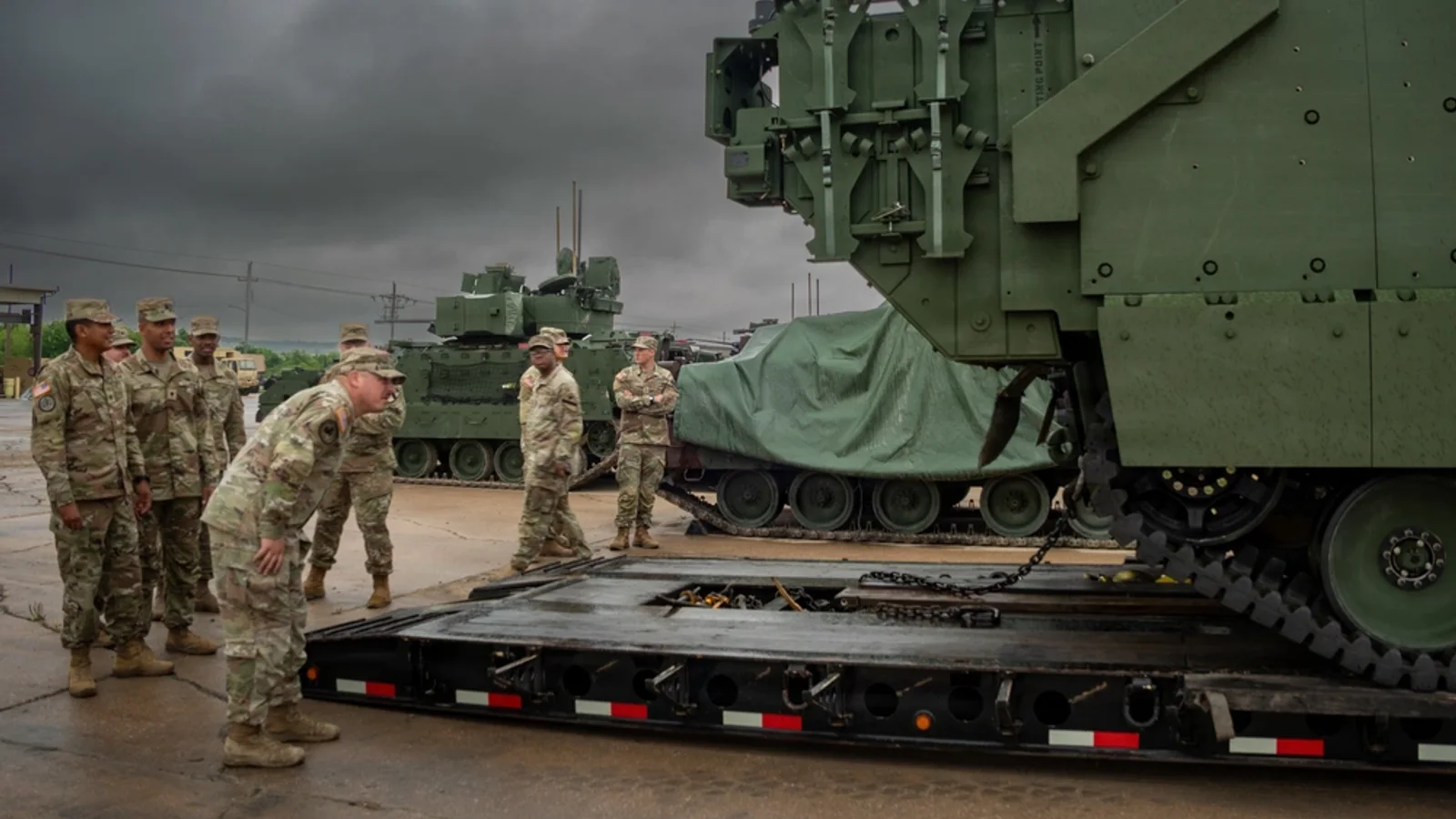
Editorial briefing snapshot
The Bottom Line
The encouraging signal is progress toward use, supported by repeat customers, field evaluation and physical capacity. Build on it by measuring delivery, operator workload, recoverability and the speed with which feedback changes the product.
In context
There are credible signs that announcements are becoming action. Today’s evidence includes a NATO architecture tested at greater scale, a continuing industrial customer relationship at Gastops, prototypes in soldiers’ hands, a completed Canadian Arctic exercise and a propulsion facility moving from construction to commissioning. These are different kinds of progress. Together, they suggest a more useful question than how many announcements the sector can produce: what can operators, buyers and manufacturers do now that they could not do before?
Action and velocity are integral to a stronger Canadian defence ecosystem. The most promising acceleration shortens the distance between an operating problem, a usable solution and the feedback needed to improve it. Axya’s procurement workflow, Oshen’s work with naval users and the U.S. Navy’s paired buying and operational-learning efforts each address a part of that distance. The opportunity for industry includes the systems around a platform: maintenance, integration, training, production and the information that lets people make a sound decision.
The test must remain demanding. A prototype is not a fleet capability, added clean-room space is not delivered output, and a design win is not recognized revenue. Exail’s delayed accounts provide a significant unresolved milestone within an otherwise active industrial picture. The short editorial below, prompted by Forterra’s mission statement, asks what keeps this momentum useful: involve operators early, design for degraded conditions and remain accountable after equipment arrives.
In this edition
Task Force X-Arctic puts scale to the test—with Canada next
Connecting more systems is progress. The next operational test is whether the architecture works across distance, constrained communications and different contributors.
NATO Allied Command Transformation’s September 24 account reports that Task Force X-Arctic connected nearly 300 capabilities to its digital backbone during REPMUS26. NATO describes this as the architecture’s first test at that scale. That count refers to connected capabilities; it should not be read as 300 newly delivered operational vehicles.
The next stage is particularly relevant to Canada: this autumn’s Innovation Continuum SHINE will test remote deployment of the data mesh infrastructure here. NATO describes human involvement in setting intent and reviewing recommendations, with assets remaining under ultimate human control. The objective is to reduce the work of managing platforms individually and shorten the interval between detection and decision.
This is a credible example of movement along a development path, with a harder question assigned to the next test. For Canadian companies, the opportunity extends beyond building another vehicle. Interfaces, data quality, communications management and the operator’s ability to understand the system can determine whether several promising products become a useful capability together.
TNM’s assessment is that the Canada stage should make degraded operation a central acceptance question. When links become intermittent, which information stays current, which tasks continue safely, and what can an operator override or recover? Speed becomes valuable when the system can explain its state to the person responsible for using it. The published account does not yet supply quantitative results for those conditions.
What remains open
The reviewed account does not quantify performance under degraded links, recovery time or workload savings, and establishes no Canadian procurement award.
What comes next
Follow the Canada trial for evidence on disconnection, stale data and operator recovery, then identify which interface or support changes the results require.
Evidence and assessment for Task Force X-Arctic puts scale to the test—with Canada next
What the sources establish
NATO reports nearly 300 connected capabilities at REPMUS and identifies remote data-mesh deployment testing in Canada as the next autumn step.
True North Map assessment
A shared architecture can widen the market for compatible Canadian subsystems while making integration quality and operator control more important.
Original source (1)
- NATO Allied Command Transformation: Task Force X-Arctic takes its next step at REPMUS 2026 (opens in a new tab)Direct record · September 24 official account, read in full through the web tool; retained excerpt covers scale, human control and the next test in Canada. Direct helper fetch was blocked.
Gastops shows why the repeat customer matters

A renewed industrial relationship is a useful sign of adoption. The operational opportunity is detecting deterioration early enough for people to act.
Gastops announced a renewed long-term supply agreement with Vestas on September 24, continuing the use of its MetalSCAN technology across the wind-turbine maker’s platforms. This is an extension of an existing customer relationship, giving the announcement a different weight from a first demonstration or memorandum of understanding.
The Ottawa company’s MetalSCAN product description explains the mechanism: metal wear debris in lubricating oil provides information about component damage and its progression. Its applications span engines, gearboxes and turbines. TNM’s Gastops profile and critical component condition-intelligence capability connect that work to the Canadian ecosystem.
For defence operators, the important idea is that equipment health can become an operating input. A warning only creates value if someone can interpret it, judge how much useful operation remains, obtain the right part and complete the intervention. On a ship or at a remote site, an accurate diagnosis delivered too late—or without a workable repair route—still leaves the mission exposed.
TNM’s assessment is that this is an instructive form of dual-use innovation: a supplier addresses the same underlying maintenance problem in demanding civilian and military settings. A renewal is evidence of a continuing commercial relationship; it does not disclose fleet availability gains or prove performance in every environment. The stronger next demonstration would connect sensor indications to actual maintenance decisions, avoided downtime and the workload imposed on technicians. That is where innovation becomes a service people continue to trust.
What remains open
The reviewed release provides no fleet-level before-and-after evidence on downtime, false alarms or maintenance cost.
What comes next
Ask for an operating-fleet case showing the alert, the technician’s decision, the intervention and the resulting availability—not just sensor detection accuracy.
Evidence and assessment for Gastops shows why the repeat customer matters
What the sources establish
Gastops says its renewed Vestas agreement continues MetalSCAN supply across turbine platforms. The announcement does not disclose contract value, duration or measured reliability gains.
True North Map assessment
Condition monitoring can turn degradation into an earlier maintenance decision, provided the warning connects to technicians, spares and an achievable repair plan.
Original sources (2)
- Gastops: Gastops and Vestas renew agreement for MetalSCAN oil debris monitoring technology (opens in a new tab)Attributed statement · September 24 announcement: renewal of an existing long-term supply relationship.
- Gastops: MetalSCAN: real-time oil debris monitoring (opens in a new tab)Attributed statementProduct description, sensing mechanism and aerospace/energy applications; vendor claims.
BAE’s six-month sprint gives soldiers something to evaluate

The useful acceleration is getting a tangible prototype into a unit’s hands. A self-funded trial still needs an acquisition and sustainment path.
Drew F. Lawrence’s September 24 reporting for DefenseScoop adds an important qualification to BAE Systems’ modernization story. The company says it spent US$17 million of its own money and developed two AMPV 30 prototypes in about six months. They reached the U.S. Army earlier this year; this week’s news is the fuller account of that effort, rather than a new delivery yesterday. The company told Lawrence there was no formal Army request or endorsement to develop them.
An Army photograph dated April 30 establishes the vehicles’ presence with the 1st Cavalry Division. The report describes a 30mm turret, counter-drone sensors and target-information sharing on an existing AMPV chassis. It does not provide the Army’s trial scores or an order for this configuration.
The lesson for Canadian industry is the development sequence: integrate a bounded change, put it with the intended users and expose it to field evaluation early enough to alter the design. That can shorten the interval between a promising concept and useful operational feedback. It also makes interfaces and maintainability consequential sooner, when they are less expensive to change.
Velocity needs somewhere to go after the demonstration. Who owns the next iteration? Which defects must be fixed before wider use? Who funds training, spares and support if the unit wants to keep the equipment? A fast prototype without those answers can become another stranded trial. TNM’s BAE Systems Canada profile and engineering and sustainment capability offer related Canadian context; the AMPV work described here is a U.S. effort, not an award to the Canadian business.
What remains open
The Army’s detailed evaluation results and a funded route to broader AMPV 30 adoption are not established in the reviewed material.
What comes next
For a Canadian trial proposal, specify the operator feedback cycle, defect owner and decision that would move the equipment from evaluation into supported use.
Evidence and assessment for BAE’s six-month sprint gives soldiers something to evaluate
What the sources establish
DefenseScoop reports BAE’s self-funded prototype effort and the absence of a formal Army development request. Official Army imagery documents the vehicles with soldiers in April.
True North Map assessment
Early unit access creates a chance to improve the design before a large purchase, especially when the prototype builds on an existing platform and support base.
Original sources (2)
- DefenseScoop — Drew F. Lawrence: BAE Systems delivers two AMPV 30s to Army built with internal funding (opens in a new tab)Original reporting · September 24 original reporting and company interview; self-funded prototypes, six-month development and no formal Army request.
- U.S. Army / DVIDS: 1st Cavalry Division tests prototypes of the new AMPV 30mm (opens in a new tab)Direct record · April 30 photograph and official caption, photo ID 9651151; prototype presence, not trial scores.
Editorial: earn the operator’s trust before the equipment arrives
Good intentions become credible through the choices a company makes when performance, money and operational reality pull in different directions.
In Forterra’s “Why We Build,” Josh Araujo and Scott Sanders write: “It’s what’s made the gap between a vendor’s promise and what they deliver highly personal to us.” Their mission statement describes why operational failure matters to them. It is a standard to hold a company to, rather than independent proof that its products meet it.
That gap deserves attention as more companies enter Canada’s defence ecosystem. Sound intentions matter. They become visible in what a team prioritizes: an honest account of limitations, time spent with operators, a repair that solves an unglamorous problem, and a willingness to change a design after a difficult trial.
Equipment will degrade. Connections drop, components wear, and the conditions that made a demonstration convincing may disappear. Operationally useful design asks what remains available then: can the crew recognize the failure, retain a safe fallback, recover essential functions and continue the task without an unrealistic support burden? Resilience is partly the ability to fail intelligibly and recover.
Engage the people who will use and maintain the system before the requirements harden. Bring them into trials, show them what broke, and explain what changed because of their feedback. When equipment eventually arrives on a ship or with a deployed unit, that history gives its users a reason to trust it. Skepticism can be valuable information about an unresolved operating problem.
Canada needs action and velocity. It also needs companies whose commitment survives an uncomfortable result. Sustainable, innovative industry grows when the people carrying operational risk can see that their experience changes the product—and that the supplier remains accountable after delivery.
What remains open
A mission statement alone cannot establish a company’s delivered performance, support quality or the conduct of every team entering the sector.
What comes next
Put an operator and a maintainer into the next design review; record one failure mode, its fallback and the change their feedback will drive.
Evidence and assessment for Editorial: earn the operator’s trust before the equipment arrives
What the sources establish
Forterra’s public mission statement links its authors’ operational experience to a commitment to build for difficult conditions. This segment is TNM editorial analysis of that stated standard.
True North Map assessment
Operator participation can make trust part of development, reducing the distance between what a supplier demonstrates and what a crew can depend on.
Original source (1)
- Forterra — Josh Araujo and Scott Sanders: Why We Build (opens in a new tab)Attributed statementUndated mission statement, paragraph describing the gap between vendor promises and delivery.
Axya targets the administrative drag on industrial velocity

Manufacturing can lose time between a supplier’s reply and the buyer’s system of record. Axya is financing an effort to close that gap.
Josh Scott reports at BetaKit that Montréal’s Axya has secured C$17 million: C$12 million in equity and C$5 million in venture debt. McRock led the equity portion. The report identifies GE Aerospace and MDA Space among customers and attributes commercial-growth claims to the company and its investor. The financing is capital for expansion, not procurement revenue or proof that delivery delays have disappeared.
Axya’s own workflow description is more useful than a broad claim about industrial AI. Supplier replies become structured changes to dates, quantities, prices and confirmations. Buyers review exceptions and approve updates before they flow back into enterprise resource planning systems. That places the human decision at a specific point in the process.
For defence manufacturers, an innovative platform can still be held up by an ordinary unanswered quote or an out-of-date delivery commitment. TNM’s assessment is that reducing those delays could make an existing factory more responsive without first expanding its floor space. The value would show up in fewer expedites, earlier warnings and production plans that reflect what suppliers can actually deliver.
A useful trial should follow a real purchasing workflow from request to receipt. Count the time recovered and check whether the system also preserves traceability, approval authority and sensitive drawing controls. Faster handling of incorrect supplier data would create another form of delay. The investment case becomes stronger when a buyer can demonstrate better delivery decisions, not merely more automated messages.
What remains open
Customer-specific delivery improvements and the controls required for a particular defence program are not demonstrated by the financing announcement.
What comes next
Pilot one purchasing workflow and compare confirmation time, overdue orders and correction effort, while retaining approval and technical-data controls.
Evidence and assessment for Axya targets the administrative drag on industrial velocity
What the sources establish
BetaKit reports C$12 million of equity and C$5 million of venture debt. Axya describes supplier-response processing with buyer review and approved ERP updates.
True North Map assessment
Procurement workflow improvements could release manufacturing capacity currently consumed by reconciliation, follow-up and late discovery of supplier changes.
Original sources (2)
- BetaKit — Josh Scott: Axya closes C$17-million Series A to modernize manufacturing procurement (opens in a new tab)Original reporting · September 24 reporting: equity/debt split, named customers, CEO and investor interviews.
- Axya: Axya manufacturing procurement platform (opens in a new tab)Attributed statementWorkflow description: supplier responses, exceptions, buyer approvals and ERP updates.
ARCTIC GHOST puts the coordination problem on the water
A completed joint exercise is tangible activity. Its lasting value depends on which operational lessons change procedures, equipment and support.
The Canadian Coast Guard’s September 24 release reports that CCGS Des Groseilliers, HMCS Robert Hampton Gray, Canadian Armed Forces and RCMP partners completed ARCTIC GHOST near Cambridge Bay. Training ran September 15–19 and included joint patrols, simulated searches and simulated interception of vessels presenting security threats. These were exercise scenarios, not reported real-world interdictions.
The milestone matters because operating together exposes demands that an organizational announcement cannot answer. A shared surveillance task needs compatible information, a common understanding of what it means, and a clear handover from detection to action. Arctic distance makes an unresolved interface or support assumption especially consequential.
For companies developing sensors, communications, small craft or decision-support tools, the useful engagement is with the people performing those handovers. What information was late? What had to be entered twice? Which function became difficult when people or equipment were stretched? These are questions TNM would use to turn an exercise into a focused innovation brief; they are not findings asserted by the release.
Canada is visibly exercising a capability here. The next step is to make the lessons durable: identify an owner, a change and the next test that will establish whether the change worked. Another event on the calendar is less informative than a resolved problem carried into the next operation.
What remains open
The public release does not disclose an after-action assessment, measured communications performance or resulting equipment decisions.
What comes next
Seek a releasable lessons summary that links each priority gap to an owner, a corrective action and a future demonstration.
Evidence and assessment for ARCTIC GHOST puts the coordination problem on the water
What the sources establish
The Coast Guard reports a completed September 15–19 exercise near Cambridge Bay with naval, CAF and RCMP partners, involving simulated security scenarios.
True North Map assessment
Joint activity can expose the information-sharing and support requirements that suppliers need to solve for a usable Arctic capability.
Original source (1)
- Canadian Coast Guard: CCGS Des Groseilliers completes Exercise ARCTIC GHOST (opens in a new tab)Direct record · September 24 release: September 15–19 training near Cambridge Bay; simulated patrol, search and interception.
Moog offers a concrete construction-to-capacity comparison
A completed propulsion clean room is a physical step toward higher throughput. Installed capacity and delivered output still need separate measures.
Moog’s September 24 release, carried by SpaceNews, says its new ISO Class 8 clean room is commissioned and operational. The site is in the United States, not Niagara Falls, Ontario. It serves thruster assembly, integration and testing for commercial and defence space applications.
The useful comparison is with Moog’s September 22, 2025 groundbreaking announcement. A construction plan has now become an operating facility. The stated increase of more than 80 percent concerns dedicated clean-room capacity; it should not be read as a measured 80-percent increase in completed thrusters.
For Canada’s expanding space and defence suppliers, this is an industrialization benchmark. Additional orders create a need for qualified space, production processes, test access and people who can repeat the work consistently. TNM would judge the next phase through accepted units per month, first-pass yield and customer lead times. Those measures show whether the new environment is relieving a delivery constraint.
What remains open
The release does not quantify the resulting increase in accepted thrusters or reduction in customer lead times.
What comes next
Compare planned capacity with accepted output, yield and delivery lead time over the first sustained production period.
Evidence and assessment for Moog offers a concrete construction-to-capacity comparison
What the sources establish
Moog reports commissioning the U.S. clean room approximately a year after announcing construction, adding more than 80 percent to dedicated clean-room capacity.
True North Map assessment
Production infrastructure is a consequential form of innovation when it makes an established technology available in useful quantities and timeframes.
Original sources (2)
- Moog press release via SpaceNews: Moog completes ISO Class 8 clean room at Niagara Falls facility (opens in a new tab)Attributed statement · September 24 release: commissioning and more than 80% added clean-room capacity; no equivalent measured output increase stated.
- Moog: Moog breaks ground on new propulsion clean room (opens in a new tab)Attributed statement · September 22, 2025 release: prior construction announcement and explicit U.S. facility location.
BlackBerry provides an operating result alongside the design-win headlines

QNX’s growth is visible in reported revenue. Its latest large design win belongs to the future revenue pipeline and should be assessed separately.
BlackBerry’s September 24 results filed with the SEC report US$80.3 million of QNX revenue, up 27 percent, for the quarter ended August 31. Group operating cash flow was US$29.3 million. Alex Riehl’s BetaKit coverage highlights the automotive software contribution to the stronger quarter.
The same company release says Coretura’s selection of Alloy Kore adds more than US$100 million to QNX royalty backlog. That is an important commercial milestone, but it is not US$100 million already recognized as sales. Keeping the two stages separate makes the progress more intelligible.
TNM’s BlackBerry profile and secure communications and embedded-software capability place the company in the wider Canadian ecosystem. Defence relevance is the possible reuse of mature embedded-software engineering and support practices; these automotive results do not establish a new defence deployment. For a buyer, commercial scale is useful context, while the evidence that matters for a particular system remains its configuration, assurance, lifecycle support and behavior under the intended operating conditions.
What remains open
The timing of revenue realization from the Coretura backlog and a defence-specific contribution from that agreement are not established here.
What comes next
Separate recognized revenue from design-win backlog, then check the exact software configuration and support commitment required for the intended system.
Evidence and assessment for BlackBerry provides an operating result alongside the design-win headlines
What the sources establish
BlackBerry reports QNX quarterly revenue of US$80.3 million and group operating cash flow of US$29.3 million. A separate Coretura design win adds over US$100 million to royalty backlog.
True North Map assessment
Reported revenue and cash generation make commercial execution more tangible, while embedded-software buyers still need evidence specific to their operational use.
Original sources (2)
- BlackBerry — SEC Exhibit 99.1: BlackBerry reports second quarter fiscal year 2027 results (opens in a new tab)Direct record · September 24 company results: quarter ended August 31, segment revenue, operating cash flow and royalty backlog.
- BetaKit — Alex Riehl: BlackBerry reports strong Q2 earnings thanks to automotive software revenue jump (opens in a new tab)Original reporting · September 24 original report on the earnings and automotive contribution.
Carleton’s rover team shows where practical engineering habits form
A student competition is not operational qualification, but it can develop the habits industry needs: test, diagnose, change and try again.
Elizabeth Howell’s September 24 SpaceQ interview examines Carleton’s win at the Canadian International Rover Challenge held in Alberta in August. Beyond the result, her conversation with team president Owen Davidson describes work on more reliable electrical connections, steering and a revised robotic arm. Testing included access to Mission Control’s rover environment, and Davidson had recently completed a Gastops co-op.
This is a useful Canadian example of innovation built through repeated contact with hardware. A connection fault can matter more to the completion of a task than a sophisticated feature elsewhere in the system. Industry benefits when new engineers arrive having experienced that trade-off, worked across disciplines and returned to a design after a difficult test.
TNM’s assessment is that support for these teams can be a practical relationship with the future workforce. Useful contributions include test access, maintainability reviews and time with experienced technicians. A trophy does not establish defence readiness; the transferable value is the engineering discipline behind it and the opportunity to learn from people who operate equipment for a living.
What remains open
Competition performance does not establish suitability for military operations or qualify the rover as a deployable defence product.
What comes next
Offer a team a practical design or maintainability review and test access, with feedback tied to a specific observed failure.
Evidence and assessment for Carleton’s rover team shows where practical engineering habits form
What the sources establish
SpaceQ’s interview describes Carleton’s August competition win, iterative reliability improvements, industry test access and Davidson’s Gastops work placement.
True North Map assessment
Hands-on engineering teams can help develop the diagnostic and integration habits that a growing defence and space industry needs.
Original source (1)
- SpaceQ — Elizabeth Howell: Carleton University wins Canadian International Rover Challenge in Alberta (opens in a new tab)Original reporting · September 24 interview with Owen Davidson: August competition, iterative reliability improvements and industry testing support.
Exail is the reminder to keep unresolved milestones visible
The company has again deferred its full half-year results. Its reaffirmed preliminary figures do not remove the need to read the completed accounts.
Exail’s September 24 regulatory release moves publication of its full half-year results to no later than October 10. It attributes the further delay to reassessing the accounting treatment of complex financial instruments in subsidiaries, in agreement with its auditors. Exail says its previously released financial indicators and operating momentum remain unchanged.
This is a distinct development from the Belgian TRIDENT award covered in yesterday’s edition. It is neither evidence that the award has failed nor a basis to infer an operational breakdown. It does leave a financial milestone unresolved.
For readers following industrial expansion, the discipline is to hold both facts together: commercial activity can be progressing while important accounting work remains incomplete. The completed statements should clarify the instrument treatment and financial position. Until then, neither enthusiasm for new orders nor concern about a delay should substitute for the document itself.
What remains open
The finalized accounting treatment and full half-year financial statements remain pending.
What comes next
Read the completed results when released and compare them with the preliminary disclosure, including instrument treatment and cash conversion.
Evidence and assessment for Exail is the reminder to keep unresolved milestones visible
What the sources establish
Exail has postponed full half-year results to no later than October 10 while reaffirming its preliminary indicators and citing complex financial-instrument accounting.
True North Map assessment
Delivery confidence benefits from transparent financial follow-through as well as technical and commercial milestones.
Original source (1)
- Exail Technologies via Actusnews: Exail postpones half-year results to no later than October 10 (opens in a new tab)Direct record · September 24 release, page 1: further postponement, accounting treatment and reaffirmed preliminary indicators. Revenue-year typo not reproduced.
Carry the signal forward
Continue in True North Map
Follow the edition into the organizations, technologies, Defence needs and Mission areas already connected to its record.