
Canadian Defence Signals
Persistent communications and control anchor space ambitions
Editorial briefing snapshot
The Bottom Line
The practical questions differ. The HAPS team must demonstrate a complete service in severe conditions. Xona has a funded facility project to deliver. ISE has a new owner. Borealis has future engine, capital and launch milestones. These stages deserve separate treatment when evaluating Canadian capacity.
In context
A new HAPS procurement defines the test conditions for long-range communications, and Xona’s Montreal investment names the industrial work behind navigation resilience. Two Canadian technology businesses are also changing scale: ISE through acquisition and Reaction Dynamics through a larger launch roadmap.
In this edition
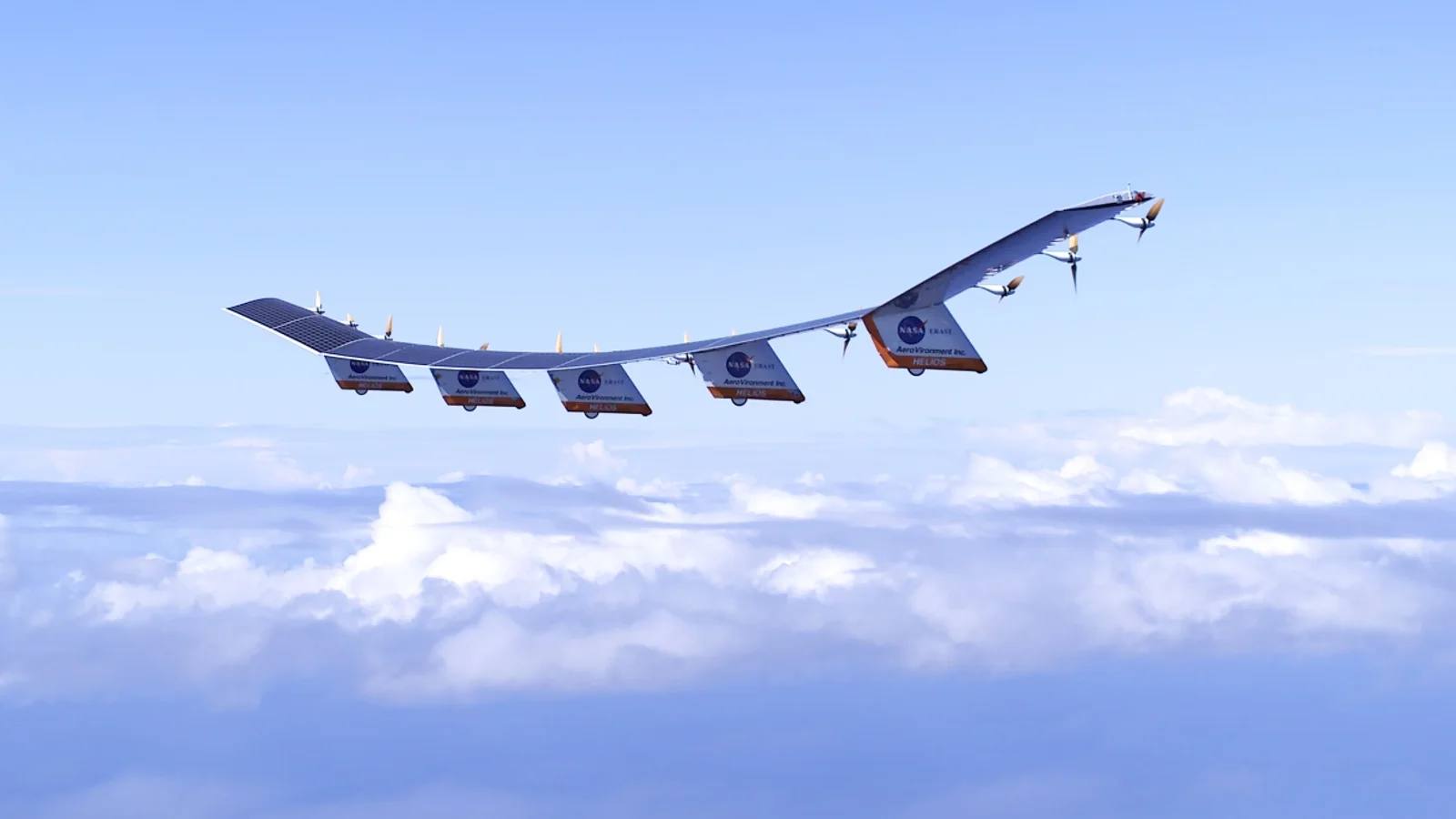
A Canadian HAPS call specifies the hard parts of persistent communications
The C$2 million prototype opportunity demands persistence near 20 kilometres, cold-weather operation and a deployable communications service.
CanadaBuys notice EN578-24ISC4/98 moves the HAPS discussion from a platform concept to a demanding demonstration. NRC, DND and Shared Services Canada seek an ultra-long-range backhaul prototype. Mandatory outcomes include holding a nominal position for at least three days, reaching a 20-kilometre altitude band, supplying 100 watts for sensors, providing at least 1,000 square kilometres of service coverage and operating down to the specified −50 to at least −70°C range. Deployment limits differ for heavier- and lighter-than-air platforms.
The distinction inside the requirement is useful: resistance to interference, communications security and linked HAPS networks appear among additional desired outcomes. A reader should not silently promote them to mandatory pass conditions. The call estimates one contract of up to C$2 million over 24 months, closing December 1 at 14:00 Eastern. The successful supplier must arrange both the demonstration site and Transport Canada flight authorization. This puts flight permissions, payload power and winter endurance on the same delivery critical path as the radio.
What remains open
The estimated single award remains conditional on evaluation, priorities and available funds; it is not committed procurement spending.
What comes next
Use the December 1 closing date and the CanadaBuys notice, including subsequent amendments, to build a requirement-by-requirement demonstration plan.
Evidence and assessment for A Canadian HAPS call specifies the hard parts of persistent communications
What the sources establish
The October 20 notice opens a prototype procurement for ultra-long-range HAPS backhaul, with a C$2 million ceiling, a 24-month maximum and supplier responsibility for the demonstration site and flight clearance.
True North Map assessment
Teams need a combined aircraft, energy, radio and flight-test case. A strong connectivity claim alone leaves several mandatory outcomes unaddressed.
Original source (1)
- CanadaBuys: High-Altitude Platform System for Ultra-Long-Range Wireless Backhaul (opens in a new tab)Direct record · EN578-24ISC4/98: mandatory outcomes, maximum funding, duration and closing date
Xona’s Montreal investment puts operations beside satellite manufacturing

Ottawa is contributing C$15 million toward a C$64.8 million Xona centre combining mission operations, development, manufacturing and testing.
The Canadian contribution to Xona is attached to a defined industrial project in Montréal. ISED says the centre will add mission control, specialized testing and satellite manufacturing capacity, with approximately 126 jobs expected. Its purpose is to support deployment and operation of Pulsar, Xona’s commercial low Earth orbit positioning, navigation and timing system.
The service is designed to complement established global navigation systems, including GPS and Galileo. That qualification matters for defence readers evaluating resilience: an additional service and a Canadian operations node can diversify dependencies, but the investment announcement does not establish an already operating sovereign replacement for GPS. The useful follow-through is the industrial and operational work that makes PNT service available: the facility, workforce, testing and control functions. The C$15 million is the federal investment in a larger project, not its full cost.
What remains open
The release does not set a service acceptance date or demonstrate resilience under interference.
What comes next
The opening of the Montreal mission operations and testing functions will make the domestic contribution easier to assess.
Evidence and assessment for Xona’s Montreal investment puts operations beside satellite manufacturing
What the sources establish
ISED announced C$15 million through the Strategic Response Fund for Xona’s C$64.8 million Montreal centre, intended to support Pulsar operations and create approximately 126 jobs.
True North Map assessment
Canadian control and testing infrastructure is a specific part of navigation resilience that suppliers can trace through project delivery.
Original source (1)
- Innovation, Science and Economic Development Canada: Government of Canada invests C$15 million in Xona Space Systems Canada (opens in a new tab)Direct record · Release: C$64.8 million Montreal centre project and Pulsar service role
Elbit completes its acquisition of Canada’s ISE

A Canadian subsea robotics business enters Elbit’s maritime portfolio, changing its ownership and potential integration route.
International Submarine Engineering has become part of Elbit Systems. The buyer says the transaction is complete, describes its price as immaterial to Elbit, and links ISE’s technology to underwater surveillance, mine countermeasures and anti-submarine warfare. ISE brings autonomous and remotely operated vehicles, controls and robotics; Elbit’s announcement cites more than 250 delivered underwater vehicles across over 20 countries.
For the Canadian ecosystem, the immediate event is an ownership transfer of an established engineering capability. Access to a larger mission-system portfolio may broaden routes to market, while domestic customers will need to understand who now controls product support, technical interfaces and future development. The release does not announce a new Canadian procurement or completed integration into an Elbit combat system. Its stated mission ambitions should therefore be read as the acquisition rationale, with the transaction itself as the confirmed change.
What remains open
The announcement does not disclose the price, integration timetable or Canadian staffing and facility commitments.
What comes next
Future product and support announcements should clarify which ISE interfaces and development activities remain in Canada.
Evidence and assessment for Elbit completes its acquisition of Canada’s ISE
What the sources establish
Elbit announced completion of its acquisition of Vancouver-area ISE and identified ISR, MCM and ASW as intended areas of portfolio expansion.
True North Map assessment
The counterparty and integration pathway change now; demonstrated mission performance still belongs to the specific vehicle and payload configuration.
Original source (1)
- Elbit Systems: Elbit Systems expands underwater and maritime autonomy capabilities with acquisition of ISE (opens in a new tab)Attributed statement · Acquisition completion and intended ISR, MCM and ASW integration
Borealis sets a medium-lift ambition with a substantial financing task

Reaction Dynamics targets a six-tonne launcher in 2031 and plans C$350 million of further private fundraising to support its expansion.
Reaction Dynamics has put dates and industrial scale around its next launcher. Borealis targets six tonnes to low Earth orbit and a first flight in 2031, following an Aurora orbital attempt targeted for late 2028. The company plans to share propulsion and operating developments across the two vehicles. It also describes a large expansion in Quebec manufacturing and staffing, supported by a planned C$350 million private capital raise through 2031.
The engineering direction is storable liquid propulsion, which RDX argues can simplify ground infrastructure compared with cryogenic propellants. That is a design and operations proposition, rather than evidence of a fielded Arctic launch service. Its reported commercial pipeline includes non-binding commitments and prospective missions. The next public test with direct bearing on the roadmap is the orbital-scale engine campaign scheduled for November. The launch dates, capacity and financing remain forward-looking company targets.
What remains open
The release does not establish committed financing for the entire expansion or binding orders for the announced pipeline.
What comes next
The planned November orbital-scale engine tests are the nearer milestone for judging the shared propulsion roadmap.
Evidence and assessment for Borealis sets a medium-lift ambition with a substantial financing task
What the sources establish
RDX unveiled Borealis with a six-tonne low-Earth-orbit target, a planned 2031 debut and an expansion programme requiring C$350 million of further private investment.
True North Map assessment
Sovereign launch planning depends on engine maturation and financed production capacity as well as a prospective mission pipeline.
Original source (1)
- Reaction Dynamics: Reaction Dynamics unveils Borealis, delivering medium-lift capability for Canada by 2031 (opens in a new tab)Attributed statement · Borealis roadmap, capital plan and non-binding pipeline qualification
Carry the signal forward
Continue in True North Map
Follow the edition into the organizations, technologies, Defence needs and Mission areas already connected to its record.