
Canadian Defence Signals
Capital and workflows shape Canadian defence capacity
Editorial briefing snapshot
The Bottom Line
The useful detail is at the interface between institutions: an investor and a shipyard customer, manufacturing and engineering teams, or military medicine and civilian care. Each development names an actual mechanism that can be investigated, while leaving its eventual delivery outcome open.
In context
Seaspan is putting an equity instrument beside its shipbuilding relationships, while MetOcean is expanding the physical workspace around its ocean technology business. NATO’s exercise closeout adds a different capacity question: how military and civilian systems exchange patient information. A smaller Montreal seed round shows how a consumer product can reveal a separate defence requirement.
In this edition
Seaspan adds an equity route into the marine supply chain

Seaspan will combine minority investments with shipbuilding access, connecting technology finance to a potential industrial customer.
A strategic investor can offer something a general fund cannot: engineers, production context and an introduction to the customer’s supply chain. Seaspan’s new corporate venture fund is built around that combination. The shipbuilder says it will take minority positions in Canadian defence, marine and dual-use SMEs and manage the investments from North Vancouver.
The announcement ties the fund to National Shipbuilding Strategy participation commitments and Industrial and Technological Benefits provisions. That makes this an industrial participation mechanism as well as a search for investment returns. Seaspan says government reporting and verification will continue. It has not disclosed a fund size, first portfolio company or investment timetable. A supplier considering the route therefore has a concrete strategic counterparty, but no published cheque size or open application terms to price into a financing plan.
What remains open
The release does not specify committed capital, portfolio investments, ticket sizes or entry process.
What comes next
A first investment and its accompanying industrial agreement would clarify how Seaspan converts financial participation into supplier adoption.
Evidence and assessment for Seaspan adds an equity route into the marine supply chain
What the sources establish
Seaspan announced a directly managed corporate venture fund for minority investments in Canadian defence, marine and dual-use SMEs, linked to its NSS industrial participation commitments.
True North Map assessment
The useful fit is technology that can mature with shipyard engineering and customer access; equity capital alone does not establish a supply agreement.
Original source (1)
- Seaspan: Seaspan launches corporate venture capital fund to advance Canadian defence and marine innovation (opens in a new tab)Attributed statement · Release paragraphs 1–7 and fund commitments
MetOcean’s capacity investment is in the workflow around the sensor

A C$900,000 repayable contribution will support a larger Dartmouth workspace, consolidating roughly 80 employees and expanding production room.
The measurable change at MetOcean is a facility project. ACOA is supporting warehouse expansion, workplace renovations and equipment at Thornhill Drive so the company can bring its local departments together. MetOcean expects ten additional jobs and approximately C$600,000 in annual cost savings. Those are company expectations, rather than observed savings.
For a firm supplying ocean monitoring, satellite communications and underwater surveillance equipment, assembly space and communication between teams can become a constraint before a product’s sensor physics does. The project targets that interface. The public record establishes repayable industrial support, without identifying a new military order or claiming that the expansion has already increased delivered output. It gives customers and prospective partners a useful capacity milestone to check as the works are completed.
What remains open
Completion timing and realized production gains are not specified in the announcement.
What comes next
Completion of the warehouse and team move will be the first observable test of the project’s promised workflow improvement.
Evidence and assessment for MetOcean’s capacity investment is in the workflow around the sensor
What the sources establish
ACOA announced C$900,000 in repayable support for MetOcean’s Dartmouth facility consolidation; the company forecasts ten jobs and about C$600,000 in annual savings.
True North Map assessment
The expansion could remove production and collaboration bottlenecks in an established Canadian ocean-technology supplier.
Original source (1)
- Atlantic Canada Opportunities Agency: MetOcean Telematics expands Dartmouth facility to bring teams under one roof (opens in a new tab)Direct record · Release: repayable contribution and project scope
Canada’s NATO exercise contribution includes the patient-data handoff
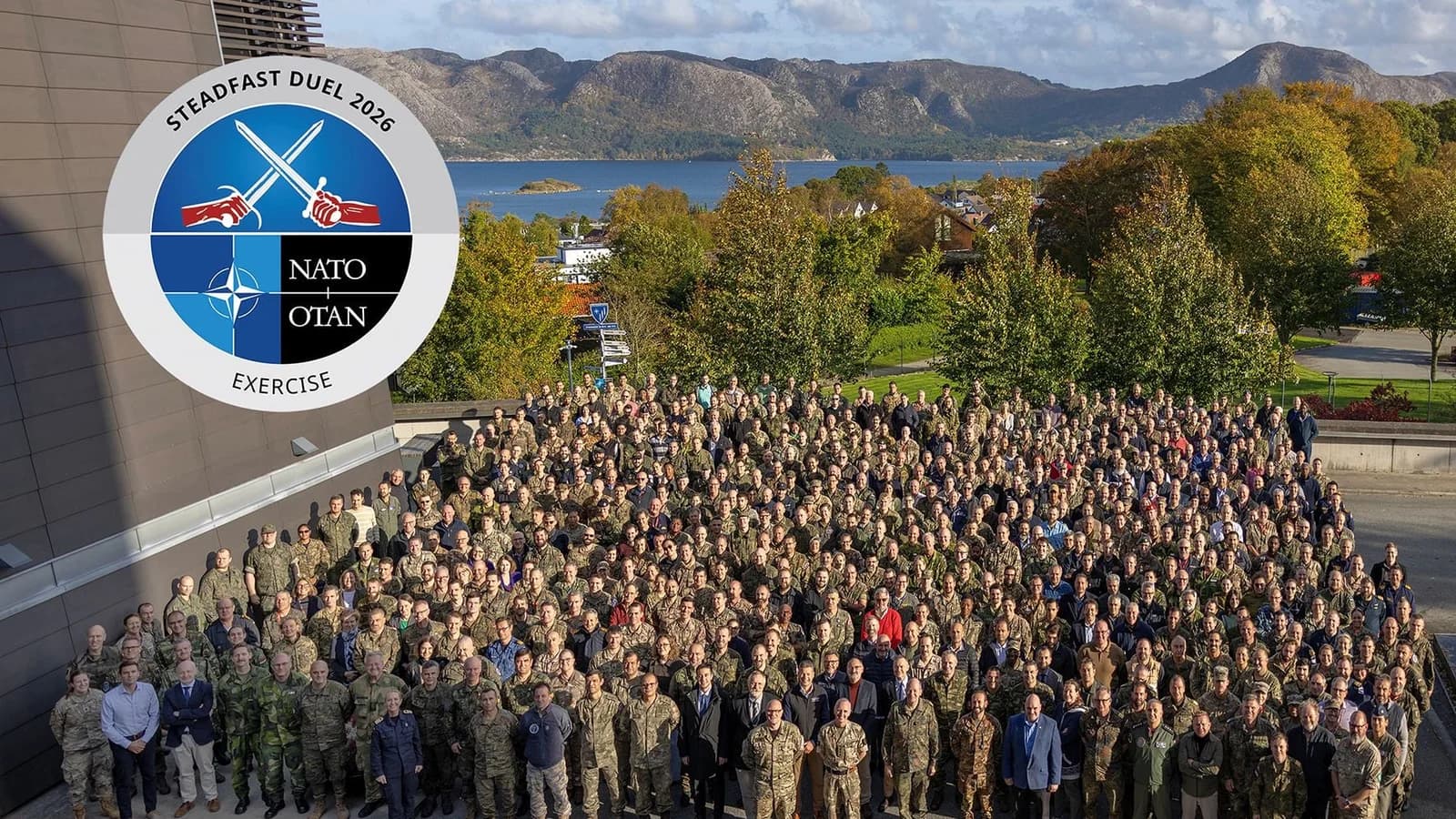
STEADFAST DUEL’s closeout identifies Canadian participation in medical information exchange experiments, alongside the wider command-post exercise.
Patient movement depends on civilian systems as well as military headquarters. In its STEADFAST DUEL closeout, ACT identifies Canadian, Belgian and Dutch national hackathon teams working on that boundary. The activity used NATO’s Medical Management application to explore sharing patient information with civilian care partners; tools at the receiving end could help identify treatment facilities and transport options. ACT describes this as an initial step in a multi-year capability effort.
The larger exercise tested collective defence command relationships across all 32 Allies, with attention to NATO’s Northwest region. Its medical experiment points to an unusually concrete Canadian opportunity within that broad exercise: the interoperability of information supporting onward care. Software that exchanges data successfully in a headquarters scenario still needs agreed identity, access and clinical workflows before it can support real patients. The published closeout provides an experiment scope, without releasing performance measurements or an operational acceptance decision.
What remains open
The closeout does not publish exchange success rates, patient-identity controls or an operational fielding decision.
What comes next
The next medical experimentation cycle should show which data and workflow barriers were carried forward for resolution.
Evidence and assessment for Canada’s NATO exercise contribution includes the patient-data handoff
What the sources establish
ACT reports Canadian participation in an exercise experiment on exchanging military patient data with civilian partners, using NATO’s Medical Management application.
True North Map assessment
Clinical interoperability is a defence capability interface that Canadian health-software and exercise specialists can investigate with the actual medical users.
Original source (1)
- NATO Allied Command Transformation: STEADFAST DUEL 2026 concludes, advancing NATO readiness and future warfighting capabilities (opens in a new tab)Direct record · Experimenting with Future Capabilities: medical data exchange and exercise development
Rozvelt’s defence pivot requires a different filtration claim
C$3.1 million of seed funding supports a proposed move from exhaled-odour control toward protective filtration, a separate validation task.
Rozvelt has raised C$3.1 million in seed funding as it develops defence applications for headgear first designed for hunters. BetaKit’s original interview distinguishes the existing product from the proposed extension: Vektr filters exhaled odour, while the new direction would add inhalation protection for military, police and first-response users. The startup reports a planned distribution agreement in Japan and aims to begin Canadian production of its consumer product this fall.
That change in airflow direction is the substantive engineering and evidence question. A product intended to conceal a user’s scent does not establish protection against hazardous particles. The financing can fund the redesign and testing needed for that separate use case. Readers assessing the opportunity should look for performance requirements and validation for the intended protective configuration, alongside the company’s international market interest. The report establishes a seed round and product-development intent, without identifying a CAF award or a certified protective product.
What remains open
The report does not identify validated protection performance, certification or an awarded CAF procurement.
What comes next
The next meaningful product milestone is test evidence for the proposed inhalation-filtering configuration and its intended user requirements.
Evidence and assessment for Rozvelt’s defence pivot requires a different filtration claim
What the sources establish
BetaKit reports Rozvelt’s C$3.1 million seed round and planned expansion from hunting headgear into military, police and first-response uses.
True North Map assessment
The dual-use opportunity depends on demonstrating the protective version, rather than transferring evidence from the existing consumer product.
Original source (1)
- BetaKit: Rozvelt built a high-tech mask for hunters. Defence buyers see something bigger. (opens in a new tab)Original reporting · Original interview: seed round and proposed inhalation-filtering defence variant
Carry the signal forward
Continue in True North Map
Follow the edition into the organizations, technologies, Defence needs and Mission areas already connected to its record.