
Canadian Defence Signals
Owned infrastructure is becoming the new readiness test
Editorial briefing snapshot
The Bottom Line
That shift changes where Canadian teams should investigate first. The highest-value questions now sit at the seams between capital, integration rights, manufacturing throughput and allied access. Map those dependencies early, because the organization that controls the enabling layer can shape the pace and terms of adoption.
In context
Canada and its allies are pushing readiness down into the infrastructure beneath the platform: secure laboratories, satellite order books, dedicated launch, shipyard ownership, textile production, tactical networks, directed-energy systems and interceptor capacity. The common movement is from capability intent toward owned facilities, controlled supply and repeatable delivery.
In this edition
Canada puts security science on a long construction clock
A $768.6 million construction contract gives Canada's security-science infrastructure a defined delivery path through 2031.
$768.6 million is moving RSS Main from design into full construction, giving Canada a defined physical backbone for public health, animal health, border protection and security science. The project concentrates six facilities and four federal organizations in Winnipeg, with construction scheduled through 2031. The opportunity sits beyond the prime build: specialized laboratory systems, secure integration, commissioning and long-term support now have a visible planning horizon.
Map suppliers to the technical packages and decision points that follow the PCL award, then watch whether the stated NATO-related resilience spending becomes scoped work. A contract value and completion date establish commitment, but they do not identify subcontractors, procurement routes or which Canadian defence suppliers will qualify.
What the public record says
Public Services and Procurement Canada awarded PCL Constructors Canada a $768.6 million construction-services contract for RSS Main, with construction expected to continue through 2031.
Why this may matter
The award turns a broad resilience objective into a multi-year infrastructure program whose specialized systems and support layers now warrant supplier mapping.
Evidence limits
Future work packages, qualified subcontractors, security requirements and the allocation of the stated NATO-related spending remain unverified.
Practical next step
Track the construction packages and compare their technical requirements with source-backed Canadian laboratory, security and integration capabilities.
Original source (1)
MDA turns order intake into a test of Canadian space capacity
A $4.0 billion backlog shifts attention from winning space work to converting it through MDA's Canadian production base.
Order intake, not quarterly revenue, is the sharper signal from MDA Space. The company ended Q2 with a $4.0 billion backlog, $310 million above Q1, while SpaceQ calculated $808.9 million in new orders and a 1.6 book-to-bill ratio. The mix spans a fourth synthetic-aperture radar satellite, Japanese defence communications, U.S. military space work and commercial programs, putting pressure on the new Montreal production base to convert demand into delivery.
For Canadian teams, the decision is where to position around payloads, ground systems, components and integration before capacity is allocated. Backlog establishes contracted work; it does not show program margins, subcontract access, schedule performance or how much activity will flow through Canada.
What the public record says
MDA Space reported $498.6 million in Q2 revenue and a $4.0 billion backlog, while SpaceQ calculated $808.9 million in quarterly orders from disclosed program activity.
Why this may matter
The order mix makes production conversion and supplier access more decision-relevant than another top-line growth announcement.
Evidence limits
Program-level margins, Canadian supplier participation, facility throughput and delivery performance are not disclosed in the cited results.
Practical next step
Compare the order mix with Montreal facility ramp milestones and identify the Canadian components, payloads and ground systems most exposed to capacity decisions.
Original sources (2)
- MDA Space: MDA Space reports second quarter 2026 results (opens in a new tab)Q2 results, financial highlights and outlook
- SpaceQ: MDA Space books $809 million in Q2 orders (opens in a new tab)Order analysis and program breakdown
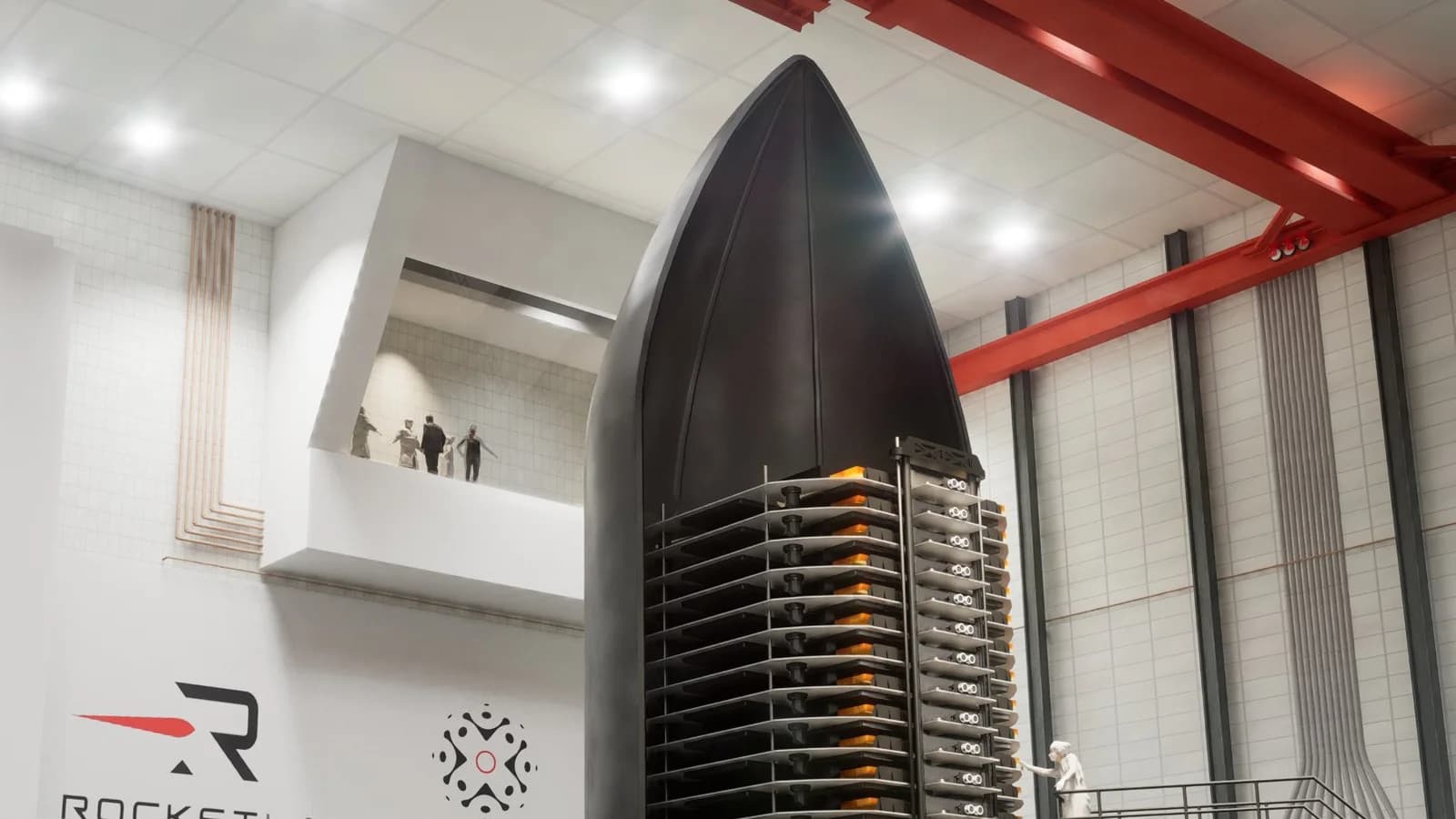
Kepler buys dedicated launch control for optical relay scale
Kepler's first dedicated launch gives the Toronto company more control over scale while concentrating execution risk on Neutron.
Dedicated launch control changes the risk profile of Kepler Communications' optical relay buildout. SpaceNews reports that the Toronto company booked a Rocket Lab Neutron mission for 2028, its first dedicated launch, as one of several planned deployments for the next-generation network. A dedicated vehicle gives Kepler more control over constellation batching and schedule, but it also concentrates dependence on a launcher that has not completed its first flight.
The Canadian opportunity extends past the spacecraft into optical terminals, hosted payloads, ground integration and mission assurance. Map those relationships now, then watch Neutron's debut and Kepler's follow-on bookings as the decisive execution gates. The contract does not establish launch readiness, network performance or delivered capacity.
What the public record says
SpaceNews reports that Kepler booked a dedicated Rocket Lab Neutron launch for 2028 to deploy next-generation optical relay satellites as part of a multi-launch plan.
Why this may matter
Dedicated launch access shifts Kepler from opportunistic deployment toward controlled constellation scaling, with launch-vehicle maturity now a central dependency.
Evidence limits
Neutron's first-flight timing, the number of satellites on the mission, follow-on launch providers and delivered network performance remain unverified.
Practical next step
Track Neutron's debut, Kepler's follow-on launch bookings and the optical-terminal partners needed to convert deployment into usable relay capacity.
Original source (1)
- SpaceNews: Kepler books Neutron for 2028 optical relay launch (opens in a new tab)Opening report and launch-plan details
Hanwha tests whether ownership can accelerate shipyard access
A proposed Austal USA acquisition tests whether direct ownership can open shipbuilding capacity faster than another partnership.
Control of a shipyard, not another teaming agreement, is the move Hanwha is testing. Breaking Defense reports a preliminary, non-binding offer valued at roughly $1.05 billion to $1.2 billion for Austal USA, and Austal's board has allowed due diligence. The proposed transaction would exclude Austal's Australian operations while placing a major U.S. Navy and Coast Guard builder inside Hanwha's American industrial footprint.
The Canadian lesson is about access to sovereign production capacity and the approvals that govern it. Compare this ownership strategy with Canadian shipbuilding constraints and supplier routes before assuming partnership alone can unlock scale. Due diligence is not a completed transaction; valuation, regulatory review, board approval and industrial integration remain unresolved.
What the public record says
Breaking Defense reports Hanwha Defense USA submitted a preliminary non-binding offer for Austal USA and received access to conduct due diligence.
Why this may matter
The proposal treats ownership of regulated production capacity as the strategic asset, offering Canada a benchmark for how industrial access can be pursued.
Evidence limits
Final valuation, board approval, U.S. regulatory review, financing and post-transaction industrial integration remain unresolved.
Practical next step
Compare the proposed ownership path with Canadian shipbuilding bottlenecks and track due diligence, regulatory review and board decisions before drawing a capacity conclusion.
Original source (1)
- Breaking Defense: Hanwha Defense USA seeks to acquire Austal USA in $1.2B potential deal (opens in a new tab)Opening report and Austal board statement
FutureTEX targets the material layer behind military readiness
A new manufacturing institute turns military textiles and fibres into an explicit allied supply-security priority.
Military textiles are becoming a supply-security problem, not a uniform-purchasing detail. DefenseScoop reports that the Pentagon established FutureTEX, its ninth manufacturing innovation institute, at Gaston College to apply automation and robotics to fibre and textile production. The associated federal solicitation frames the institute as a public-private effort to rebuild domestic capability where foreign dependence creates operational vulnerability.
That model gives Canada a practical benchmark for treating technical fabrics, fibres and production equipment as defence infrastructure. Identify Canadian material producers and integrators that could fit allied programs, then watch membership, project calls and intellectual-property rules. The launch establishes an institution; it does not establish funded project volume, supplier access or measurable production gains.
What the public record says
DefenseScoop reports the Pentagon launched FutureTEX at Gaston College, while the federal solicitation describes a public-private manufacturing institute for revolutionary fibres and textiles.
Why this may matter
FutureTEX expands defence industrial policy into the material layer, where production equipment and domestic know-how can become readiness constraints.
Evidence limits
Initial project funding, membership terms, intellectual-property rules, Canadian participation and resulting production throughput are not yet established.
Practical next step
Identify Canadian fibre, textile and automation capabilities, then track FutureTEX membership rules and funded project calls for an admissible access path.
Original sources (2)
- DefenseScoop: New DOD innovation hub will confront unacceptable vulnerabilities in production of military fabrics (opens in a new tab)Opening report and institute launch details
- SAM.gov: Revolutionary Fibers and Textiles Manufacturing Innovation Institute (opens in a new tab)Public opportunity description
Wave Relay moves a common operating picture into nuclear-base operations
A $104.7 million modification moves a regional operating picture into a defined tactical-network integration program at four U.S. bases.
A $104.7 million contract modification moves a regional operating picture from concept into a defined tactical-network integration effort. The U.S. Department of War says Persistent Systems will integrate the capability with its Wave Relay Tactical Assault Kit at Hill Air Force Base and three nuclear missile bases, bringing the contract's total value to $146.4 million with work through September 2029.
For Canadian teams already working around TAK, resilient communications or distributed command, the signal is the integration pattern and its support burden. Compare interfaces, security assumptions and base-level workflows before treating the U.S. architecture as transferable. The notice establishes scope, locations and value; it does not disclose performance requirements, Canadian interoperability, subcontractors or operational acceptance.
What the public record says
The official contracts notice records a $104,661,109 modification for Persistent Systems to integrate a Regional Operating Picture into the Wave Relay Tactical Assault Kit.
Why this may matter
The award places common-operating-picture integration, site workflows and support requirements at the centre of tactical-network value rather than radio hardware alone.
Evidence limits
Technical performance requirements, subcontractors, Canadian interoperability, cyber-accreditation details and operational acceptance criteria are not public in the notice.
Practical next step
Compare the published integration scope with Canadian TAK and resilient-communications needs, then track test and acceptance evidence through the 2029 work period.
Original source (1)
- U.S. Department of War: Contracts for Aug. 10, 2026 (opens in a new tab)Air Force contracts section, Persistent Systems entry
Epirus packages high-power microwave defence for Marine deployment
A reported Marine Corps award shifts the HAVOC high-power microwave system from stand-alone effect toward deployable integration and support.
Deployability, not raw power, is the centre of the Marine Corps' reported HAVOC award. Epirus told DefenseScoop that an $11 million effort will deliver a high-power microwave system on a universal sled mount, plus testing, training and support. The format suggests the service is evaluating how a counter-electronics effect fits existing vehicles and expeditionary logistics rather than buying a stand-alone demonstration.
That integration focus is relevant to Canadian counter-drone planning, where mobility, power, command links and training can decide whether an effect is usable. Inspect the mount, test plan and support model before mapping suppliers. The award and one-system-per-week production claim come from the company; the Marine Corps had not confirmed them to the publication.
What the public record says
DefenseScoop reports that Epirus described an $11 million Marine Corps HAVOC award covering a universal sled mount, testing, training and support, while noting the service did not confirm the award.
Why this may matter
The reported program shifts the useful question from laboratory effect to vehicle integration, training and logistics, the layers that determine operational usability.
Evidence limits
The Marine Corps has not publicly confirmed the award, and the test plan, delivery quantity, performance threshold and production-rate claim remain unverified.
Practical next step
Inspect future Marine Corps or Office of Naval Research records for award confirmation, then compare the mount, power and training model with Canadian counter-drone requirements.
Original source (1)
- DefenseScoop: Marine Corps awards Epirus $11M for high-powered microwave program, company says (opens in a new tab)Opening report, company interview and service-response note
SM-3 demand turns production capacity into the strategic variable
A $745 million interceptor contract and a linked factory expansion make throughput the next visible allied missile-defence constraint.
Interceptor demand is now colliding with the factory, not the design. Naval News reports that Raytheon received a $745 million Missile Defense Agency contract for SM-3 Block IIA production and sustainment while expanding its Alabama integration and delivery site by $115 million. The company says the expansion will lift capacity by more than 50 percent, linking current orders directly to a throughput plan for a U.S.-Japanese interceptor.
For Canada, the useful benchmark is how allied demand converts into facilities, co-development and sustainment capacity before a capability is fielded at scale. Track the Alabama expansion and delivery cadence, then compare those dependencies with Canada's continental-defence decisions. The announcement does not disclose unit quantities, Canadian access, production yields or delivery performance.
What the public record says
Naval News reports a $745 million Missile Defense Agency production-and-sustainment contract and Raytheon's $115 million Alabama expansion intended to raise integration and delivery capacity by more than 50 percent.
Why this may matter
The paired contract and facility expansion show that allied interceptor demand is increasingly governed by integration and delivery throughput rather than design maturity alone.
Evidence limits
Unit quantities, delivery schedule, production yields, Canadian access and the facility expansion's realized throughput are not disclosed.
Practical next step
Track the Alabama expansion and SM-3 delivery cadence, then compare the resulting capacity model with Canada's continental-defence procurement dependencies.
Original source (1)
- Naval News: Raytheon awarded $745 million contract for SM-3 IIA interceptors (opens in a new tab)Contract summary and Alabama expansion details