
Canadian Defence Signals
Defence readiness is being earned across the whole chain
Editorial briefing snapshot
The Bottom Line
The allied signals reinforce the same point. Responsive space now depends on manoeuvre after launch, missile capacity depends on qualifying programmable factories, and fleet readiness is driving a wider search for second sources. The practical advantage belongs to organizations that can prove the next link in the chain, not merely describe a promising capability.
In context
Readiness is moving out of the announcement layer and into a connected chain of access, qualification, testing, delivery and sustainment. Canada is widening small-business procurement paths, applying cyber controls to defence suppliers, flying Canadian payloads and completing a twenty-vessel lifeboat program, while a Canadian training company has secured a fifteen-year allied agreement.
In this edition
Federal buying opens a wider lane for small firms
Ottawa has paired simpler federal procurement access with $79.9 million over five years for small firms to develop, test, demonstrate and potentially scale solutions.
Canada is widening the front door to federal buying while putting more money behind the path from prototype to tested solution. The first Small Business Procurement Program measures sit beside $79.9 million over five years for Innovative Solutions Canada, including pilot contracts and a pathway for scaled procurement. That connects navigation, evidence building and buying more clearly than a stand-alone funding announcement.
The immediate decision is to identify which federal problem, test route and contracting evidence fit a firm's actual maturity. Access creates a place to compete, but it does not establish defence demand, eligibility for a specific solicitation or an eventual award. The useful work begins with matching a supported problem to a credible demonstration plan.
What the public record says
Innovation, Science and Economic Development Canada announced the first Small Business Procurement Program measures and $79.9 million over five years through Innovative Solutions Canada for development, testing, demonstration, pilot contracts and scaled-procurement pathways.
Why this may matter
The combination narrows the gap between learning how to sell to government and building the evidence needed for a later buying decision.
Evidence limits
Program-specific intake dates, defence allocation, solicitation eligibility and the share that reaches scaled procurement are not stated in the announcement.
Practical next step
Map one supported federal problem to the firm's maturity, then inspect the applicable Innovative Solutions Canada intake and contracting evidence before choosing a route.
Original source (1)
Seaspan turns cyber compliance into supplier readiness

Seaspan says it has completed the thirteen controls behind CPCSC Level 1, turning a new defence-contract requirement into a concrete supplier-readiness milestone.
Cyber compliance is becoming part of the industrial readiness stack rather than a separate information-technology exercise. Seaspan's reported completion of the thirteen CPCSC Level 1 controls shows how a major Canadian shipbuilder is translating a new federal requirement into operating practice, with a veteran-owned Canadian cyber firm supporting the work.
The decision for suppliers is to determine whether Level 1 appears in the contracts they want and whether the required controls are truly embedded before award. The official program is phased into select defence contracts beginning in summer 2026, so the milestone should not be read as a universal prerequisite. It is evidence that compliance work is already shaping access.
What the public record says
Canadian Defence Review reports that Seaspan completed the thirteen CPCSC Level 1 security requirements with support from 123 Cyber; the federal program states that Level 1 is a self-assessment of thirteen controls introduced progressively in select defence contracts.
Why this may matter
The milestone moves cyber certification from future policy into a visible supplier-readiness task, especially for firms entering protected defence supply chains.
Evidence limits
The sources do not establish which Seaspan contracts require Level 1, whether a federal audit occurred or how the controls flow down to every subcontractor.
Practical next step
Inspect target solicitations for CPCSC clauses, verify the applicable level and compare current controls with the thirteen Level 1 requirements before relying on certification readiness.
Original sources (2)
- Canadian Defence Review: Seaspan achieves CPCSC Level 1 with support from 123 Cyber (opens in a new tab)Opening report and Level 1 control description
- Public Services and Procurement Canada: Canadian Program for Cyber Security Certification Level 1 (opens in a new tab)Level 1 requirements and phased implementation
STRATOS puts Canadian payloads into a real test window
Five Canadian payloads and fifteen student experiments are scheduled to fly from Timmins during an August 15 to 23 balloon campaign reaching roughly thirty-five kilometres.
A real flight window turns Canadian space research from a laboratory claim into observable test activity. STRATOS 2026 plans five balloon launches from Timmins, carrying five Canadian payloads and fifteen high-school experiments to altitudes near thirty-five kilometres. The participants span university teams, a company and student programs, creating a compact path from technical experiment to flight evidence.
The next decision is to watch which payloads complete launch, recovery and usable data collection, then identify where another test or partner is needed. A scheduled campaign is not a successful mission, and near-space balloon performance is not orbital qualification. It is a bounded opportunity to build evidence under a defined operating window.
What the public record says
The Canadian Space Agency states that the August 15 to 23 STRATOS campaign will launch five balloons from Timmins with five Canadian payloads and fifteen high-school experiments, reaching altitudes of about thirty-five kilometres.
Why this may matter
The campaign gives participating teams a public, time-bounded route to generate flight evidence and expose the next technical or integration constraint.
Evidence limits
Launch completion, recovery outcomes, payload data quality and any later orbital or defence application remain unverified; the page body also carries a 2025 dateline inconsistent with its 2026 URL and campaign text.
Practical next step
Watch the August 15 to 23 flight record, confirm which payloads return usable data and identify the next qualification step before treating the campaign as completed proof.
Original source (1)
- Canadian Space Agency: STRATOS 2026 campaign: Canadian experiments to be tested in space-like environment (opens in a new tab)Campaign schedule and payload list
Mira Bay closes a twenty-vessel delivery cycle
The Coast Guard's dedication of CCGS Mira Bay into service completes delivery of twenty Canadian-built Bay-class search-and-rescue lifeboats.
One vessel entering service matters because it closes a complete production sequence. CCGS Mira Bay is the twentieth Bay-class search-and-rescue lifeboat delivered under contracts worth about $180 million, built by Hike Metal Products in Ontario and assigned to Sydney, Nova Scotia. The class now has a visible Canadian build, delivery and operating footprint rather than an open-ended fleet promise.
The practical question shifts from whether the boats will arrive to how the fleet performs, sustains readiness and supports regional response. The Coast Guard cites a one-hundred-nautical-mile operating range and thirty-minute readiness posture, but the announcement does not provide availability, lifecycle-cost or mission-outcome data. Delivery is proven; operational performance remains the next evidence layer.
What the public record says
The Canadian Coast Guard formally dedicated CCGS Mira Bay into service and said the event completes delivery of all twenty Bay-class search-and-rescue lifeboats built under contracts worth approximately $180 million.
Why this may matter
Completing the class converts a long-running Canadian shipbuilding program into a sustainment and operating-readiness question rather than a delivery-count question.
Evidence limits
Fleet availability, lifecycle cost, mission outcomes, maintenance demand and any follow-on production requirement are not established by the dedication announcement.
Practical next step
Track class-wide availability and sustainment evidence, then compare regional coverage and response performance before drawing a readiness conclusion.
Original source (1)
- Canadian Coast Guard: Canadian Coast Guard officially welcomes CCGS Mira Bay into service in Sydney (opens in a new tab)Vessel dedication and Bay-class program facts
Calian converts training continuity into a fifteen-year base
Calian UK has secured an approximately CAD $296 million role in a fifteen-year British Army training agreement led by Raytheon UK, beginning in October 2026.
A fifteen-year agreement changes the value of training from episodic exercise support to durable delivery infrastructure. Calian UK says its contracted base revenue is approximately CAD $296 million as part of the Raytheon-led Omnia Training consortium, with work beginning in October 2026. The model joins digital, synthetic and live collective training under one long operating horizon.
For Canadian firms, the decision is to inspect the partner, data, simulation and integration roles that make continuous allied training possible. The award establishes a contracted position for Calian, not the performance of future exercises or access for another supplier. The longer horizon creates a relationship map; delivery evidence must follow.
What the public record says
Calian announced a fifteen-year agreement with Raytheon UK as lead of the Omnia Training consortium, starting in October 2026, with approximately CAD $296 million in contracted base revenue for Calian UK's role supporting British Army collective training.
Why this may matter
The agreement gives a Canadian-headquartered provider a long planning horizon inside an allied training system where simulation, data integration and exercise delivery become repeatable capability layers.
Evidence limits
Annual tasking, exercise outcomes, margins, subcontracting access and the exact split between digital, synthetic and live delivery are not disclosed.
Practical next step
Map the consortium's delivery stack, inspect Calian's first October milestones and identify which integration relationships create credible participation rather than assumed access.
Original sources (2)
- Calian Group Ltd.: Calian UK secures CAD $296 million 15-year British Army training agreement (opens in a new tab)Agreement value, duration, start date and delivery scope
- RTX: Omnia Training selected to deliver £2bn Army training contract (opens in a new tab)Consortium award and training model
Impulse moves responsive space beyond launch speed
A $28 million U.S. Space Force modification adds two Impulse Space vehicles to Victus Salo, extending responsive-space demonstrations from rapid launch into on-orbit manoeuvre.
Responsive space is no longer only a race to reach orbit. The U.S. Space Force has added two more Impulse Space vehicles through a $28 million modification, bringing the Victus Salo contract to roughly $62.8 million and setting up demonstrations of positioning and manoeuvre after launch. That shifts the readiness test from launch cadence to controllable movement in orbit.
The Canadian comparison is to inspect which propulsion, command, tracking and payload-integration capabilities support that next layer. The contract funds demonstrations, not an operational fleet, and the first mission is expected in 2027. The useful watchpoint is whether the programme proves repeatable manoeuvre under tactically relevant timelines.
What the public record says
SpaceNews reports that the U.S. Space Force added a $28 million modification for Victus Salo 2 and 3, taking the programme's total contract value to about $62.8 million for manoeuvring demonstrations using Impulse Space vehicles.
Why this may matter
The modification makes on-orbit positioning, propulsion and control the next visible readiness layer after rapid launch, creating a sharper allied benchmark for space mobility.
Evidence limits
Final launch dates, manoeuvre profiles, payload details, demonstration results and any operational acquisition decision remain undisclosed.
Practical next step
Track the 2027 mission schedule, inspect the manoeuvre objectives and compare Canadian propulsion, tracking and control evidence with the demonstrated requirements.
Original source (1)
- SpaceNews: Space Force orders two more Impulse Space vehicles for maneuvering demonstrations (opens in a new tab)Contract modification, programme total and demonstration purpose
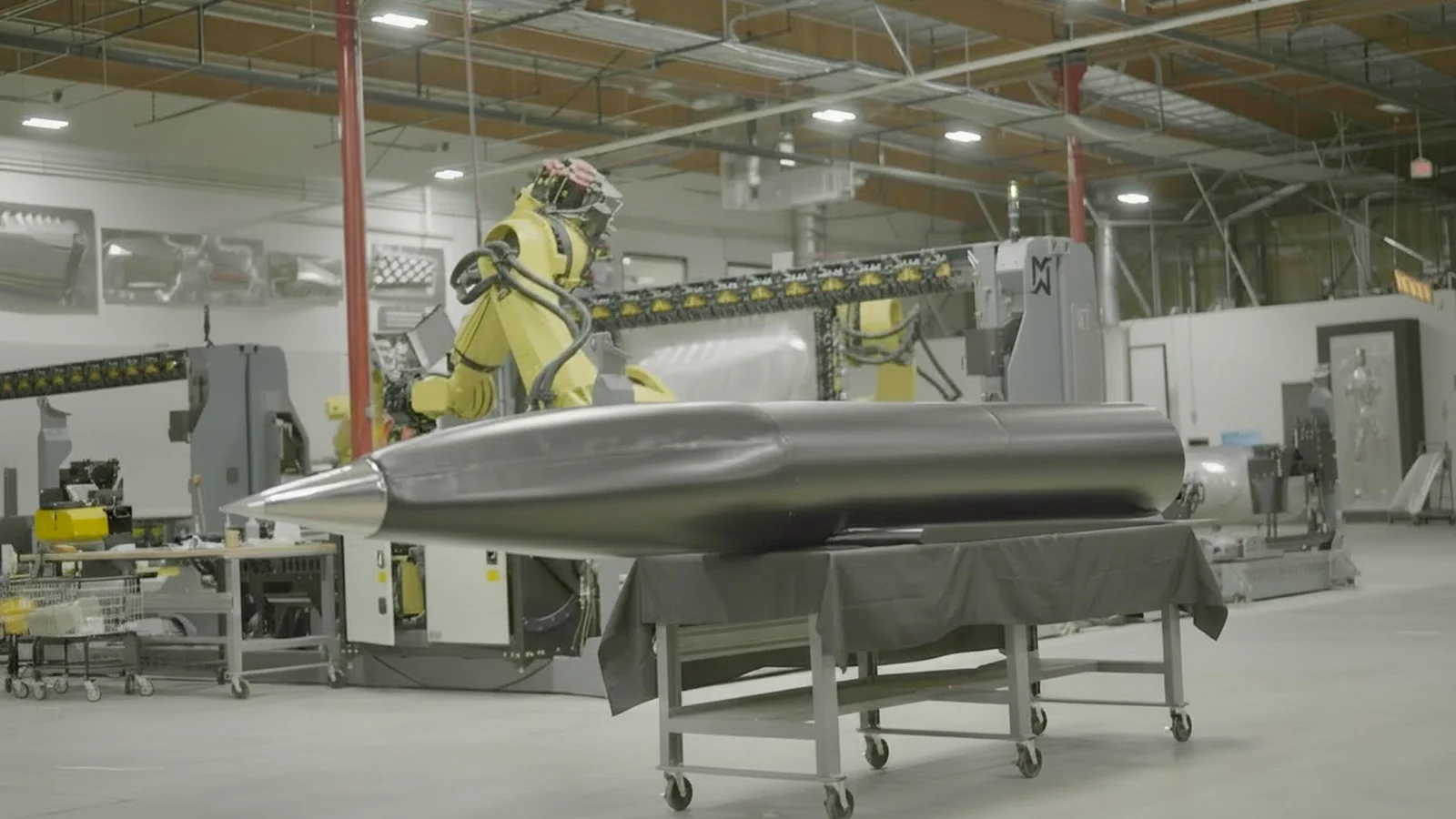
Machina puts programmable factories through missile qualification
Machina Labs is moving its robotic sheet-metal platform through a Lockheed Martin qualification contract tied to JASSM production, testing whether flexible factories can enter missile supply chains.
The factory is becoming a qualification problem, not just a capital-spending problem. Machina Labs is using a Lockheed Martin contract tied to JASSM production to qualify its RoboCraftsman robotic forming platform, while planning a two-hundred-thousand-square-foot facility. The milestone tests whether software-driven equipment can make approved parts across changing production needs.
The decision is to examine qualification data, material repeatability and production economics before treating flexible automation as surge capacity. A qualification contract does not prove acceptance, throughput or delivered missile output. It establishes the gate that programmable manufacturing must clear before the promised flexibility becomes defence capacity.
What the public record says
SpaceNews reports that Machina Labs holds a Lockheed Martin qualification contract supporting JASSM production, is qualifying its RoboCraftsman robotic sheet-metal system and plans a 200,000-square-foot factory.
Why this may matter
The work exposes production qualification as the bridge between flexible manufacturing claims and usable munitions capacity, a benchmark Canadian suppliers can inspect before investing.
Evidence limits
Qualification completion, approved part scope, production rates, unit economics, final facility timing and delivered output are not yet established.
Practical next step
Inspect the qualification milestones, compare repeatability and throughput evidence, and identify where Canadian manufacturing capability could clear a similar programme gate.
Original source (1)
- SpaceNews: Pentagon missile buildup is changing the factory floor (opens in a new tab)Machina Labs qualification work and factory plan
TACOM widens the supplier search as readiness tightens
TACOM is planning more industry engagements after a forty-plus-vendor event focused on second sources, advanced manufacturing and material constraints in an ageing vehicle fleet.
Readiness pressure is widening the search beyond incumbent supply lines. U.S. Army TACOM brought Honeywell and more than forty vendors into an engagement focused on second sources, advanced manufacturing and raw-material constraints as leaders confront an ageing fleet and delayed modernization. The signal is less about one solicitation than about opening the sustainment problem to a broader industrial base.
The Canadian decision is to identify where a qualified second source, repair process or material substitute can remove a real bottleneck. The event does not disclose platform-level requirements, funded orders or vendor selections. It shows that proof of compatibility, repeatability and delivery speed is becoming the price of a serious readiness conversation.
What the public record says
Breaking Defense reports that TACOM plans further industry engagement after an event involving Honeywell and more than forty vendors, with second sourcing, advanced manufacturing and raw-material constraints among the stated readiness priorities.
Why this may matter
The wider engagement model signals that sustainment organizations are actively looking beyond familiar suppliers when fleet age and delayed modernization expose fragile parts and material pathways.
Evidence limits
Specific platforms, part numbers, funded requirements, vendor selections, qualification standards and timelines for follow-on engagements remain undisclosed.
Practical next step
Identify one evidenced sustainment bottleneck, compare qualification and delivery requirements, and watch for the next TACOM engagement before treating the signal as an addressable opportunity.
Original source (1)
- Breaking Defense: TACOM plans further industry engagement amid readiness crisis (opens in a new tab)Industry engagement participants and readiness priorities
Carry the signal forward
Continue in True North Map
Follow the edition into the organizations, technologies, Defence needs and Mission areas already connected to its record.