
Canadian Defence Signals
Adoption gates are becoming the real market
Editorial briefing snapshot
The Bottom Line
The stronger pattern continues after entry. A Canadian battery supplier has reached an allied army order, Kraken has secured a long-term underwater-platform relationship, operational lessons are pushing C2 kits toward portability, and an allied camouflage agreement creates a repeatable ordering framework for signature management. Partner funding is also moving the F135 engine upgrade into engineering.
In context
Canadian defence opportunities are becoming easier to read because the hand-off points are becoming visible. MDA is opening a capital route, NordSpace has funding to advance a launch site, and the Army is publishing operator-defined autonomy challenges.
In this edition
MDA creates a gate between invention and defence scale
MDA Space has created an investment program for Canadian space and defence small and medium-sized businesses, adding a corporate route from early capability to funded scale.
MDA Space has created LaunchPad Ventures to identify and invest in Canadian small and medium-sized businesses across 25 space and defence focus areas. The program says selected companies will have access to funding, MDA expertise and relationships, and possible participation in future programs. The program turns a prime contractor's search for Canadian capability into a named entry point.
The useful decision is whether a company fits one of the focus areas and can supply the evidence required to progress from introduction to investment or program work. The announcement does not disclose the fund size, investment terms, selection criteria, timetable or first portfolio. Track the first selections and verify whether participation produces contracts, qualification or repeat integration.
What the public record says
MDA Space announced LaunchPad Ventures as a strategic program to identify and invest in Canadian space and defence small and medium-sized businesses across 25 focus areas.
Why this may matter
A named corporate investment route exposes a new adoption gate: firms must show both technical fit and the capacity to integrate with a prime's programs, relationships and delivery model.
Evidence limits
The fund size, investment structure, selection criteria, application timetable, governance, first participants and path into MDA programs are undisclosed.
Practical next step
Map eligible Canadian firms to the 25 focus areas, then track the first selections and verify evidence of funded program participation.
Original source (1)
- MDA Space: MDA Space establishes MDA Space LaunchPad Ventures to invest in Canadian space and defence companies (opens in a new tab)Opening announcement, program scope and participant-benefit sections
Sovereign launch gains a funded Atlantic address

A $10-million public-private package advances NordSpace's Atlantic Spaceport Complex in Newfoundland and Labrador, giving sovereign launch capacity a funded physical site.
A $10-million package will advance NordSpace's Atlantic Spaceport Complex in St. Lawrence, Newfoundland and Labrador. It combines $1 million from the federal government, $4 million from the province and $5 million from NordSpace. The site connects Canada's sovereign-launch ambition to infrastructure, while an earlier conditional National Defence contribution under Launch of North gives it a direct defence context.
The decision now moves from whether Canada needs launch capacity to whether the site can clear construction, regulatory, range-safety and customer gates. This announcement does not make the full $10 million defence funding, establish a launch date or prove an operational spaceport. Track permits, construction milestones and the first contracted mission before treating capacity as available.
What the public record says
Atlantic Canada Opportunities Agency announced a $10-million package, including $1 million federal, $4 million provincial and $5 million from NordSpace, for the Atlantic Spaceport Complex in St. Lawrence.
Why this may matter
Funding gives sovereign launch a delivery address, shifting scrutiny toward permitting, site build, range safety, launch customers and repeatable operations rather than strategic intent alone.
Evidence limits
The construction schedule, permits, launch licence, first customer, mission date, recurring capacity and relationship between the current package and earlier defence funding remain unresolved.
Practical next step
Track permitting and construction, then verify the first contracted mission and the operational conditions attached to sovereign defence use.
Original source (1)
- Atlantic Canada Opportunities Agency: $10M investment advances Canada's sovereign space-launch capacity in Newfoundland and Labrador (opens in a new tab)Funding announcement, contribution breakdown and Atlantic Spaceport Complex project description
MINERVA expands Army demand into six challenge pathways
The Canadian Army has set out six MINERVA challenges for uncrewed air and ground systems, replacing a single opportunity view with a staged map of operator-defined demand.
The Canadian Army has published the full MINERVA program map: Arctic air operations, intelligence and surveillance, airspace deconfliction, cargo or munition drop, ground surveillance and reconnaissance, and tactical ground cargo. The Innovative Solutions Canada challenges are being released through August and September, with up to $2.5 million available per challenge. Industry events at Valcartier and Petawawa added direct operator contact.
This materially expands the earlier single ISR-UAS challenge into six separate pathways with distinct users and evidence needs. The decision is which problem a team can solve credibly, and which demonstration, safety or integration proof will be required next. Publication does not establish an award, adoption, eligibility for any supplier or fielded performance. Track each release and compare its requirements before choosing a bid or partner route.
What the public record says
National Defence described six MINERVA uncrewed-system challenges scheduled for release across August and September, supported by industry engagement at Valcartier, Petawawa and a planned Gagetown event.
Why this may matter
A six-challenge map makes end-user demand more legible and separates autonomy opportunities by mission, forcing suppliers to choose the operator problem and evidence gate they can actually clear.
Evidence limits
Final challenge language, eligibility, assessment criteria, award timing, demonstration access, integration standards and later procurement pathways differ by challenge and remain partly unresolved.
Practical next step
Compare each released challenge with reviewed Canadian capabilities, identify the strongest operator fit and verify the next demonstration or submission gate.
Original source (1)
- National Defence: From the Arctic to the front line: Army and industry join forces on uncrewed systems through MINERVA (opens in a new tab)Six-challenge program list, Innovative Solutions Canada funding and industry-engagement sections
NEO Battery crosses into an allied army order
NEO Battery Materials has received its first direct order from a Republic of Korea Army division for military drone battery packs, creating an allied buyer-validation step for Canadian battery technology.
NEO Battery Materials has received its first direct supply order from a Republic of Korea Army division for military-grade drone battery packs intended for field validation and use. The Canadian company also disclosed a separate battery-management-system development order and other purchase orders in U.S., Korean and Japanese drone supply chains. A direct military buyer moves the evidence beyond laboratory or company-only testing.
The next gate is whether validation produces accepted performance, repeat orders and a durable production role. The announcement does not disclose quantity, value, unit performance, test criteria, delivery timing or the Army division. It also does not establish broad Republic of Korea Army adoption. Verify completion and customer acceptance, then track whether the order becomes repeat demand or qualification for additional platforms.
What the public record says
NEO Battery Materials announced its first direct supply order from a Republic of Korea Army division for military-grade drone battery packs for field validation and use.
Why this may matter
A direct allied-army order creates buyer evidence at the validation gate, but the commercial and defence signal depends on accepted field performance and repeat platform demand.
Evidence limits
The buyer division, order value, quantity, delivery schedule, pack specifications, validation criteria, results and path to broader adoption are undisclosed.
Practical next step
Verify delivery and field-validation results, then track repeat orders, platform qualification and production evidence across the allied drone customers.
Original source (1)
- NEO Battery Materials: NEO Battery receives first direct order from Republic of Korea Army and secures additional international drone battery orders (opens in a new tab)Republic of Korea Army order, battery-management-system order and international purchase-order sections
Kraken puts subsea power inside a platform relationship

Kraken Robotics has paired more than $27 million in new product orders with a separate long-term battery supply agreement for an extra-large uncrewed underwater vehicle program.
Kraken Robotics disclosed more than $27 million in additional orders across several product lines and, separately, a long-term master supply agreement for pressure-tolerant subsea batteries. The battery customer is described as a major international conglomerate developing extra-large uncrewed underwater vehicles. Together, the disclosures add a new platform relationship and a broader order signal beyond Kraken's July business update.
The adoption gate is sustained integration into the customer's underwater platform, not the headline order total. The source does not assign the $27 million to batteries, disclose the master agreement's value or name the XL-UUV customer. It also leaves quantities, schedules and qualification evidence unresolved. Verify deliveries under the agreement and track whether platform milestones create repeat battery orders at production scale.
What the public record says
Kraken reported more than $27 million in new orders across several product lines and a separate long-term master supply agreement for pressure-tolerant batteries supporting an XL-UUV developer.
Why this may matter
A long-term platform supply relationship is stronger evidence than a standalone product announcement, but its significance depends on qualification, delivery cadence and the customer's XL-UUV progress.
Evidence limits
The battery customer's identity, agreement value, committed quantity, delivery schedule, qualification milestones and share of the separate $27-million order total are undisclosed.
Practical next step
Verify initial deliveries and platform qualification, then track repeat orders and production cadence under the long-term supply agreement.
Original source (1)
- Kraken Robotics: Kraken Robotics Reports Q2 2026 Financial Results (opens in a new tab)Business highlights covering new product orders and the XL-UUV pressure-tolerant battery master supply agreement
Portable C2 turns mobility into an operating requirement
U.S. Air Force lessons from Epic Fury are pushing command-and-control communications from a 10-pallet package toward one-person portability with redundant transport paths.
Operational lessons from Epic Fury have changed how the U.S. Air Force frames deployable command and control. Brigadier General Jeffrey Phillips described an existing communications package of about 10 pallets, 20 tons and 40 people, while the target is equipment one person can carry and one or two people can operate. The review also found that primary connectivity existed without adequate alternate, contingency and emergency paths.
The result makes mobility and communications resilience part of the capability requirement rather than support assumptions. Canadian teams can compare portable C2, commercial satellite, military satellite, 5G and terrestrial options against the same PACE discipline. The report does not publish a procurement, configuration, performance threshold or fielding schedule. Track exercises to verify whether the smaller kits preserve command function under disruption.
What the public record says
A named U.S. Air Force official said Epic Fury exposed an overlarge deployable communications package and inadequate alternate, contingency and emergency connectivity, prompting a push for portable C2.
Why this may matter
The operating requirement now combines physical mobility with communications redundancy, raising the value of systems that can be carried, reconfigured and tested across multiple transport paths.
Evidence limits
The final architecture, suppliers, procurement path, portability threshold, cyber controls, fielding schedule and measured performance under disrupted conditions are not public.
Practical next step
Compare Canadian deployable C2 options against the portability and PACE requirements, then track exercise evidence for resilient operation under disruption.
Original source (1)
- Breaking Defense: Air Force seeks more portable C2, comms approach after studying Epic Fury (opens in a new tab)Named Air Force official's description of package size, portability target, PACE gap and connectivity options
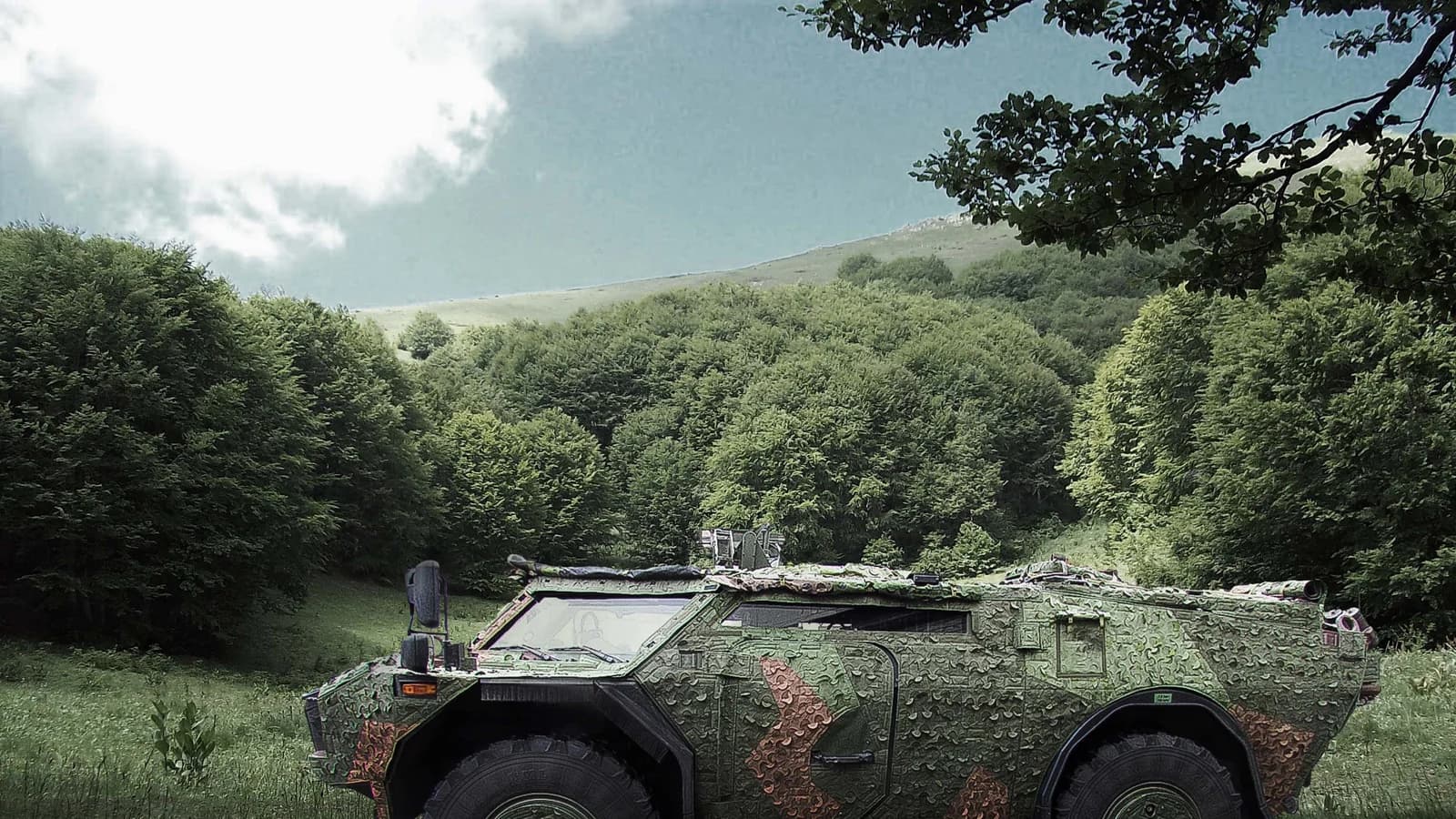
A camouflage framework makes signature management repeatable
The Netherlands has placed a first vehicle order under a multi-year Saab Barracuda agreement, turning multispectral camouflage from a product choice into a repeatable fleet framework.
Saab has signed a multi-year agreement with the Netherlands Ministry of Defence for Barracuda camouflage systems and received the first order for existing Fennek reconnaissance vehicles and Panzerhaubitz self-propelled howitzers. Future vehicles can be ordered through the same agreement, with woodland, urban and Arctic patterns available. The structure connects signature management to repeat fleet integration rather than a one-off kit purchase.
The Canadian decision is whether camouflage should be planned as a vehicle-family and environment framework with common integration evidence. The company release does not disclose value, quantity, delivery schedule, vehicle modifications or measured multispectral performance. It establishes an agreement and first order, not operational results. Compare Canadian vehicle and Arctic signature needs, then track deliveries and user evidence before treating the model as transferable.
What the public record says
Saab announced a multi-year camouflage agreement with the Netherlands Ministry of Defence and a first order covering existing Fennek and Panzerhaubitz vehicles.
Why this may matter
A framework agreement makes signature management repeatable across vehicle fleets and environments, placing interface, pattern, maintenance and performance evidence inside a continuing procurement relationship.
Evidence limits
The agreement value, first-order quantity, delivery schedule, vehicle integration work, maintenance model and measured performance across woodland, urban and Arctic patterns are undisclosed.
Practical next step
Compare Canadian vehicle and Arctic signature requirements with the framework, then track deliveries and verify user evidence across the ordered platforms.
Original source (1)
- Saab: Saab signs long-term agreement for camouflage systems with the Netherlands (opens in a new tab)Agreement scope, first vehicle order and woodland, urban and Arctic pattern sections
Partner funding moves the F135 upgrade into engineering
A $240.8-million F135 contract modification moves the engine-core upgrade into engineering and manufacturing development, with aggregate F-35 partner funding attached.
The U.S. Department of War has issued a not-to-exceed $240.754-million modification to RTX's Pratt & Whitney Military Engines for the F135 engine-core upgrade. The work moves the upgrade from risk-reduction design review into engineering and manufacturing development, addresses readiness and operational issues, and includes long-lead material for a spare test engine. The notice records $39.009 million in aggregate F-35 partner funds.
Canada is acquiring 88 F-35A aircraft and the official project includes sustainment, making engine-upgrade progress relevant to future fleet support. The contract does not identify Canada's share of the partner funds, final upgrade cost, aircraft retrofit plan or Canadian industrial role. Track engineering milestones and verify how configuration, timing and sustainment choices enter Canada's program before assigning a domestic effect.
What the public record says
The official contract notice records a $240.754-million not-to-exceed F135 engine-core-upgrade modification moving work into engineering and manufacturing development, including $39.009 million in aggregate F-35 partner funds.
Why this may matter
Partner-funded engineering moves the upgrade closer to a fleet configuration decision, where Canada will need evidence on retrofit timing, sustainment, readiness effects and industrial participation.
Evidence limits
Canada's portion of partner funding, final upgrade value, engineering results, retrofit scope, fielding schedule, sustainment effect and Canadian industrial workshare are unresolved.
Practical next step
Track engineering and test milestones, then verify Canada's configuration, retrofit, sustainment and industrial decisions against the official fighter project.
Original sources (2)
- U.S. Department of War: Contracts for Aug. 27, 2026 (opens in a new tab)Navy contract entry for RTX Corp., Pratt & Whitney Military Engines, modification P00013
- National Defence: Future Fighter Capability Project (opens in a new tab)F-35A fleet quantity, acquisition agreement and sustainment project scope
Carry the signal forward
Continue in True North Map
Follow the edition into the organizations, technologies, Defence needs and Mission areas already connected to its record.