
Canadian Defence Signals
Maintenance AI and undersea trials define the work
Editorial briefing snapshot
The Bottom Line
The useful unit of discovery is the work and its handoffs: the approved maintenance information, the payload host, the responsible authority and the component supplier. These developments offer different levels of evidence and commitment.
In context
A Canadian AI contract starts with the people sustaining Hercules aircraft. Allied undersea trials, a northern crisis exercise and a proposed computer supply chain show other parts of turning technology into usable capability.
In this edition
Contextere’s $10 million contract starts with the people maintaining Hercules aircraft

Lockheed Martin Canada has contracted a Canadian AI platform for a defined sustainment problem: connecting workforce competence and technical knowledge to CC-130J maintenance.
Aircraft availability depends on the people allowed and prepared to do the work. Lockheed Martin Canada’s October 27 agreement with Contextere puts C$10 million behind that part of the maintenance system, beginning with the RCAF’s CC-130J Hercules fleet.
The funded platform, iMAPLE, builds on Contextere’s MADISON technology. The announcement describes natural-language access to validated technical information, competency profiles, qualification mapping and retention of institutional knowledge. The useful distinction is between making a manual easier to search and helping an organization understand whether the right expertise is available for a particular task. The latter also requires reliable personnel, training and maintenance records.
This is a contracted next phase of development with a named initial fleet. The release does not publish an aircraft-availability improvement, a reduction in maintenance hours or evidence of fleet-wide adoption. Those outcomes will need measurement against the existing workflow. A promising deployment question is whether a technician can reach the right approved instruction with its revision and applicability intact, while supervisors can see the qualification gap without handing an AI system authority to certify the work.
For Canadian firms, this is also a concrete route through an established prime’s sustainment work and industrial-benefit obligations. Repeating that route elsewhere would require an equipment owner, access to governed source data and a defined operational test. A generic AI demonstration would not establish the same fit.
What remains open
The announcement gives no measured readiness gain, acceptance criteria, deployment scale or public data-integration specification.
What comes next
A useful deployment review would compare task completion, approved-information retrieval and competency-gap resolution with the prior process.
Evidence and assessment for Contextere’s $10 million contract starts with the people maintaining Hercules aircraft
What the sources establish
The issuer announcement reports a C$10 million Lockheed Martin Canada contract to develop iMAPLE, beginning with support for the RCAF’s CC-130J fleet.
True North Map assessment
The opportunity is in an accountable maintenance workflow: approved knowledge, workforce qualifications and task decisions need to remain connected.
Original source (1)
- Contextere / TheNewswire: Lockheed Martin Canada announces $10 million Contextere contract (opens in a new tab)Attributed statement · Opening and Building Canadian AI for Defence Readiness; publication date has day precision
AUKUS puts payload delivery and common control into the same undersea trial
The UK has named three UUV payloads for delivery from 2027 after Maritime Big Play testing; interoperability remains a development task with a stated delivery horizon.
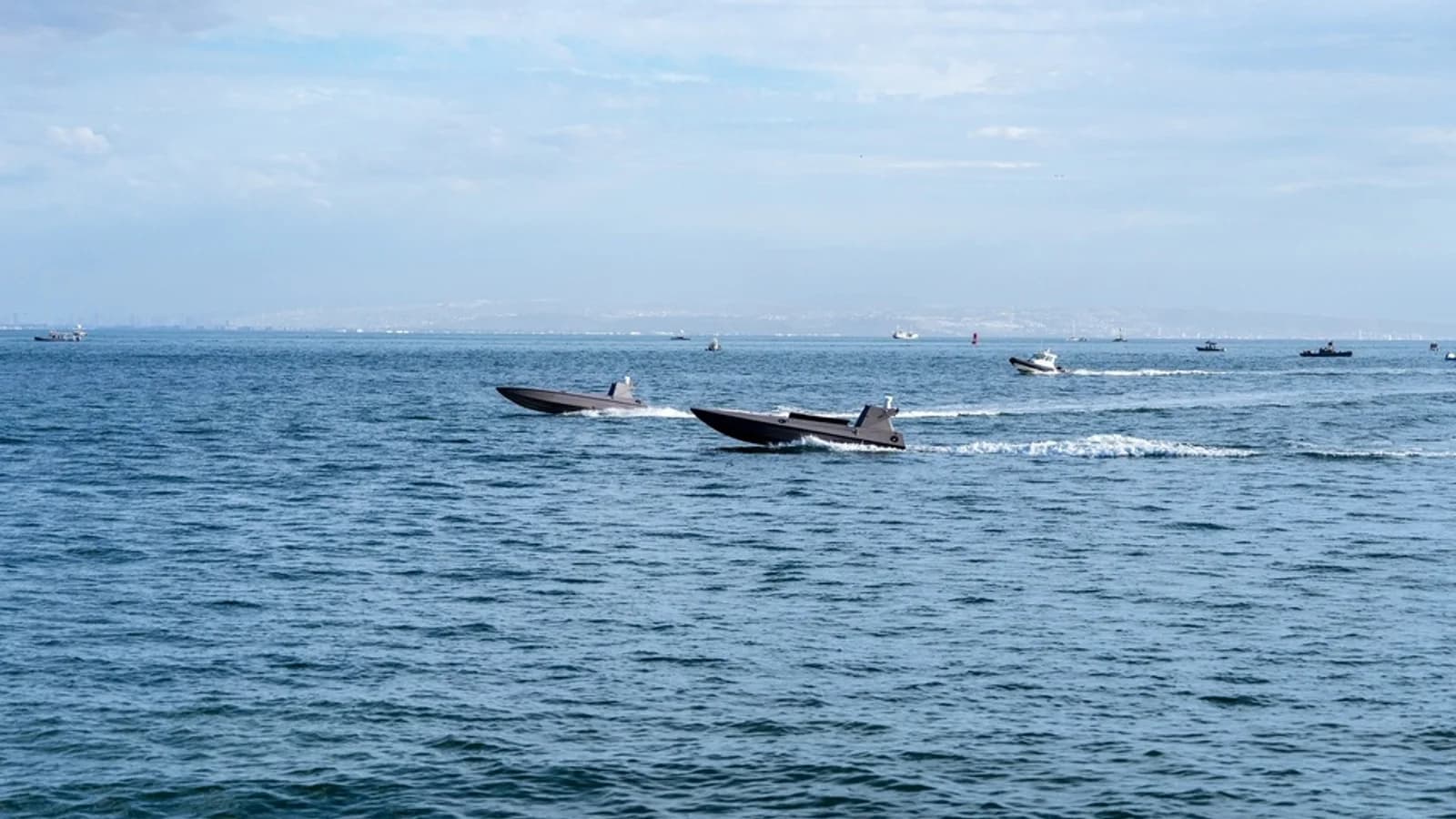
The UK’s October 27 announcement gives the undersea autonomy discussion a more specific shape: synthetic-aperture sonar, a deployable anti-submarine sensor and a deployable non-kinetic effector are to be developed for use across AUKUS UUV fleets from 2027. This follows a week of Maritime Big Play testing in San Diego.
The exercise combined anti-submarine warfare, resupply, lethality and seabed work. Britain’s ASW contribution included 13 uncrewed surface vehicles, two targets and four gliders. Those assets matter as parts of a sensing and control chain, rather than interchangeable counts of autonomous vessels. A sensor finding something, a gateway moving the observation and a command system assigning another vehicle to investigate are separate engineering and operational claims.
The release explicitly emphasizes common control solutions. It does not disclose the payload interface, bandwidth and power budgets, acoustic performance or acceptance results needed to assess a particular Canadian integration. Nor does the exercise establish that the three future payloads are already operational across allied fleets.
For Canada’s acoustic, subsea and autonomy community, the useful comparison is how a multi-vendor trial carries a defined payload toward a fleet requirement. Developers should be able to explain what their component produces, who consumes that output, what happens when communications fail and what the host must supply. AUKUS participation or a supplier opportunity cannot be inferred from relevance to those functions.
What remains open
Public material does not specify the three payloads’ interfaces, performance results or Canadian supplier access.
What comes next
Watch for host-interface and acceptance information that connects the 2027 delivery commitment to usable fleet configurations.
Evidence and assessment for AUKUS puts payload delivery and common control into the same undersea trial
What the sources establish
The UK MOD identifies three UUV payloads intended for availability from 2027 and reports Maritime Big Play testing involving crewed and uncrewed systems.
True North Map assessment
An integration case needs the sensing, communications, control and host-support handoffs; a platform list alone cannot establish it.
Original source (1)
- UK Ministry of Defence: UK leads three undersea sensor payloads after Maritime Big Play (opens in a new tab)Direct record · Payload list, 2027 availability and Maritime Big Play contribution
NANOOK-TATIGIIT exercises the decisions around northern infrastructure
A northern emergency scenario put community relationships and response responsibilities alongside military capability.
National Defence’s October 27 account describes an October 19–23 exercise in Whitehorse, built around a complex emergency threatening critical infrastructure and public safety.
Participants included federal departments, RCMP, Coast Guard, Red Cross, Indigenous Services, Yukon First Nations governments and communities, and territorial and municipal authorities. Defence reports that the activity clarified roles and strengthened coordination.
For anyone proposing northern sensing or communications, the practical question comes after detection: who receives the information, who decides, and who can respond? A technically successful alert does not establish those responsibilities. The exercise identifies that coordination work; it is not evidence of a new equipment purchase.
What remains open
The release supplies no measured response-time or communications-performance results.
What comes next
Use the scenario to ask how an infrastructure alert reaches the responsible northern authority.
Evidence and assessment for NANOOK-TATIGIIT exercises the decisions around northern infrastructure
What the sources establish
Defence reports a multi-agency crisis-response exercise, not an operational emergency.
True North Map assessment
Northern integration includes agreed decision roles and local knowledge as well as data links.
Original source (1)
- National Defence: Operation NANOOK-TATIGIIT Strengthens Whole-of-Government Crisis Response in the Arctic (opens in a new tab)Direct record · Exercise dates, participants and scenario paragraphs
BlueChip starts with the factory and battery constraints behind a sovereign computer
Anduril and Qualcomm’s laptop announcement exposes the engineering work needed to change where a computer is made.
The October 27 BlueChip announcement has functional prototypes and a plan to take orders in 2027. Qualcomm supplies Snapdragon X computing and on-device AI; Anduril plans circuit-board assembly at Arsenal-1 in Ohio.
The useful detail is the redesign around available industry: enclosure machining, battery and power management, producible metals and bonding for US-made display glass. More than 90% of prototype component procurement cost comes from US and allied-country suppliers. That figure does not describe US content alone, or certify a production laptop.
For Canadian sovereign-compute discussions, this is a comparison in supply-chain engineering. A local assembly line still depends on component qualification and repair support. No Canadian supplier participation is announced.
What remains open
The release does not specify final production content or validated ruggedness.
What comes next
Check the production specification and service model when orders open.
Evidence and assessment for BlueChip starts with the factory and battery constraints behind a sovereign computer
What the sources establish
Qualcomm reports functional prototypes, phased domestic sourcing and orders planned for 2027.
True North Map assessment
On-device processing can address some cloud constraints; hardware origin and software assurance remain separate questions.
Original source (1)
- Qualcomm: Anduril and Qualcomm Unveil BlueChip to Rebuild American Computer Manufacturing (opens in a new tab)Attributed statement · Rendered public press note, captured article paragraphs (lines 32–43)
Carry the signal forward
Continue in True North Map
Follow the edition into the organizations, technologies, Defence needs and Mission areas already connected to its record.