
Canadian Defence Signals
Financing drone defence and testing the maritime chain
Editorial briefing snapshot
The Bottom Line
North Vector’s capital is directed toward production and supply chains; TEKEVER pairs a purchase with completed acceptance and training. Aksungur and SMOKERS add specific trial evidence, while this evening’s Canadian procurement hearing offers a place to examine the institutional handoffs behind delivery.
In context
New Canadian interceptor financing and an allied drone purchase show different stages of the path to usable capability. Maritime reports follow the same question through sonobuoy data links, shore processing and sea-trial configurations.
In this edition
North Vector’s new capital targets interceptor production

North Vector Dynamics reports a closed Series A exceeding US$20 million, with manufacturing and assembly among the intended uses.
Calgary’s North Vector Dynamics has closed a Series A exceeding US$20 million, or C$29 million as presented by the company, at a valuation above US$90 million. Tech Horizons led, with Canadian and other investors including ONE9, Garage Capital and CSG. The October 26 issuer announcement directs the money toward manufacturing, assembly, supply-chain security, greater vertical integration and offices in the United States and Europe.
CM-70, its counter-drone interceptor, is the initial commercial product. NVD says DRDC has supplied early funding and continuing testing support. The current product page advertises several launch configurations and an open integration proposition; neither it nor the financing release supplies an independently evaluated intercept dataset. A successful financing establishes capital availability, rather than military acceptance.
The round follows a separate October 22 MOU to explore European manufacturing and integration with CSG. That earlier agreement retained Canadian design and engineering authority, according to NVD. The new money can fund an industrial route, while the site, repeatable output, customer acceptance and binding orders still determine how much capability that route delivers.
What remains open
The release gives no production rate, manufacturing commissioning date or named procurement award.
What comes next
Commissioned capacity, accepted deliveries and repeat orders would show the industrial effect of the new financing.
Evidence and assessment for North Vector’s new capital targets interceptor production
What the sources establish
The issuer reports a completed financing and specified industrial uses; CM-70 performance and integration statements remain company claims.
True North Map assessment
Capital for assembly and supply-chain work addresses a different bottleneck from proving an interceptor in a trial.
Original sources (3)
- North Vector Dynamics: North Vector Dynamics closes Series A exceeding US$20 million (opens in a new tab)Attributed statement · Full bilingual October26 issuer release; closed round, valuation, investor list, manufacturing use and DRDC testing support.
- North Vector Dynamics: CM-70 counter-UAS interceptor (opens in a new tab)Attributed statementFull current product page; advertised configuration and integration scope, not independent trial results.
- North Vector Dynamics: North Vector Dynamics and CSG sign memorandum of understanding (opens in a new tab)Attributed statement · Full bilingual October22 original; exploratory European industrial cooperation and retained Canadian design/IP authority.
TEKEVER pairs a USSOCOM purchase with completed acceptance testing
TEKEVER’s October 26 announcement pairs a purchase with completed validation, acceptance flights and training; the bought model remains undisclosed.
TEKEVER’s USSOCOM announcement pairs a purchase with a completed validation and acceptance programme, flights at several locations and dedicated training. The company describes a deployable intelligence, surveillance and reconnaissance system combining aircraft, mission payloads, communications and AI-enabled mission software. It withholds quantity, model and configuration.
An earlier company account identifies AR3 at a March 2025 USSOCOM exercise at Camp Roberts. That establishes a previous demonstration in the relationship. It does not establish that AR3 is the model now bought, a distinction easily lost when a photograph or product history sits beside a new announcement.
Canadian suppliers can learn from the progression without assuming eligibility for the same contract. Field evidence and user training are part of bringing a modular system into service. TEKEVER’s CEO describes the relationship in terms of repeated tests, dialogue and professional engagement.
What remains open
Quantity, value, delivery dates and the bought model are undisclosed.
What comes next
A buyer or fielding account identifying the selected configuration would clarify the resulting operational package.
Evidence and assessment for TEKEVER pairs a USSOCOM purchase with completed acceptance testing
What the sources establish
TEKEVER reports a USSOCOM purchase and completed validation and acceptance; the public statement withholds the purchased configuration.
True North Map assessment
The announcement connects trial evidence, training and procurement while preserving the difference between an earlier demonstration and the selected system.
Original sources (2)
- TEKEVER: TEKEVER delivers aerial intelligence for USSOCOM (opens in a new tab)Attributed statementFull October26 company release; completed validation/acceptance programme, training, purchase and withheld configuration.
- TEKEVER: TEKEVER and USSOCOM complete operational exercise (opens in a new tab)Attributed statementFull earlier March7,2025 exercise account; AR3 demonstration at Camp Roberts. Background does not identify the system bought in2026.
Aksungur’s sonobuoy trial exercises the shore-processing chain
Reported TURNAs trials connected buoy release, airborne reception and acoustic processing ashore within one sortie.
Naval News’s October 26 account of TURNAs-26 follows the acoustic data beyond the aircraft. Aksungur carried three ASELSAN aselBUOY 100P passive sonobuoys into the Mediterranean exercise area, descended to about 1,000 feet for release and climbed to 6,000 feet to listen. The aircraft reportedly stayed in the mission area for roughly four hours, relaying acoustic data to a centre integrated with its ground-control station in Ankara. The report says underwater targets were detected from the processed signals.
The receiving aircraft and the processing location matter separately. ASELSAN’s older product brochure describes a NATO A-size buoy that transmits acoustic information by VHF to air or surface platforms; settings can be selected before launch and some changed afterward through a UHF command interface. These are manufacturer configuration statements. The format label does not establish an end-to-end coalition interoperability result.
For Canadian acoustic and autonomy teams, the comparison is a complete delivery path: deploy the sensor, receive its data, move it to processing and put the interpretation before an operator. This account supplies a concrete trial sequence, rather than public detection probabilities or performance under denied communications. It also differs from a claim that all acoustic processing ran onboard the drone.
What remains open
Detection range, false-alarm performance and behaviour under disrupted links are not established.
What comes next
A trial account with target ground truth and the reporting timeline would make this architecture easier to compare with Canadian trials.
Evidence and assessment for Aksungur’s sonobuoy trial exercises the shore-processing chain
What the sources establish
Original reporting describes sonobuoy release, reception and data relay to shore; the manufacturer brochure explains the buoy’s radio/control interfaces.
True North Map assessment
Receiver endurance helps only if the data path and processing arrangement support a usable operator picture.
Original sources (2)
- Naval News / Tayfun Ozberk: Aksungur UCAV drops aselBUOY sonobuoys for the first time (opens in a new tab)Original reporting · Full October26 original reporting; TURNAs sortie sequence and shore processing. Trial observations remain attributed; author commentary distinguished.
- ASELSAN: aselBUOY 100 P passive directional sonobuoy brochure (opens in a new tab)Attributed statementComplete two-page manufacturer brochure dated05.2025; platform interfaces, VHF/UHF control and published configuration, not a TURNAs performance report.
SMOKERS trials separate a target boat from a production decision
France’s DGA tested prototypes and retained design ownership; procurement and industrial production remain future decisions.
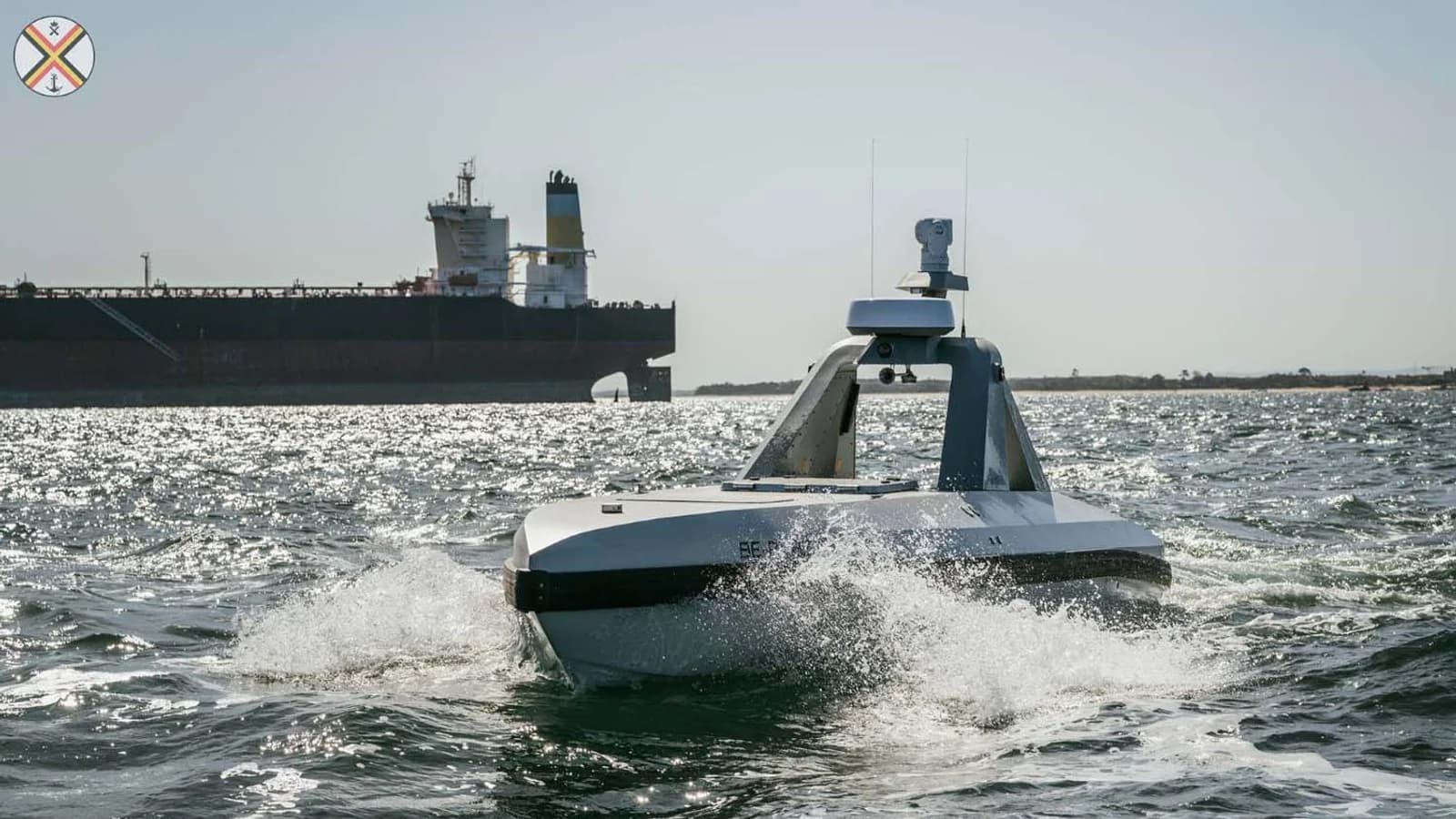
Naval News reports more than four SMOKERS sea-trial campaigns and three craft used in France’s WildFire exercise. Its embarked observation preserves an important configuration distinction: a white target craft lacked the infrared sensors, satellite antennas and payload compartment of the grey operational variant. Exercise participation therefore does not prove every configuration was tested.
DGA owns the design and envisages production by small civilian or military yards. Internal resources fund the prototypes; a Navy purchase would use a separate equipment budget. The Canadian industrial comparison is the relationship between design authority, repeatable boatbuilding and operator trials. Design ownership can make a wider manufacturing route possible, while reliability work and procurement still stand between prototypes and fleet output.
What remains open
No production award or accepted fleet quantity is announced.
Evidence and assessment for SMOKERS trials separate a target boat from a production decision
What the sources establish
Original reporting and DGA statements distinguish target configuration, completed trials and future industrialisation.
True North Map assessment
Access to a reproducible design can matter as much as the number of prototype hulls.
Original source (1)
- Naval News / Florent de Saint Victor and Xavier Vavasseur: From concept to sea trials in six months: France fast-tracks SMOKERS USV (opens in a new tab)Original reporting · Full October26 original; DGA interview and embarked observation distinguish target craft, operational variant, trials and future procurement.
Tonight’s procurement hearing puts delivery actors at one table
The Senate’s October 26 agenda schedules procurement officials and operational leaders from 16:00 Eastern; no hearing result is yet reported.
The Senate’s National Security, Defence and Veterans Affairs committee is scheduled to examine defence procurement and Canada’s higher spending commitment at 16:00 Eastern on October 26. The first panel lists Secretary of State Stephen Fuhr, Defence Investment Agency CEO Doug Guzman and senior official Wendy Hadwen. Later panels include ISED, Treasury Board, the Coast Guard, National Defence and independent specialists.
The agenda creates a useful opportunity to compare commercial acquisition powers with industrial participation, operating needs and financial controls. It establishes who is due to discuss those handoffs, rather than a policy decision or completed testimony. For a supplier, the subsequent transcript will be more useful than attributing an answer to officials before the session has occurred.
What comes next
Read the subsequent transcript for specific commitments, timelines and responsibility for implementation.
Evidence and assessment for Tonight’s procurement hearing puts delivery actors at one table
What the sources establish
The official notice specifies the study, scheduled time and witnesses, with changes still possible.
True North Map assessment
Hearing the acquisition, industrial and operating organizations together can expose where their delivery responsibilities meet.
Original source (1)
- Senate of Canada: SECD meeting29: defence procurement and increased spending (opens in a new tab)Direct recordComplete current October26 meeting notice; scheduled16:00Eastern, panels and subject. It is an agenda, not testimony or a committee finding.
Carry the signal forward
Continue in True North Map
Follow the edition into the organizations, technologies, Defence needs and Mission areas already connected to its record.