
Canadian Defence Signals
Arctic tasking, test-range access and Canadian field power
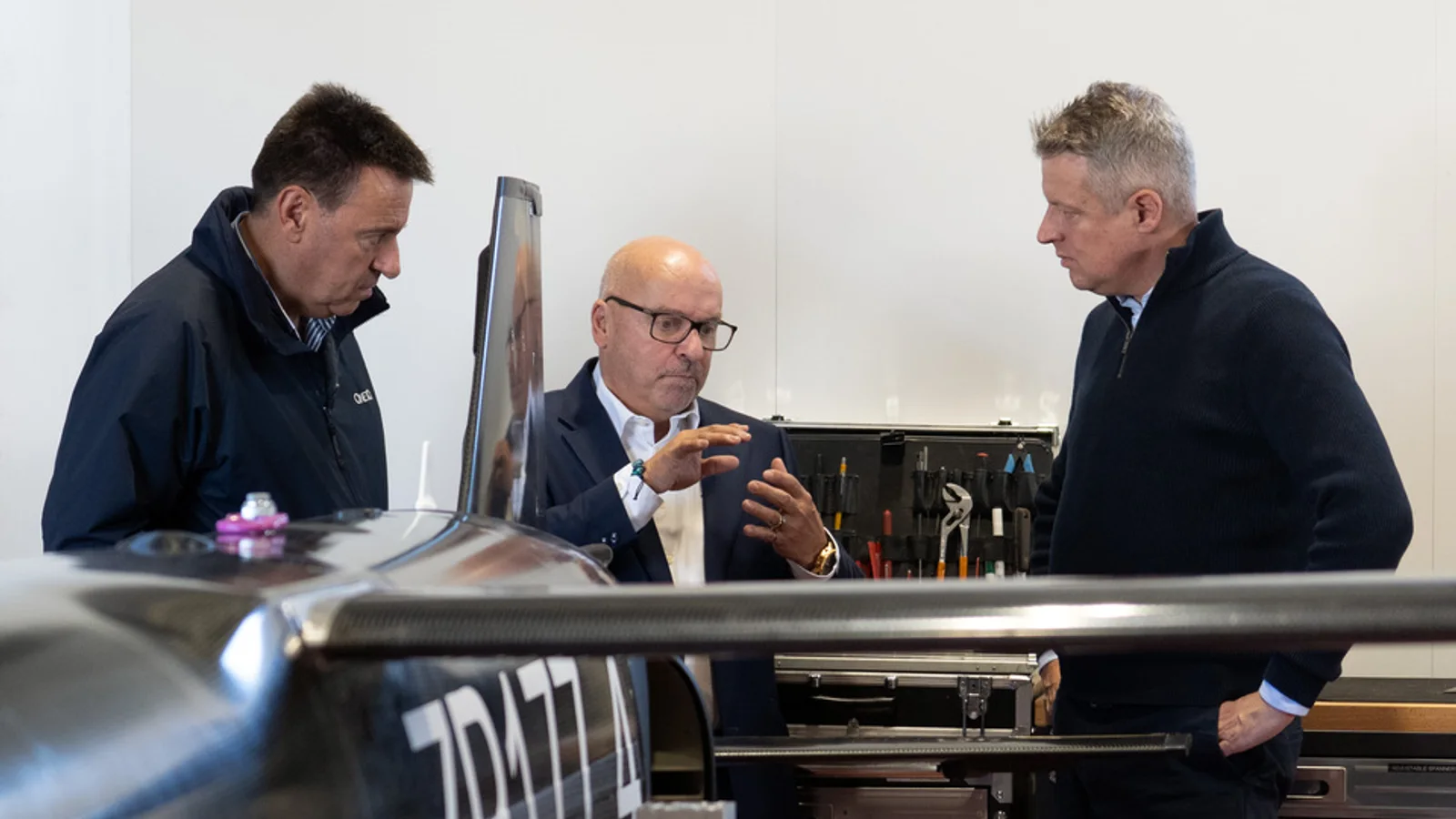
Editorial briefing snapshot
The Bottom Line
Useful capability depends on the surrounding system: tasking, test approvals and representative evidence deserve attention alongside the platform.
In context
A new NATO account reports adaptive autonomous tasking at REPMUS, while completed Dartmouth experimentation points toward follow-on work. Britain is changing access to its test facilities, and AlumaPower has support for the work between a power prototype and a commercial product.
In this edition
Task Force X-Arctic reports autonomous tasking, with a winter trial next

NATO’s October 9 report identifies completed adaptive digital tasking at REPMUS26 and a planned November trial in northern Norway, advancing beyond the previously reported integration test.
Task Force X-Arctic’s PRIMUS mission-engineering tool completed autonomous digital tasking during REPMUS 26, adapting assignments to the exercise’s changing environment, NATO’s maritime research centre reported on October 9. Earlier Iceland work had established the tasking infrastructure; Portugal exposed it to a much larger, more varied collection of systems. The result advances the architecture beyond simply connecting platforms.
Canada has a direct place in the next part of this work. SHINE, held at COVE in Dartmouth from October 5–9, brought military users and developers together for operationally relevant experimentation, including undersea-infrastructure protection and operations in contested electromagnetic conditions. ACT says observations will feed its Innovation Continuum report and follow-on experiments, including Task Force X-Arctic. It has not yet published a system-by-system outcome.
The northern operating question remains. Portugal supplied complexity and scale, rather than Arctic winter conditions. CMRE says a northern Norway trial with polar-ready assets is planned for November. That planned move is useful precisely because a working tasking architecture must still be tested against the environment in which Canadian and allied crews would use it.
What remains open
The accounts do not report tasking latency, degraded-link performance, or a completed northern Norway winter trial.
What comes next
The November northern Norway trial and Innovation Continuum report would show which constraints survived the move from integration to representative northern use.
Evidence and assessment for Task Force X-Arctic reports autonomous tasking, with a winter trial next
What the sources establish
CMRE reports completed adaptive PRIMUS digital tasking at REPMUS26 and a planned November Norway trial. ACT separately confirms completed SHINE experimentation in Dartmouth and follow-on TFX-Arctic work.
True North Map assessment
The newly reported result is adaptive tasking across a mixed system architecture. SHINE gives Canadian innovators a route into follow-on operational experimentation, while winter performance remains a separate test.
Original sources (2)
- NATO STO Centre for Maritime Research and Experimentation: Task Force X-Arctic scales up at REPMUS 26 (opens in a new tab)Direct record · October 9 body: Iceland first infrastructure realization, REPMUS adaptive digital tasking, Portugal/Arctic environmental distinction and planned northern Norway winter trial.
- NATO Allied Command Transformation: SHINE 2026 Brings NATO Innovation into Operational Experimentation (opens in a new tab)Direct record · October 9 body: completed Dartmouth/COVE experimentation, undersea-infrastructure and other operational lines, human control, pending Innovation Continuum report and follow-on TFX-Arctic work.
Project Safari addresses the approvals behind access to test ranges
The UK plans one access route for smaller companies and simpler trial approvals; its Hebrides investment has reached a first design agreement.
Access to a test range includes permission to run the trial. Project Safari, launched by the UK Ministry of Defence and QinetiQ on October 10, tackles that administrative part of capability development. The programme promises a single access route for smaller companies and improved trial approvals, alongside specialist facilities, expertise and infrastructure modernisation.
The same announcement records a more specific commitment at MOD Hebrides: the parties signed the first design-stage agreement for a multimillion-pound investment intended to support hypersonic and other advanced testing. That is a design commitment. The release supplies neither a completed upgrade nor a live booking service.
The Canadian comparison is practical. More trial facilities will only help suppliers if companies can obtain access, agree safe test conditions and produce evidence a buyer can use. Safari makes that process an explicit part of the UK’s defence-industrial programme. It does not establish Canadian eligibility, prices or an opening date, so Canadian teams should investigate those details before treating the announcement as an available overseas test route.
What remains open
The release does not specify Canadian eligibility, fees, the booking mechanism or operating dates for the revised access route.
What comes next
A published access process and trial-approval rules would establish how a supplier can actually use the announced programme.
Evidence and assessment for Project Safari addresses the approvals behind access to test ranges
What the sources establish
MOD announced the joint programme and signed a separate first design-stage agreement for investment at the Hebrides range.
True North Map assessment
Test access and approval procedures are capability infrastructure alongside the range itself and the specialists who operate it.
Original source (1)
- UK Ministry of Defence: Faster front-line delivery with new Testing and Evaluation programme (opens in a new tab)Direct record · Full October 10 release: SME access and trial approvals; separately signed first design-stage agreement for Hebrides investment.
AlumaPower receives support to commercialize aluminium-fuel power
FedDev Ontario provides C$4 million toward AlumaPower’s C$8 million commercialization project, separate from ProMart’s tariff-response support.
FedDev Ontario’s October 9 announcement gives AlumaPower C$4 million toward a C$8 million commercialization project for aluminium-fuelled generators. The Sarnia company is developing portable, long-duration power using recycled aluminium, with defence among its potential applications. This is industrial development support; the release identifies no military purchase.
A preceding NRC contribution record helps explain the work between a promising generator and a usable field product. The C$950,000 sprint, scheduled from December 2025 to June 2026, covered accelerated testing, a consolidated evidence package, higher-energy-density cells, thermal-management and heat-export concepts, and prototype preparation for off-site trials. Those are planned activities in the grant record, rather than published test results.
For military power, quiet operation is only one part of the proposition. Operators also need evidence about usable output, heat, fuel handling and the support chain in representative conditions. Commercialization funding can help a Canadian supplier answer those questions. ProMart’s accompanying equipment and facility support, close to C$900,000 toward an almost C$2 million project, uses the separate tariff-response initiative. Keeping the instruments and recipients clear makes the industrial effect easier to assess.
What remains open
The records supply no validated field-performance result, defence customer order or recipient-specific repayment schedule.
What comes next
A documented off-site trial with representative loads and support requirements would clarify the operating case for a defence customer.
Evidence and assessment for AlumaPower receives support to commercialize aluminium-fuel power
What the sources establish
The October 9 federal release specifies C$4m for AlumaPower commercialization and a separate ProMart tariff-response project; the NRC record identifies the preceding development work.
True North Map assessment
Commercialization support addresses a Canadian power-supply option whose earlier funded work centred on testing and prototype preparation.
Original sources (2)
- FedDev Ontario: Government of Canada supports growth and competitiveness of two businesses in Sarnia (opens in a new tab)Direct record · Full original release; AlumaPower C$4m/C$8m commercialization project, separate ProMart tariff-response project.
- NRC / Open Government: NRC AlumaPower 2026 development sprint contribution (opens in a new tab)Direct recordFull contribution record1040727; agreement December22,2025–June29,2026; purpose and planned evidence-generation activities. Direct HTML was a rejection body; web recovery supplied the substantive record.
Carry the signal forward
Continue in True North Map
Follow the edition into the organizations, technologies, Defence needs and Mission areas already connected to its record.