
Canadian Defence Signals
Allied autonomy is moving into repeatable operating pathways
Editorial briefing snapshot
The Bottom Line
Britain extended torpedo support while the Space Force funded standardised laser-link tests.
The common shift is from platform claims to repeatable pathways: coalition integration, operational deployment, an enduring mission order, a faster buying interface, sustainment capacity, and an integration test. For Canadian teams, the decision is to map the interfaces and proof each pathway requires, then identify where a domestic capability can enter without waiting for a full procurement statement.
In context
Across the latest allied defence record, autonomy is leaving the demonstration lane. RIMPAC 2026 closed with Canadian participation and 30 nations; Singapore deployed mine-countermeasure AUVs; the United States renewed a 20-vehicle Saildrone mission; and a Pentagon task force put a counter-UAS marketplace under contract.
In this edition
RIMPAC closes with Canadian participation in a 30-nation test bed
A multinational exercise put Canadian interoperability and maritime readiness into one visible operating context.
RIMPAC 2026 ended with 30 nations, more than 30,000 personnel, 30 surface ships, five submarines and more than 197 aircraft in five weeks of training. The official account names HMCS Ottawa among the Canadian participation and frames the exercise as a way to build interoperability before a crisis.
That makes the exercise more than a calendar event for Canadian ecosystem work. It gives teams a public setting for examining data exchange, sustainment, unmanned integration and coalition procedures against a named operating context. Read the after-action record and map which interfaces are proven in exercise conditions, which remain demonstration-only, and which domestic suppliers could support the next iteration.
What the public record says
The U.S. Department of War reports that the 30th RIMPAC brought together 30 nations and identifies HMCS Ottawa in the closing coverage.
Why this may matter
RIMPAC creates a public benchmark for the integration evidence Canadian maritime suppliers need to show across coalition operations.
Evidence limits
The public release does not specify Canadian system performance, supplier participation, procurement follow-on, or which experimental capabilities transitioned beyond the exercise.
Practical next step
Inspect the exercise record and map one Canadian capability to a named interoperability, sustainment, or test requirement before treating participation as market access.
Original source (1)
- U.S. Department of War: Largest Pacific Joint Maritime Exercise Successfully Concludes (opens in a new tab)Exercise overview and HMCS Ottawa caption
Singapore deploys autonomous underwater vehicles for mine countermeasures
A navy is using autonomous underwater vehicles as an operational layer inside a mine-countermeasure system.
Singapore's navy has moved several RTsys COMET-MCM autonomous underwater vehicles into operational deployment for mine countermeasures. The Naval News report, drawing on an RTsys release, describes side-scan sonar, more than 12 hours of autonomous operation, and a role across detection, classification and identification before neutralization.
For Canada, the important signal is the operating chain, not the French platform itself. Mine-countermeasure capability is becoming a system of vehicles, sonar, command-and-control, mission data and maintenance. Compare that chain with Canadian maritime surveillance and undersea priorities, then decide which evidence standard a domestic supplier would need to meet before a crewed platform or port-security conversation becomes credible.
What the public record says
Naval News reports that the Republic of Singapore Navy and DSTA are operationally deploying several RTsys COMET-MCM AUVs for mine detection and identification.
Why this may matter
The deployment makes autonomous detection, mission data and maintenance interfaces a visible readiness question for Canadian maritime planning.
Evidence limits
The public report does not establish contract value, fleet size beyond several vehicles, neutralization integration, or any Canadian acquisition or transfer path.
Practical next step
Compare the COMET-MCM operating chain with Canadian undersea priorities and decide which detection, data, or sustainment evidence deserves a domestic test.
Original source (1)
- Naval News: Singapore Navy Deploys RTsys COMET-MCM AUVs for Mine Countermeasures (opens in a new tab)Article body, operational deployment section
Saildrone receives a $16.3 million extension for persistent naval surveillance
A recurring naval task order turns uncrewed maritime endurance into an operating and sustainment decision.
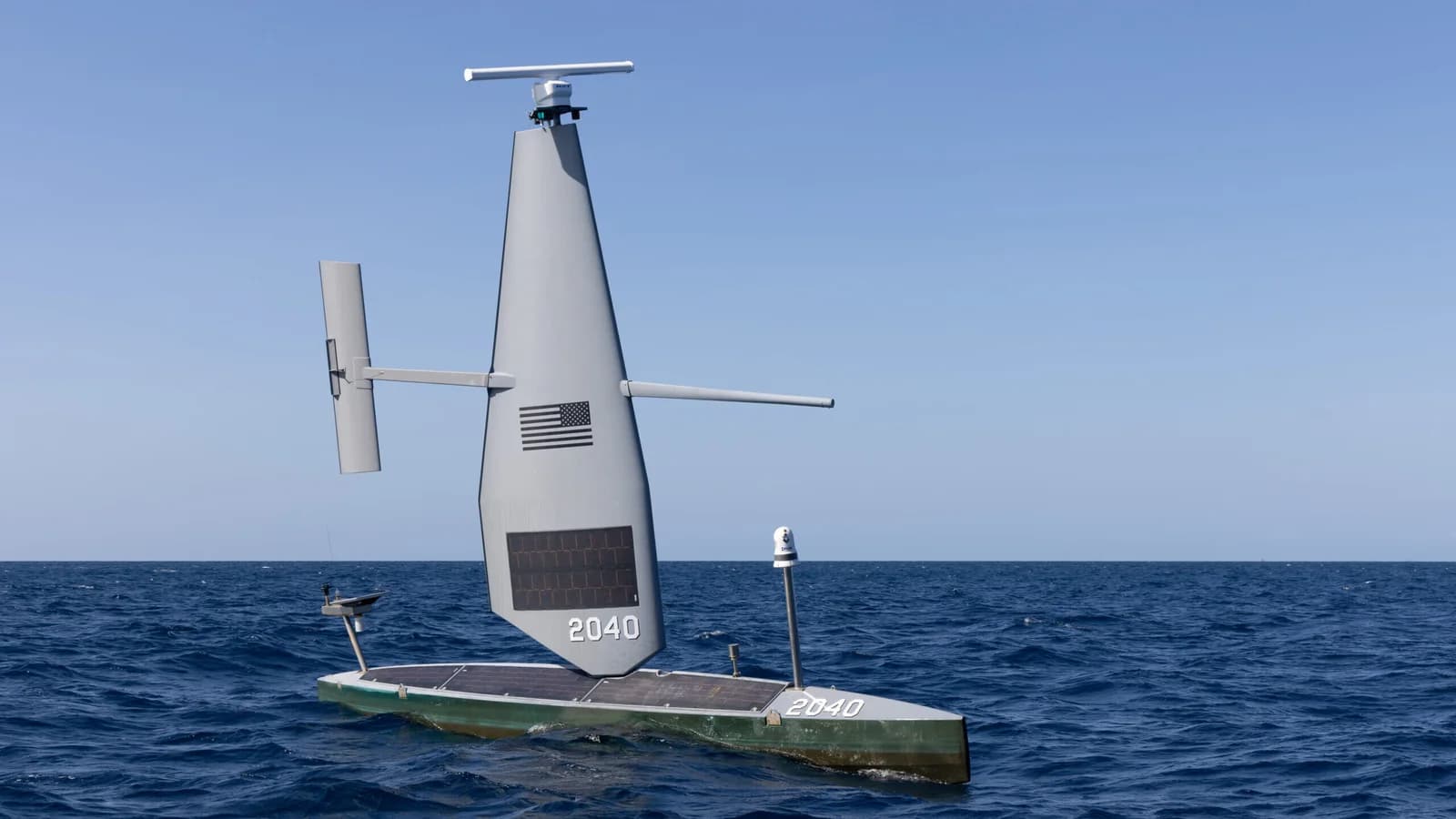
Breaking Defense reports that the U.S. Navy issued Saildrone a $16.3 million task-order extension to keep Voyager unmanned surface vessels operating in the Caribbean and Eastern Pacific into 2027. The article says the company has supported the region since 2023 and that 20 Voyagers were previously at sea.
The strategic read is endurance tied to a recurring mission, not a one-off demonstration. Canadian teams assessing Arctic, Atlantic or Great Lakes maritime awareness should inspect how an uncrewed service is tasked, monitored, sustained and integrated with human operators. Decide which parts of that service model need Canadian ownership, domestic support, or a different regulatory and security treatment.
What the public record says
Breaking Defense reports a $16.3 million Navy task-order extension for Saildrone Voyager USVs supporting Operation Southern Spear into 2027.
Why this may matter
A renewed mission order turns unmanned maritime persistence into an operating and sustainment question relevant to Canadian approaches.
Evidence limits
Canadian adoption, data ownership, rules of engagement, weather performance, and long-term cost are not established by the report.
Practical next step
Inspect the mission tasking and support model, then map a Canadian operating area where persistence solves a named coverage gap.
Original source (1)
- Breaking Defense: Navy renews Saildrone's counter-drug mission in the Caribbean, Eastern Pacific (opens in a new tab)Article body, task-order and Voyager deployment paragraphs
Pentagon puts a counter-UAS buying interface under contract
A digital marketplace is being used to connect screened counter-UAS products with mission buyers.
DefenseScoop reports that Joint Interagency Task Force 401 awarded Kaizen a $15 million contract to build a Counter-Unmanned Aircraft Systems Marketplace. The article says the system went live after a build measured in weeks and is designed to let pre-screened military, law-enforcement and allied buyers compare products through access controls for export and classification.
The Canadian implication sits in the interface between a public problem and a qualified supplier. The marketplace is a procurement mechanism, not proof that any listed product works in Canadian conditions. Use it to study how mission-specific requirements, product data, security gates and buying authority are connected, then decide which evidence a Canadian counter-UAS offer would need before it can be compared responsibly.
What the public record says
DefenseScoop reports that Joint Interagency Task Force 401 awarded Kaizen a $15 million contract for a Counter-UAS Marketplace.
Why this may matter
A fast digital buying layer narrows the distance between a counter-UAS requirement and a screened capability comparison.
Evidence limits
The article does not establish Canadian access, product performance, security accreditation, export treatment, or which listed systems will be adopted.
Practical next step
Inspect the marketplace's qualification and data fields, then compare them with Canadian public counter-UAS needs without inferring a procurement route.
Original source (1)
- DefenseScoop: Pentagon's counter-drone hub picked software startup Kaizen to develop c-UAS marketplace for $15M (opens in a new tab)Article body, contract and marketplace description
Britain extends torpedo support while a modernised sustainment path forms
A support contract protects undersea readiness while preserving the engineering base for a later modernisation programme.
UK Ministry of Defence says a £135 million Torpedo Repair and Maintenance contract with BAE Systems will support about 315 UK jobs, including 150 specialist engineering and technician roles. It covers Spearfish and Sting Ray torpedoes and bridges to the WHITEHEAD2 support programme from 2029.
The signal for Canada is the continuity model. Undersea readiness depends on repair, test, documentation and industrial workforce as much as on a new weapon. Treat the contract as a prompt to inspect sustainment dependencies around Canadian maritime systems, from component supply and telemetry to training and depot capacity. Decide which domestic gaps should be measured before the next platform decision.
What the public record says
GOV.UK reports a £135 million BAE Systems contract covering Royal Navy Spearfish and Sting Ray torpedo repair and maintenance and supporting hundreds of jobs.
Why this may matter
The contract makes sustainment continuity and industrial workforce depth visible as undersea capability inputs.
Evidence limits
The source does not establish Canadian torpedo choices, industrial participation, transferability, costs beyond the UK contract, or future performance.
Practical next step
Map the UK support chain against Canadian undersea sustainment needs, then identify one evidence-backed industrial gap to investigate.
Original source (1)
- UK Ministry of Defence: Hundreds of UK jobs supported with million-pound contract to secure Royal Navy torpedo weapons (opens in a new tab)GOV.UK opening and contract details
Space Force funds a standardised laser-link integration test
A space award packages terminals, satellite buses and launch into one testable communications path.
Breaking Defense reports a $22.9 million Space Force award to K2 Space for Enterprise Space Terminal tests. The contract covers procurement of terminals, integration with two large satellite buses and launch, with the aim of proving optical links for missile-warning and tracking architectures.
For Canadian space and defence teams, the useful signal is the integration package. A terminal, bus, ground link, launch plan and test regime have to be specified together before a communications capability is operationally meaningful. Separate the public award from assumptions about Canadian participation, then decide which interfaces, standards and test evidence would be required for a sovereign or allied contribution.
What the public record says
Breaking Defense reports that the Space Force awarded K2 Space $22.9 million to procure and integrate laser-link terminals with two satellite buses and launch them for testing.
Why this may matter
The award turns resilient space communications from a component claim into an integration and test-evidence question.
Evidence limits
Canadian role, terminal supplier, interoperability standards, test results, classification boundaries, and future production decisions remain undisclosed.
Practical next step
Inspect the Enterprise Space Terminal architecture and compare its interfaces with Canadian space-domain awareness and resilient-communications priorities.
Original source (1)
- Breaking Defense: K2 tapped to host Space Force satellite laser links tests (opens in a new tab)Article body, Enterprise Space Terminal award section