
Canadian Defence Signals
Canada's defence supplier pathways are starting to connect
Editorial briefing snapshot
The Bottom Line
BOREALIS moved testing and operational feedback closer to the centre. Kraken's orders exposed demand across the undersea stack. London gained a four-year vehicle-production horizon. NATO promised a clearer front door for industry.
Taken together, these are not isolated announcements. They show the stages of a defence supplier journey becoming easier to read: identify the need, prove the capability, assemble the team, produce at scale and reach allied markets.
In context
Across July, five announcements began to sketch a more complete Canadian supplier journey. Ottawa opened a route for uncrewed-system suppliers.
In this edition
Ottawa opens a clearer entry point for drone suppliers
The Defence Drone Initiative gives Canadian suppliers a visible place to enter, but its immediate value is qualification intelligence, not guaranteed production.
The breadth changes the teaming question. Few companies will enter every application area as complete platform providers. A credible role may be a sensor, payload, software layer, component, test capability or integration partner. The initiative gives firms an earlier chance to compare their evidence against named applications and decide whether to qualify directly, join a team or wait for a better-aligned requirement.
That decision should happen before formal demand hardens. Map the application areas to existing products, identify what an operational buyer would need to inspect and surface the capability gap that prevents a credible response. The important asset today is not an assumed contract. It is a clearer basis for deciding how to prepare and with whom.
What the public record says
National Defence launched the initiative on July 23 and opened a Request for Supply Arrangement covering air, ground, surface, underwater, counter-drone, payload, and strike applications.
Why this may matter
The important development is not simply more drones. Government is trying to connect operational requirements, testing, feedback, and production through one repeatable route for Canadian suppliers.
Evidence limits
Qualification does not guarantee a contract, and the public release does not establish which suppliers, quantities, evaluation results, or future purchases will follow.
Practical next step
Decide whether the credible route is direct qualification or a team. Then watch for named suppliers, evaluation results and any production follow-on.
Original source (1)
- National Defence: Government of Canada launches Defence Drone Initiative to strengthen Canada's sovereign defence capabilities (opens in a new tab)Marketplace launch, eligible capability categories and supplier-access description
BOREALIS moves testing closer to the operational conversation
The NEXUS secure hub addresses the gap between a promising prototype and evidence an operational user can inspect.
Testing infrastructure is becoming part of industrial strategy, not an afterthought. BOREALIS gives developers a place to expose integration constraints, operational assumptions, data requirements and performance questions before a procurement process forces the issue.
Access creates a place to compete. It does not establish adoption. The practical decision is whether the hub can produce evidence that changes a customer's view of technical readiness. Watch the specific calls, demonstrations and published results. They will show which companies can enter, what a useful test record looks like and whether the program is creating a repeatable bridge from experimentation to operational consideration.
What the public record says
National Defence describes BOREALIS as an accelerator bringing government, industry, academia, the Canadian Armed Forces, and security partners together around uncrewed systems.
Why this may matter
Testing infrastructure is becoming part of industrial strategy, not an afterthought. It can shorten the distance between a promising prototype and a record an operational buyer can inspect.
Evidence limits
Public material does not establish open access for every company, selection criteria for all future activities, test capacity, program timelines, or procurement outcomes.
Practical next step
Decide what evidence the capability still needs, then watch for specific calls, demonstrations, test results and signs that operational users are changing their view.
Original source (1)
- National Defence: Uncrewed Systems Defence Innovation Secure Hub (opens in a new tab)Backgrounder, BOREALIS and NEXUS program description
Kraken's orders show the undersea market is bigger than sonar
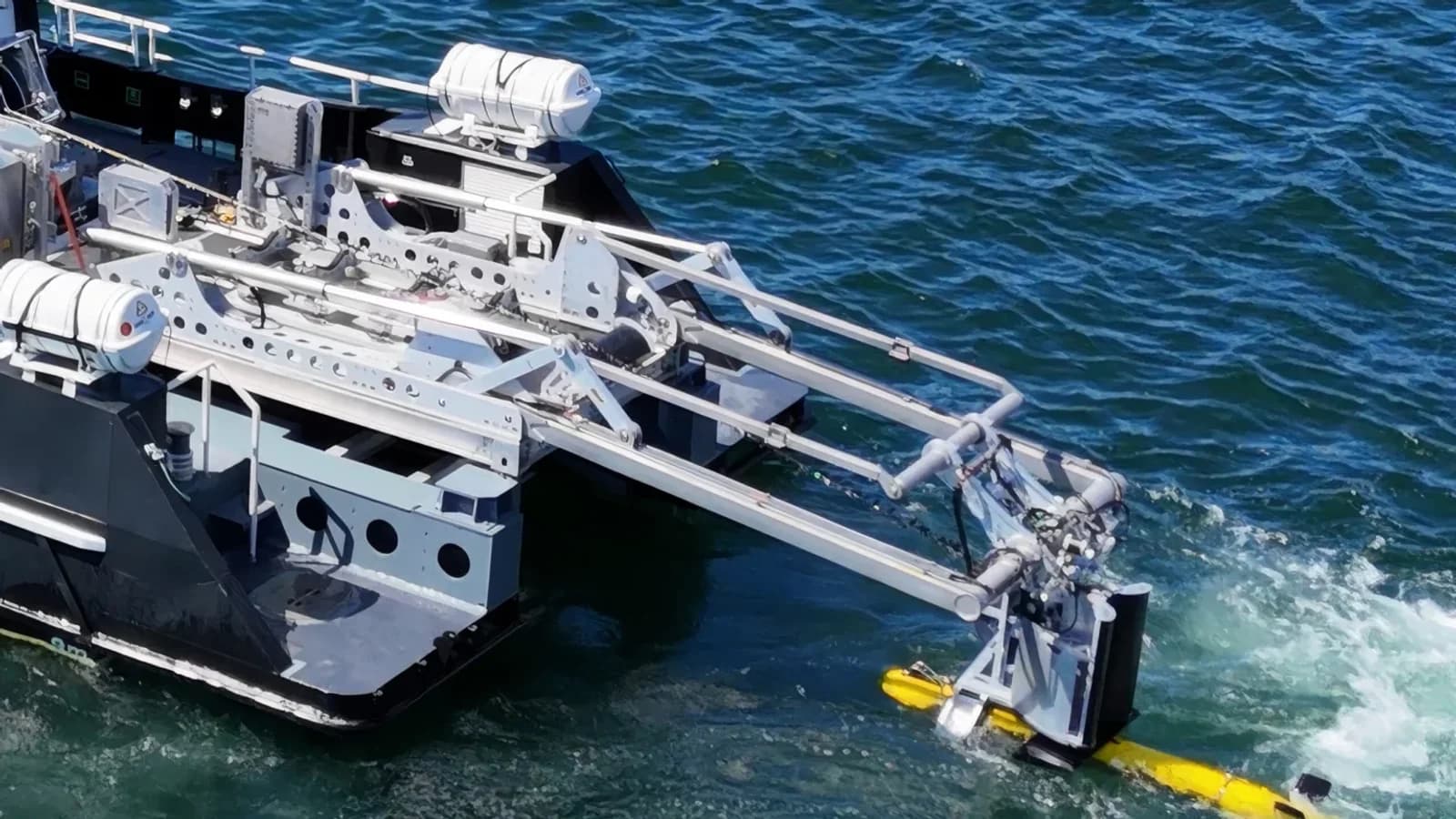
Kraken's latest orders span sonar, navigation, positioning, and monitoring systems, showing that undersea opportunity extends across the payload and platform stack.
Kraken's visible product may be sonar. The market extends across the entire platform stack. Crewed and uncrewed systems also need navigation, positioning, imaging, power, communications and monitoring, which opens several distinct places for Canadian companies to contribute.
Look beyond the vehicle and sensor. Map the interfaces, test infrastructure, platform partners and sustainment capabilities around each product family. That exposes where Canadian strength is already connected and where a future team still depends on an outside supplier. The useful decision is whether to pursue one product opportunity or build a position across the wider undersea system.
What the public record says
Kraken announced $35 million in new orders on July 20 and reported $327 million in combined 2026 product orders across Kraken and Covelya technologies.
Why this may matter
The market opportunity is broader than one sonar product. Every undersea platform creates connected demand for sensing, navigation, power, imaging, communications and monitoring.
Evidence limits
The release combines defence, offshore-energy, and ocean-science demand and does not identify every customer, contract value by product, delivery schedule, or Canadian program connection.
Practical next step
Separate confirmed orders from market narrative, map each product family to a real platform and mission, and watch for customer, value and delivery detail by product.
Original source (1)
- Kraken Robotics: Kraken Robotics announces $35 million in new orders and business update (opens in a new tab)Business update, new-order summary and defence-market product sections
London's vehicle build gives suppliers something to plan around
A nearly $2 billion plan for 190 additional Armoured Combat Support Vehicles creates a defined scale and four-year horizon for Canadian land-systems production.
The opportunity is not the announcement. It is the planning horizon. A stated fleet size, four years of work and a domestic production centre give suppliers a concrete frame for deciding where they could contribute. Components are only one part of that picture. Integration, testing, training, maintenance and sustainment can all shape the team around a vehicle program.
Map capabilities to those functions now. Then decide whether the credible route is direct to the prime or through an established vehicle-system partner. The firms that prepare evidence and relationships before supplier engagement opens will be better positioned to recognize where they fit and where they do not.
What the public record says
The Prime Minister announced the partnership with General Dynamics Land Systems-Canada on July 16, with the vehicles to be built and delivered through the London, Ontario industrial base.
Why this may matter
The four-year horizon extends beyond one prime. It gives suppliers time to qualify components, strengthen integration evidence and build the maintenance, training and sustainment relationships around the vehicle program.
Evidence limits
The public announcement does not provide the complete subcontracting plan, supplier selection process, detailed delivery sequence, or guaranteed opportunities for individual firms.
Practical next step
Choose the most credible route into the program, then watch for formal contracting, supplier engagement, delivery sequencing and disclosed industrial participation.
Original source (1)
- Prime Minister's Office: Prime Minister announces partnership with General Dynamics Land Systems-Canada (opens in a new tab)Announcement of investment, vehicle count, duration, and London production
NATO is trying to make allied demand easier to read
NATO's new industry-cooperation strategy aims to make capability needs more visible and engagement easier for companies, including small and non-traditional suppliers.
Allied markets are difficult to read before a formal opportunity appears. NATO's SYNC strategy promises a clearer front door, more visible capability needs and simpler industry engagement. If implemented, that gives Canadian firms more time to understand standards, assemble partners and build the evidence needed for an allied conversation.
Do not wait for a solicitation to expose the gaps. Compare current capabilities against allied mission problems now. Test interoperability, export readiness, security requirements and the local relationships needed to operate in another member country. The strategy creates direction, not demand. Its value will be proven only when the implementation plan changes actual access, procurement and production.
What the public record says
NATO released the SYNC strategy on July 8 with objectives covering industry communication, innovation and interoperability, and the scaling and sustainment of defence production.
Why this may matter
A clearer allied front door gives Canadian firms more time to understand priorities, standards and partners before a formal opportunity appears.
Evidence limits
The detailed implementation plan is not yet public, and the strategy does not by itself establish company eligibility, contract access, interoperability acceptance, or funded demand.
Practical next step
Compare current capabilities with allied priorities now, then watch whether the implementation plan changes access, standards, procurement and production in practice.
Original source (1)
- NATO: NATO releases new strategy for industry cooperation (opens in a new tab)Strategy announcement and three stated objectives