
Canadian Defence Signals
Defence capacity is becoming a chain of explicit gates
Editorial briefing snapshot
The Bottom Line
Allied buyers are doing the same: the United States is widening its space-sensing vendor pool, setting a sub-$150K counter-UAS missile target, and authorizing IL5 agentic software, while Britain funds energetics factory studies.
The pattern is not a single platform race. It is a demand for repeatable pathways: secure interfaces, qualification evidence, operational integration, manufacturing depth and sustainment. For a Canadian supplier, the next move is to map the gate that turns a capability into a deployable service, from terminals and ground control to test data, production traceability, security authorization and cost-per-effect.
In context
Canada's latest defence record moves from strategy into concrete operating and industrial gates. A $2.3B Arctic MILSATCOM service contract, an Inuit-led icebreaker partnership, and a nine-manufacturer Prairie AI test cohort put connectivity, maritime access, traceability and adoption on named timelines.
In this edition
Telesat wins a $2.3B Arctic military satcom contract
Canada has put a secure Arctic connectivity service, its satellites, terminals and ground infrastructure on a 2028 delivery path.
Ottawa has now attached a $2.3B service commitment to secure Military Ka-band connectivity for the Canadian Armed Forces across the Arctic. Telesat says the agreement starts in 2028, includes 15 years of service with two five-year options, and expands Lightspeed from 156 to 225 satellites. MDA Space is building the added satellites in Montreal; user terminals, ground and control infrastructure, training and support are included in the service pathway.
The ecosystem signal is the complete operating chain. The requirement is not a satellite in isolation but coverage, terminals, control, training, sustainment and a security boundary across 65-90 degrees north. Read the contract announcement alongside the federal partnership record, then map where a Canadian capability can support that chain without treating the award as open access or proof of CAF adoption beyond the announced service.
What the public record says
Telesat reports a signed $2.3B contract with Canada's Defence Investment Agency for secure Military Ka-band Arctic connectivity, with service beginning in 2028, two five-year options and 69 additional MDA Space satellites.
Why this may matter
A major Canadian defence requirement is being expressed as an integrated service and sustainment pathway, creating visible interfaces beyond the spacecraft itself.
Evidence limits
The public release does not name all subcontractors, terminal selections, detailed security controls, annual service profile, export treatment, or which Canadian suppliers can participate.
Practical next step
Map the terminals, ground-control, training and sustainment interfaces against your capability, then verify which public evidence is needed before claiming a route into the programme.
Original sources (2)
- Telesat: Telesat secures $2.3 billion Arctic military satcom contract, expanding Telesat Lightspeed network and capacity by 44% (opens in a new tab)Contract announcement, service scope and network expansion paragraphs
- Public Services and Procurement Canada: Briefing material: Defence Investment Agency and the Telesat-MDA partnership (opens in a new tab)Defence Investment Agency and strategic partnership sections
An Inuit-led partnership adds a Polar Class icebreaker
QHAS is bringing the Polar Class Icebreaker Nordica into Canadian Arctic operations in coordination with the Coast Guard for the coming season.
An Inuit-led operating model is moving a Polar Class icebreaker into Canadian Arctic waters for the coming season. Canadian Defence Review reports that Qikiqtaaluk Horizon Arctic Services will deliver the Nordica to support maritime capability and navigation across Inuit Nunangat, with the vessel independently crewed and supplied from Finland. The Canadian Coast Guard will coordinate additional icebreaking and navigation support.
This is a concrete access and sustainment arrangement rather than a platform announcement alone. It links Inuit ownership, a NATO-allied supply base, crew and logistics, and a public maritime operating partner. Inspect how the arrangement handles tasking, safety, data, maintenance and seasonal availability, then compare those interfaces with a Canadian Arctic capability that needs an operating environment before it can demonstrate value.
What the public record says
Canadian Defence Review reports that Inuit-led QHAS will deliver the Polar Class Icebreaker Nordica for Canadian Arctic operations and work with the Canadian Coast Guard on icebreaking and navigation support.
Why this may matter
The partnership makes Arctic access, local operating relationships and seasonal sustainment visible as capability inputs that can be assessed alongside the vessel.
Evidence limits
The article does not specify the contract value, tasking schedule, crew nationality in detail, sensor fit, Coast Guard command relationship, or a procurement commitment for additional vessels.
Practical next step
Inspect the QHAS and Coast Guard operating interfaces, then decide which Arctic test or support requirement your capability could address during the announced season.
Original source (1)
- Canadian Defence Review: Inuit-Led Partnership Delivers Polar Icebreaker to Canadian Arctic (opens in a new tab)Opening paragraphs and Nordica operating arrangement
AeroTrace turns Prairie defence AI into a test cohort
Nine Prairie manufacturers will receive structured assessments and pilots intended to make AI-enabled traceability and operational intelligence measurable.
Prairie manufacturers are being offered a defined route from AI interest to evidence. mode40 and Canadian Manufacturers & Exporters announced the AeroTrace Initiative for nine manufacturers, three each in Manitoba, Saskatchewan and Alberta. Each participant receives a discovery assessment, implementation and pilot planning, technical support, validation and a value summary focused on traceability, quality, compliance, supplier performance and throughput.
The useful signal is the cohort design and its publication boundary. Participants share the cost with mode40 and CME, while results are consolidated into an anonymized white paper. That creates a public test of whether digital-thread and operational-intelligence claims survive implementation in real factories. Track the participant list and output controls, then compare the programme's evidence fields with a defence supplier's own production and audit gaps.
What the public record says
Canadian Defence Review reports that mode40 and CME launched AeroTrace for nine Prairie manufacturers, with assessments, pilot planning, technical support, validation and anonymized results.
Why this may matter
A regional cohort is making industrial AI adoption testable through implementation evidence, traceability and value measurement rather than a broad technology claim.
Evidence limits
The announcement does not name the participants, selected use cases, implementation results, defence contracts, classified-data posture, or the final white paper's release date.
Practical next step
Track the cohort and white paper, then compare its validation measures with one production, quality or supplier-performance gate in your own defence workflow.
Original source (1)
- Canadian Defence Review: mode40 and CME Launch AeroTrace AI Initiative for Defence (opens in a new tab)AeroTrace announcement, cohort scope and assessment model
Space Force widens the aircraft-tracking vendor pool
Three new agreements worth $615M are meant to diversify the U.S. Space Force's sensing architecture and sustain competition beyond a single prime.
The Space Force is widening its vendor pool for space-based moving-target indication. DefenseScoop reports three agreements totalling $615M for Rocket Lab, Stratolaunch's STR and a third vendor whose identity is withheld for operational security. The work matures SB-AMTI and follows a $4.16B award to SpaceX, with multiple sensing technologies and commercial providers intended to make the architecture more resilient.
The signal is a portfolio and integration decision, not a single satellite award. A diversified supplier base still has to produce useful phenomenology, data exchange, tasking and manufacturing evidence. Use the public awards to map where sensors, analytics, launch, ground systems and sustainment meet, then compare that architecture with the evidence a Canadian space supplier could show without implying access to a U.S. programme.
What the public record says
DefenseScoop reports that the Space Force awarded three Space-Based Moving Target Indication agreements with a combined value of $615M to mature the capability and add vendors.
Why this may matter
The U.S. is treating sensing resilience as a vendor-portfolio and integration problem, creating a public benchmark for Canadian space-domain capability claims.
Evidence limits
The report does not disclose the third vendor, payload details, milestones, task orders, classified requirements, Canadian participation, or operational performance.
Practical next step
Map the sensing, data and sustainment interfaces in the public SB-AMTI record, then decide which Canadian evidence can be shown at an allied benchmark without overclaiming access.
Original source (1)
- DefenseScoop: Space Force awards three contracts to companies for aircraft-tracking satellites (opens in a new tab)SB-AMTI agreement value and vendor diversification paragraphs
Army RFI sets a sub-$150K counter-UAS missile target
The U.S. Army is asking industry for a high-volume counter-sUAS interceptor with a named range, launch-time and unit-cost envelope.
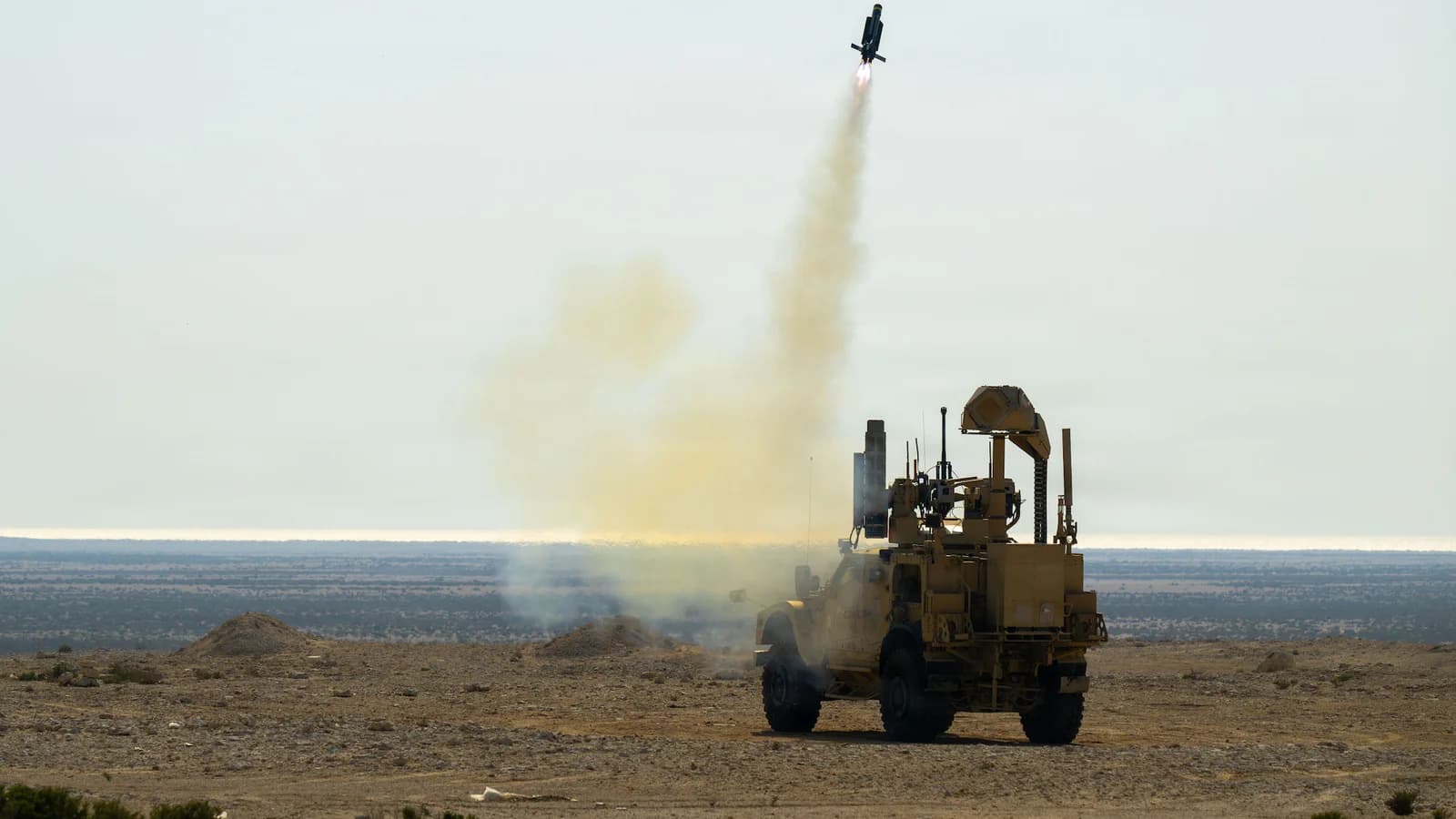
The Army's Aug. 4 RFI turns counter-UAS demand into measurable gates. DefenseScoop reports a Next Generation Counter-sUAS Missile notice for Group 2 and 3 drones, with a threshold range above 16 kilometres at 6 kilometres altitude, an objective above 25 kilometres at 8 kilometres, launch in under five seconds, an all-weather RF seeker, and compatibility with Coyote and IBCS-M. The notice seeks at least 5,000 rounds below $150,000 each.
This is a requirement signal, not a contract or a tested product. The combination of volume, cost, range, seeker, launcher and TRL7 testing creates a public comparison frame for Canadian counter-UAS work. Read the notice and test assumptions against its response deadline, then identify which performance and manufacturing evidence would be needed to compare a domestic effect honestly.
What the public record says
DefenseScoop reports that the Army's Next Generation Counter-sUAS Missile RFI seeks at least 5,000 rounds at less than $150,000 each, with range and launch-time thresholds and an FY2027 test path.
Why this may matter
The RFI exposes the trade space between counter-UAS effect, range, speed, seeker, launcher integration, test maturity and production volume.
Evidence limits
An RFI does not establish an award, final requirements, technical feasibility, production rate, Canadian interoperability, export treatment, or battlefield performance.
Practical next step
Read the RFI, compare its range, cost and integration gates with Canadian public counter-UAS needs, and watch the Aug. 20 response deadline.
Original source (1)
- DefenseScoop: Army seeks new missile to shoot down drones for less than $150K a pop (opens in a new tab)RFI range, integration, quantity, cost and response-date paragraphs
Britain funds the feasibility gates for new munitions factories
The UK is funding early industrial studies before committing to a larger sovereign energetics manufacturing pipeline.
Britain is rebuilding the industrial gates behind munitions supply. The Ministry of Defence says 22 companies, including SMEs, will receive up to £300,000 each for feasibility studies covering at least six new energetics factories. Studies are due by the end of September, with construction planned for the end of 2026 and later front-end engineering contracts worth up to £5M.
The sequence matters for Canadian industrial strategy: feasibility, plant design, safety, workforce, feedstock, production qualification and sustainment are staged before a factory becomes a sovereign capability. The announcement does not prove output or a Canadian opportunity, but it offers a public benchmark for how a state turns resilience language into funded gates. Track the study outcomes and compare their evidence requirements with a Canadian supply-chain or energetic-material gap.
What the public record says
The UK Ministry of Defence says 22 companies will receive up to £300,000 for feasibility studies supporting at least six new energetics factories, with construction planned for late 2026.
Why this may matter
The UK is converting munitions resilience into a staged industrial pipeline with funded feasibility, engineering and factory decisions.
Evidence limits
The announcement does not identify all companies, plant locations, energetic materials, output volumes, safety approvals, workforce plans, export terms or eventual production economics.
Practical next step
Track the September study milestone, then compare the UK's feasibility and factory gates with one Canadian munitions or energetic-material capacity gap.
Original source (1)
- UK Ministry of Defence: Funding boost for British companies to supercharge UK munitions production (opens in a new tab)Funding announcement, feasibility study and factory timeline sections