
Canadian Defence Signals
Access, architecture and production are becoming readiness gates
Editorial briefing snapshot
The Bottom Line
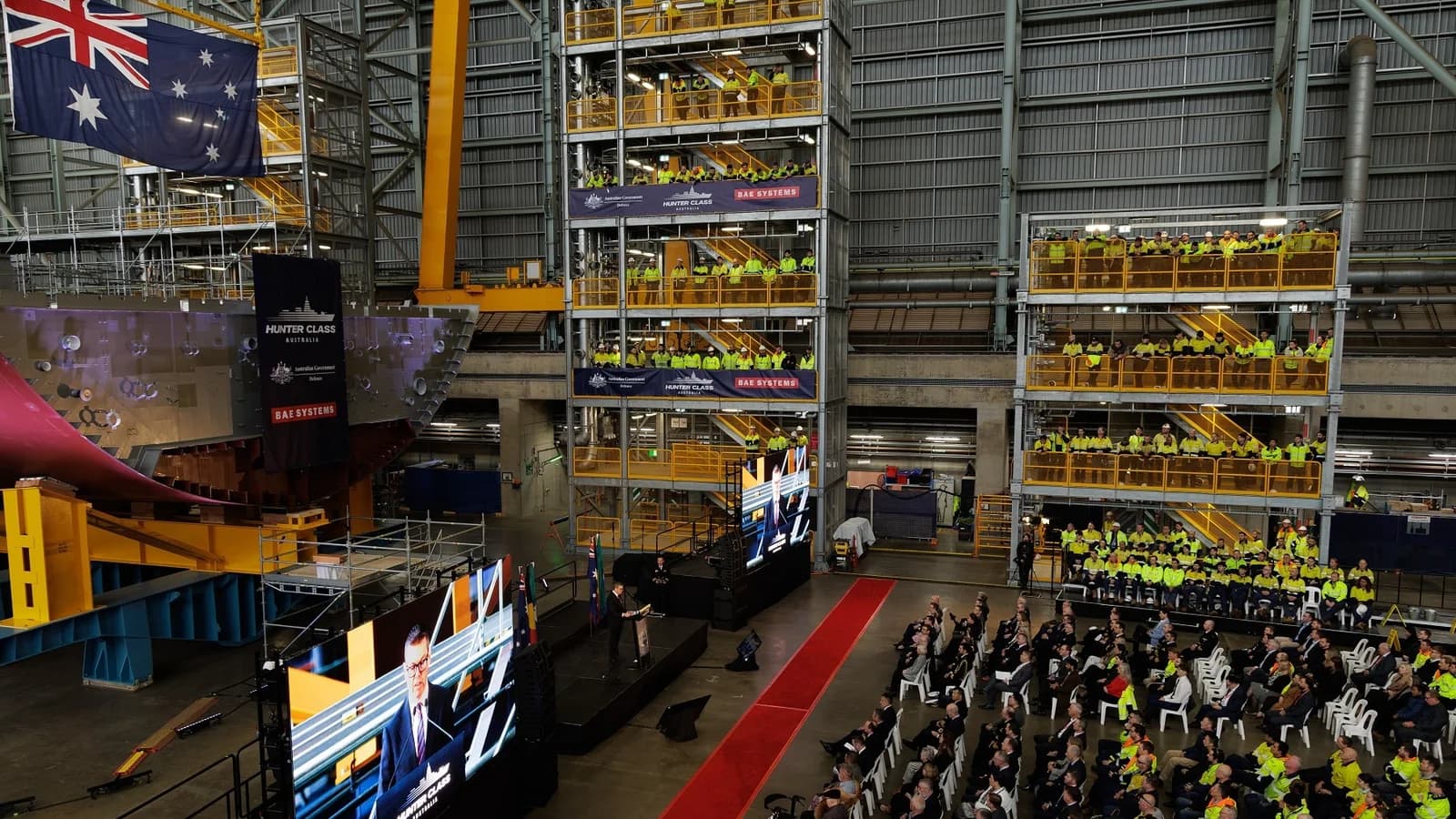
Defense Innovation Unit is targeting classified-space, accreditation and testing bottlenecks, and the U.S. Navy has identified the teams that will shape an open MH-60 architecture. At the same time, the first Hunter-class keel has been laid, Britain reports a sharp rise in weapons-production employment, and a Canadian-built Coast Guard lifeboat has entered service in Shippagan.
Those developments connect access, integration and production to operating outcomes. The U.S. Navy has also published the performance envelope for a new long-range air-to-air missile, while Northern Viking is testing antisubmarine warfare, mine countermeasures and multidomain command and control across the North Atlantic. The common signal is that readiness now depends on qualification, interfaces, skilled capacity and repeatable operating evidence as much as on the visible system.
In context
Readiness is being decided in the layers behind the platform. A Canadian cyber supplier has completed an independent CMMC Level 2 assessment, the U.S.
In this edition
Lastwall turns CMMC into market-access proof
Lastwall says an independent third-party assessment has certified it at CMMC Level 2, covering the 110 NIST SP 800-171 controls required for handling controlled U.S. defence information.
Certification now sits inside the market-access decision. Canadian Defence Review reports that Lastwall completed an independent CMMC Level 2 assessment, validating controls for Federal Contract Information and Controlled Unclassified Information. The standard requires 110 controls aligned with NIST SP 800-171, and the company presents the result alongside its existing FedRAMP Moderate authorization and work in U.S. and Canadian government environments.
The consequence is narrower than a contract but more useful than a readiness claim: Lastwall can point to a completed third-party assessment when buyers and primes screen cyber eligibility. The public announcement does not identify the assessor, certificate identifier, contract clauses, new awards or customer decisions. Qualification opens a gate; it does not prove that work will pass through it.
What the public record says
Canadian Defence Review reports that Lastwall achieved CMMC Level 2 after an independent third-party assessment covering 110 controls aligned with NIST SP 800-171.
Why this may matter
Independently assessed compliance gives a Canadian cyber supplier concrete evidence for U.S. defence-supply-chain screening and makes qualification a visible competitive variable.
Evidence limits
The announcement does not publish the assessor, certificate identifier, assessment scope, covered systems, contract clauses, bid activity or any award resulting from the certification.
Practical next step
Verify the certification scope and track U.S. defence solicitations or prime-contractor decisions that explicitly use CMMC Level 2 as an eligibility gate.
Original source (1)
- Canadian Defence Review: Lastwall Achieves CMMC Level 2 Certification, Reinforcing its Leadership in U.S. Defense Programs (opens in a new tab)20 August 2026 announcement, certification and CMMC control paragraphs
MH-60 modernization separates architecture from airframe
The U.S. Navy has named industry performers for the first design phase of an open MH-60 avionics and mission-system architecture intended to support the fleet through 2050.
Open architecture is being bought as a distinct modernization problem. The U.S. Navy named Sierra Nevada and Lockheed Martin for aircraft-integration roles, Collins Aerospace and Lockheed Martin for flight-critical avionics and the digital backbone, and Technology Security Associates for third-party open-system verification. Phase 1 will establish preliminary designs and a digital engineering baseline; Phase 2 is expected to develop and verify prototypes.
The choice gives Canadian aerospace and maritime teams a concrete allied benchmark for interface control, independent verification and long-life sustainment. It also draws a firm boundary: the Navy says the selections are not formal awards and remain subject to statement-of-work negotiations. Names on an integration map do not yet prove that the architecture is portable, affordable or ready for aircraft-level testing.
What the public record says
The U.S. Navy identified performers across aircraft integration, flight-critical avionics, the digital backbone and independent open-system verification for a phased MH-60 prototype project.
Why this may matter
Separating architecture, integration and verification roles shows where allied customers expect evidence before committing a long-lived platform to modular modernization.
Evidence limits
No formal award is complete, and the source omits statement-of-work values, interface standards, prototype schedules, software rights, aircraft availability and verification results.
Practical next step
Track the Phase 1 statements of work and compare the published interface, data-rights and verification requirements before mapping Canadian supplier fit.
Original source (1)
- U.S. Department of War: Navy Advances MH-60 Modernization, Identifies Industry Performers for Prototype Project (opens in a new tab)21 August 2026 performer roles, phase description and no-award boundary
Britain measures munitions expansion in people
UK defence-supported employment in weapons and ammunition manufacturing rose 51 percent in 2024/25, adding roughly 2,000 jobs and bringing the total to 5,900.
Workforce figures expose whether industrial policy is reaching factories. The UK Ministry of Defence reports a 51 percent rise in defence-supported jobs in weapons and ammunition manufacturing during 2024/25, with about 2,000 additional roles bringing the total to 5,900. Wider UK defence employment increased by 26,000 roles. The government connects the change to an always-on munitions pipeline and a four-year defence investment plan.
For Canada, the useful comparison is not the headline percentage but the measurement model: production ambition is being tested against skilled employment and regional capacity. Employment does not reveal output, productivity, bottleneck trades, stockpile depth or surge performance. The next signal is whether workforce growth converts into sustained delivery rates and whether those rates remain resilient once initial investment moves through the supply chain.
What the public record says
The UK Ministry of Defence reports that weapons and ammunition manufacturing jobs supported by defence expenditure rose 51 percent to 5,900 in 2024/25, while wider defence roles increased by 26,000.
Why this may matter
Publishing workforce growth turns industrial mobilisation into a measurable benchmark and gives Canada a concrete way to compare whether spending is producing durable capacity.
Evidence limits
The release omits production volumes, productivity, vacancy rates, occupational shortages, supplier concentration, stockpile effects and how many roles depend on temporary investment.
Practical next step
Track UK munitions output and supplier delivery data, then compare Canadian industrial policy against skilled-trade growth, throughput and surge-capacity measures rather than spending alone.
Original source (1)
- UK Ministry of Defence: British weapons jobs rise by more than 50% in a year as defence investment strengthens UK industry (opens in a new tab)20 August 2026 employment estimates and industrial-capacity paragraphs
Cascumpec Bay turns output into local readiness
The Canadian Coast Guard has formally dedicated CCGS Cascumpec Bay into service at Shippagan, converting a Canadian-built Bay-class delivery into local search-and-rescue capacity.
Commissioning closes a different gate than delivery. The Canadian Coast Guard formally dedicated CCGS Cascumpec Bay into service in Shippagan on August 19. Chantier Naval Forillon built the vessel in Gaspé and delivered it in December 2024; the Coast Guard says it has since supported regional search and rescue. The ceremony follows completion of all 20 Bay-class lifeboat deliveries under the National Shipbuilding Strategy.
The signal is local operating capacity backed by a completed domestic production run. It does not add another hull to the twenty-vessel total, and the source publishes no mission record, availability rate, crew data or sustainment cost. The practical test now shifts from build completion to whether the fleet can sustain coverage, maintenance and readiness across its assigned stations.
What the public record says
The Canadian Coast Guard says CCGS Cascumpec Bay was built in Gaspé, delivered in December 2024, has operated from Shippagan and was formally dedicated into service on 19 August 2026.
Why this may matter
The dedication turns a national shipbuilding output into a station-level readiness asset and moves the evidence gate from delivery count to sustained search-and-rescue availability.
Evidence limits
The release does not provide missions completed, availability, crew readiness, maintenance demand, operating cost, response-time improvement or station-level coverage data.
Practical next step
Track Coast Guard fleet-readiness reporting and compare Bay-class availability, maintenance and response coverage across the stations receiving the twenty delivered vessels.
Original source (1)
- Canadian Coast Guard: Canadian Coast Guard officially welcomes CCGS Cascumpec Bay into service in Shippagan (opens in a new tab)19 August 2026 service dedication, build history and Bay-class delivery paragraphs
Malice publishes a new long-range air boundary
The U.S. Navy has disclosed an official specification for the Raytheon AIM-424 Malice missile, including a stated range beyond 250 nautical miles and compatibility with fourth-, fifth- and sixth-generation platforms.
A published specification changes the allied comparison set. The U.S. Navy describes AIM-424 Malice as a developing long-range air-to-air missile with range beyond 250 nautical miles, a 1,500-pound weight and a blast-fragmentation warhead. Raytheon is named as contractor, and the weapon is described for fourth-, fifth- and sixth-generation platforms. The source frames it as a fleet-defence and integrated-deterrence capability.
For Canada, the disclosure creates a watchpoint around future fighter integration, export access and long-range air-defence concepts. It does not state development phase, test results, production quantity, cost, schedule or whether the Canadian CF-35A configuration can carry it. The specification establishes an intended performance boundary, not an available Canadian capability.
What the public record says
The U.S. Navy's 22 August specification lists AIM-424 Malice as a Raytheon long-range air-to-air missile exceeding 250 nautical miles, weighing 1,500 pounds and intended for fourth-, fifth- and sixth-generation platforms.
Why this may matter
The disclosure gives Canadian planners and suppliers a concrete allied range and integration benchmark while putting exportability, carriage and production evidence on the critical path.
Evidence limits
The Navy does not disclose program phase, flight-test evidence, acquisition value, unit cost, production schedule, inventory objective, export policy or CF-35A integration.
Practical next step
Track Navy test and production milestones, then verify platform integration and export decisions before connecting the published specification to Canadian fighter or NORAD planning.
Original sources (2)
- U.S. Navy: AIM-424 LRAAM - Malice (opens in a new tab)22 August 2026 description and specifications table
- Naval News: U.S. Navy Unveils AIM-424 Malice Long-Range Air-to-Air Missile (opens in a new tab)23 August 2026 specification and platform-image report
Northern Viking tests the North Atlantic operating system
Seven NATO countries are using Northern Viking 2026 to test antisubmarine warfare, mine countermeasures, search and rescue and multidomain command and control around Iceland and the Greenland-Iceland-United Kingdom gap.
Seven NATO countries have moved Northern Viking from an anniversary message into an operating test. The exercise runs from August 22 to September 3 around Iceland with Belgium, Denmark, France, Iceland, Norway, Poland and the United States. Scenarios cover antisubmarine warfare, mine countermeasures, expeditionary construction, search and rescue, medical response and disaster response, supported by multidomain command and control and real-time data integration.
That mission mix sits on sea lines connecting North America and Europe, making the exercise directly relevant to Canada's North Atlantic responsibilities even though Canada is not listed as a participant. The announcement defines objectives but reports no performance, gaps or lessons. The next value lies in the after-action evidence: which command, data, logistics and undersea problems appear once allied forces operate together.
What the public record says
U.S. 6th Fleet says Northern Viking 2026 brings seven NATO nations together from 22 August to 3 September for undersea, mine, rescue, construction and multidomain command-and-control scenarios around Iceland.
Why this may matter
The exercise tests the combined operating layer that protects North Atlantic sea lines, offering Canada a practical allied benchmark across undersea missions, data integration and support.
Evidence limits
The source does not publish participating units, scenario results, readiness scores, command-and-control performance, data-sharing limits, logistics findings or Canada's observer role.
Practical next step
Track U.S. 6th Fleet and NATO after-action reporting, and compare identified data, undersea and logistics gaps with Canadian North Atlantic readiness priorities.
Original source (1)
- U.S. Department of War: Exercise Northern Viking Marks 75 Years of Defense Cooperation (opens in a new tab)19 August 2026 participant, schedule, training and command-and-control paragraphs