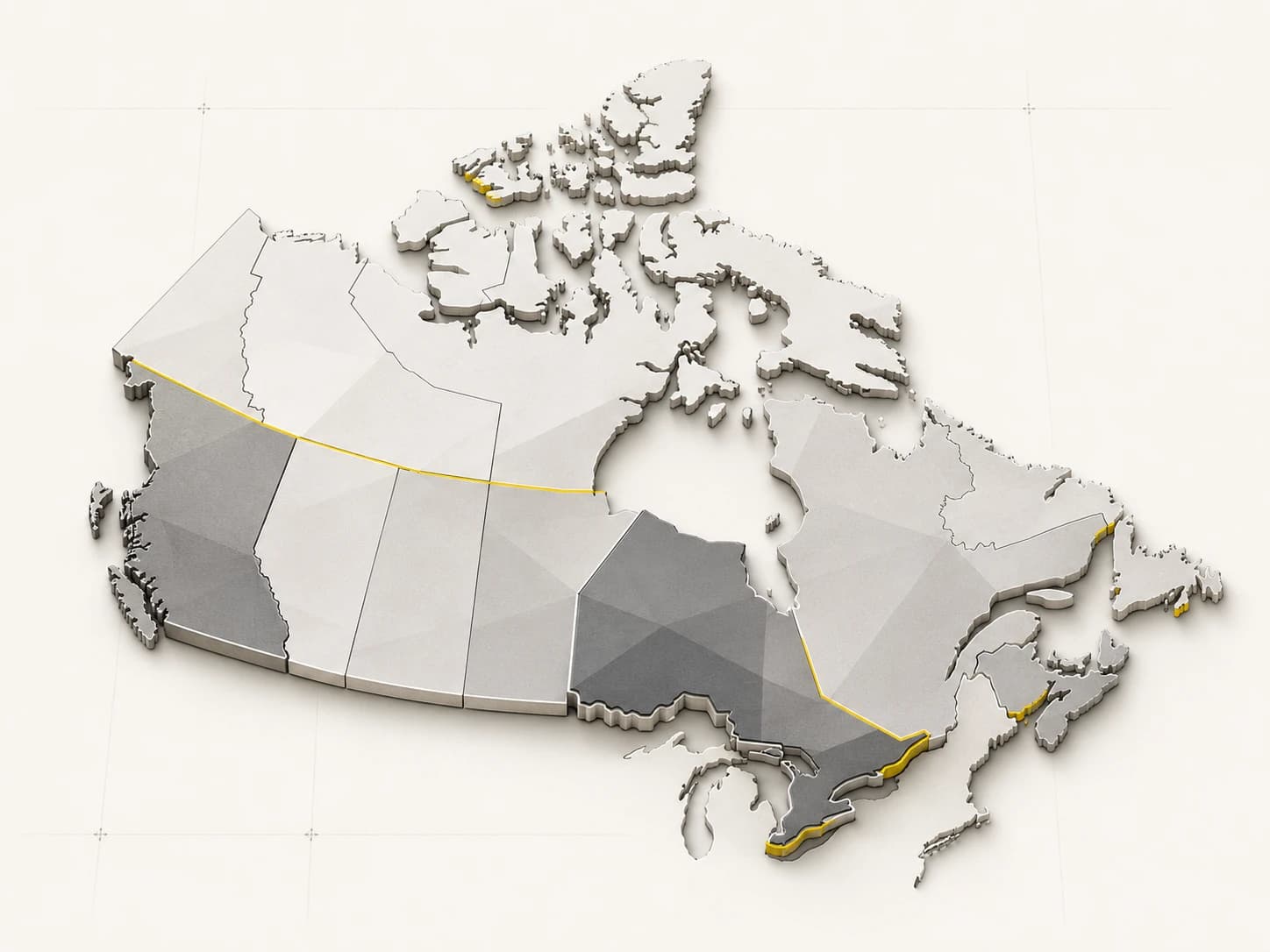
Counts reflect the current published dataset, not the total size of the real ecosystem. Unknown and thin coverage remain explicit to support gap-driven research.
Current regional coverage
Published organizations
Every profile below is built from reviewed public sources. Open one to see what supports it and where gaps remain.
Base Camp Connect
Lévis, QC
Base Camp Connect is the Lévis-based communications business of Telflex Technologie Inc. It builds configurable systems that bridge radio networks, telephony and data when agencies use different equipment. A donor radio from each network and suitable cables provide the audio path; SIP connects radio groups to voice services. The catalogue ranges from computer-free NANO/TVB bridges to NEXT, MICRO and TACTICAL gateways, while NOMAD adds mobile-command computing and vehicle integration. Canadian procurement and municipal support/training records establish named commercial use, and do not disclose exact models or accepted security configurations.
Canadian vehicle-survivability engineering and manufacturing company offering protective seating, add-on armour, integrated spall liners, stowage and RPG mitigation systems.
Marecomms is a Halifax company founded in 2017 that develops ROAM underwater acoustic communications within its AQUABAND offering. It markets mobile random-access and multiuser links that handle Doppler and multipath, with licensing, OEM integration and complete-system engagement. These are supplier-described functions; the public offering does not disclose a complete routing or sensor-gateway interface contract.
The described ROAM architecture pairs a transmitter with a hydrophone array and receive-processing platform. Its older brochure combines acoustic link rate with image-compression gain when advertising 30–600 kbit/s over 100 m–2 km; this is not raw payload throughput at every range. A dated February 2022 company account describes a 2 km compressed-image transfer in Halifax Harbour. Later NRC projects address receiver power, frequency control, a lightweight operating environment and ruggedized AUV payload integration. The modem offering and those integration work packages should be assessed at their respective stages.
Compusult is a Newfoundland and Labrador technology company developing geospatial information systems, sensor integration, mobile tools, asset tracking and configurable unmanned ground vehicles. Founded in 1985 and headquartered in Mount Pearl, it serves defence, government, emergency-management, scientific and commercial applications through several distinct products.
Web Enterprise Suite, or WES, connects geospatial discovery and data management with operational collaboration. Its portfolios organize maps, areas of interest, documents, imagery and field information, while users can assign tasks, track logistics requests, discuss incidents and view sensor or asset status. WES Analyst lists OGC interfaces and direct ArcGIS database integration, providing defined routes for connecting information rather than requiring every source to use the same underlying system.
SensorHub supplies the device-integration layer. It runs on Java-capable devices and uses drivers to connect sensors, including custom drivers that can be added without replacing the core software. Live and historical views, alerts, tasking and rule chains connect incoming observations to operational workflows. GO Mobile extends data viewing and collection to field users, including connected and disconnected operation.
NANUK is a separate family of configurable robotic platforms for sensing, mapping and work in difficult environments. Its models use different wheeled or tracked bases, payload capacities and endurance specifications, with manual, semi-autonomous or autonomous functions depending on configuration.
Compusult identifies WES as central to the Canadian Coast Guard's Communication Portal for Integrated Incident Response. It also participates with Visual Defence and AXYS Technologies in the Ripple ocean edge-AI development project, which addresses local marine analytics when connections to remote servers are unavailable.
Canadian supplier-diversity organization that certifies eligible Indigenous- and visible-minority-owned businesses and connects them with corporate members.
Ecosystem organizationProfiled for its ecosystem role
Ki3 Photonics
Montréal, Quebec
Montréal quantum-photonics company developing components and systems for quantum communications, including photon-pair sources, frequency conversion, and fibre-network test platforms.
The University of Calgary combines CMSS maritime and Arctic policy research with applied work in quantum, cyber, autonomous systems and resilient navigation. The DND-backed Quantum Defence Innovation Secure Hub offers a specific technology-transition pathway operated through Quantum City, distinct from CMSS’s policy and convening role.
Tacteris Systems is a Calgary software company developing sensor-tasking and mission-management tools for coordinating multi-domain data collection and operational workflows.
Alchemy Labs Inc. is a Kitchener nanotechnology company with two businesses: ExoShield windshield protection films and Crypsis thermal-signature-management materials. Founded by University of Waterloo Nanotechnology Engineering graduates, the company developed a coating platform that connects automotive durability applications with defence textiles and other surface-integration work. It trades on the TSX Venture Exchange as ALCH.
ExoShield combines a protective nanoceramic hardcoat, flexible substrate and adhesive in transparent windshield films. Its product family includes GT3+ for passenger vehicles, ULTRA for off-road and industrial uses, and ULTRA Pro vehicle-specific kits supplied pre-cut and pre-shrunk. In September 2026, Alchemy reported ULTRA Pro coverage across 40+ vehicle models through 17 kits. Its automotive business also has a reported three-year Mercedes-Benz Tourrider supply arrangement.
Crypsis uses nanoparticles for passive signature management. Alchemy describes the particles as nanoscale thermal mirrors that diffusely reflect ambient radiation and redirect an asset's thermal emission inward. The company is developing integration into textiles and rigid substrates, with intended signature control across visible and infrared bands. Current work includes NATO DIANA participation, company-reported DND trials and separate engineering agreements with Canadian and US textile partners.
The businesses are at different commercial stages. ExoShield generates automotive product revenue; Crypsis is progressing through development, validation and integration. Alchemy's MD&A attributes its first-half 2026 defence revenue to DIANA Phase 1 work.