
Canadian Defence Signals
POLAR-1 and the power to stay
Editorial briefing snapshot
The Bottom Line
POLAR-1’s most consequential promise is sustained activity: useful heat and power supporting places where logistics constrain what Canada can do. Follow a specific host, operating model and demonstration path—and the Canadian companies able to build the surrounding system.
In context
Much of the discussion about Canada’s North concerns reaching it: aircraft, ships, communications and surveillance. POLAR-1 invites a complementary question. What could Canadians do there more reliably if a remote site had a dependable local supply of both electricity and heat?
CSMC’s new terrestrial microreactor platform leads this edition because the potential is larger than one defence application. Community services, industrial operations and enduring military infrastructure can share the same underlying energy problem. A successful platform could support several of them, while creating Canadian work in manufacturing, controls, communications and operation. The strongest opportunities will be specific places with sustained demand and willing partners, rather than a reactor proposed for every remote site.
Our investigation follows that possibility through the company’s launch, Vanguard’s interview with Daniel Sax, earlier project records and federal energy policy. It distinguishes a criticality experiment from a working power station and examines who might buy the energy, operate the installation and benefit from its heat. Those distinctions make the opportunity easier to understand and pursue.
Other developments show different routes from Canadian technology to useful work. Avalon has a new development contract; RBC is assembling growth capital; EarthDaily has a purchasing mechanism; and SpaceQ’s Marc Boucher surfaces the people and possible dual-use sensing behind military space capability. Vention is investing in longer-term manufacturing research. Seaspan’s submarine-support extension is the important counterweight: building tomorrow’s capabilities also requires maintaining today’s. A U.S. shared-savings pilot closes the edition with a different way to finance adoption.
In this edition
POLAR-1: what dependable local power could unlock in Canada’s North
CSMC’s new terrestrial reactor platform gives Canada a concrete development program around a consequential question: which activities become viable when remote sites can count on both electricity and heat?
A remote installation can have a runway, a communications link and a compelling mission, yet still be constrained by its next fuel delivery. That is why Canadian Strategic Missions Corporation’s September 9 launch of POLAR-1 deserves close attention. CSMC is developing a transportable, megawatt-scale microreactor for northern communities, industrial sites and defence installations. It proposes supplying useful heat alongside electricity, with a design intended for military airlift including the C-17. The potential reaches into the operating costs and endurance of almost everything built around it.
The launch also makes a substantive change to the company’s portfolio. CSMC is retiring LEUNR as a concept and separating terrestrial power, lunar power and research into POLAR-1, JAY-1 and ORCA-1. Those platforms have different missions and development paths. Readers can follow the terrestrial program through TNM’s recently enriched POLAR-1 capability record.
Steve Ladurantaye’s reporting for Vanguard, including an interview with CEO Daniel Sax, adds an important operational distinction. The proposed reactor would be transported into position and installed; it is not intended to drive around supplying power. Sax also describes the targeted demonstration as a criticality experiment with safety-system checks, rather than a finished generating station. CSMC’s current platform page targets first criticality in 2028 and fleet deployments beginning in 2030. These remain company objectives.
Where the dual-use opportunity is strongest
For northern communities, electricity is only part of the energy bill. Natural Resources Canada’s remote-energy research identifies heating and hot water as substantial additional fossil-fuel demands, alongside expensive fuel transport and storage. TNM’s assessment is that a useful POLAR-1 proposition would therefore start with the community’s combined needs: homes and public buildings, water services, local businesses and the electrical system that keeps them running. Capturing useful heat could improve the value of a generating installation, provided buildings are close enough and suitable heat-distribution infrastructure exists. Community leadership, ownership preferences and affordability would have to shape the project from the beginning.
For a remote mine or industrial site, the attraction is a dependable operating base for work that already needs sustained power. NRCan’s SMR mining analysis identifies processing and combined heat and power as potential applications, and describes an owner-operator model in which a mine buys energy from a nuclear operator. That model matters: a mining company could seek reliable energy without building an entirely new nuclear operating business itself. A POLAR-1 proposal would still need to match the site’s actual load and project life. Existing generic SMR cost estimates cannot be applied to this design, whose launch materials do not state an exact electrical rating or delivered energy price.
For defence, the strongest early use-case hypothesis is enduring infrastructure: northern operating locations, communications facilities and sites supporting persistent surveillance. Less dependence on recurring diesel deliveries could make operating schedules less exposed to seasonal access and disrupted transport. Electricity and heat could support accommodation, workshops and equipment as well as the mission systems themselves. The practical gain would be time on station and dependable service. A small isolated sensor or a short deployment may have neither the demand nor the support arrangements to justify a reactor.
A shared civilian and defence location is especially interesting. An airfield, nearby community services and an enduring government presence could provide complementary demand, potentially spreading the cost of infrastructure across more useful activity. That is a TNM use-case hypothesis, not an announced customer or site. It needs an agreed load profile, distribution plan, operating responsibility and local partnership before anyone can judge the economics. Nor should nuclear crowd out easier improvements: efficiency, renewable generation, storage and existing backup may offer better near-term options at particular sites.
The opportunity extends beyond the reactor
There is already work around the wider operating system. Telesat’s May agreement with CSMC envisages satellite connectivity for monitoring and supporting reactors in remote environments. It is a memorandum covering technical discussions and possible pilots; commercial arrangements still require definitive agreements. For Canadian companies, it points toward potential work in communications integration, industrial controls, maintenance and local energy distribution. Remote connectivity can support oversight, but it does not establish a remotely operated plant’s staffing or licensing arrangements.
Manufacturing is another dependency. CSMC’s April NGen announcement describes a $3-million project, including $1.2 million in program funding, with Samuel Automation and Stern Laboratories. The stated work is an advanced manufacturing cell. That announcement names LEUNR, so it supports a history of investment in manufacturing capability, not a claim that a POLAR-1 production line is ready. Similarly, Emissions Reduction Alberta’s project record describes an unfuelled prototype and research-facility development. It is not evidence that POLAR-1 has generated power.
The timing is ambitious relative to the federal nuclear strategy, which envisages a Canadian microreactor demonstration by 2035 and remote-community deployment later in that decade. These milestones have different scopes: CSMC’s 2028 criticality target cannot be treated as equivalent to a licensed commercial installation. The CNSC also explains that a vendor design review is a preliminary service, not a licence or design certification. This research did not establish a POLAR-1 site licence, contracted operator or firm customer delivery.
Canada’s opportunity is nevertheless substantial. A successful domestic remote-energy platform could enable industrial activity, more dependable public services and a sustained northern defence presence using related engineering and support capabilities. The next useful conversation is specific: which willing host has a durable need for both power and heat, an operating partner, and a credible path from demonstration to service? That would turn a broad sovereignty argument into a project Canada could learn from and repeat.
What comes next
Watch for a named host and operator, site-specific power and heat requirements, and the licensing and demonstration milestones that connect the design to useful service.
Evidence and assessment for POLAR-1: what dependable local power could unlock in Canada’s North
What the sources establish
CSMC launched POLAR-1 on September 9 with first-criticality and fleet-deployment targets. Earlier prototype and manufacturing records have distinct scopes and do not establish an operating POLAR-1 installation.
Original sources (11)
- Canadian Strategic Missions Corporation: CSMC unveils three new nuclear reactor platforms (opens in a new tab)Attributed statement · POLAR-1 section and retirement of LEUNR
- Canadian Strategic Missions Corporation: CSMC Nuclear: POLAR-1, ORCA-1 and JAY-1 (opens in a new tab)Attributed statementPOLAR-1 description and development targets
- Vanguard Defence — Steve Ladurantaye: CSMC unveils three reactor platforms for the Arctic, defence and the moon (opens in a new tab)Original reporting · Interview: transportable versus mobile; demonstration scope
- Natural Resources Canada: Northern, Indigenous, Rural, and Remote Communities (opens in a new tab)Direct recordLocal energy challenges and heating demand
- Natural Resources Canada: Small Modular Reactors for Mining (opens in a new tab)Direct recordEconomic considerations and Business Models for Deployment; general SMR context
- Telesat: Telesat and CSMC announce strategic collaboration agreement (opens in a new tab)Attributed statement · MOU scope and requirement for definitive arrangements
- Canadian Strategic Missions Corporation: CSMC secures $1.2 million NGen grant (opens in a new tab)Attributed statement · Project amount, manufacturing cell and named LEUNR scope
- Emissions Reduction Alberta: Low Enriched Uranium Nuclear Reactor project (opens in a new tab)Direct recordProject scope: non-fueled prototype and research design
- Natural Resources Canada: Nuclear Energy Strategy for Canada (opens in a new tab)Direct record · Pillar 1 deployment objectives and Pillar 4 microreactor program
- Canadian Nuclear Safety Commission: Pre-licensing vendor design review (opens in a new tab)Direct recordPurpose and limits of a vendor design review
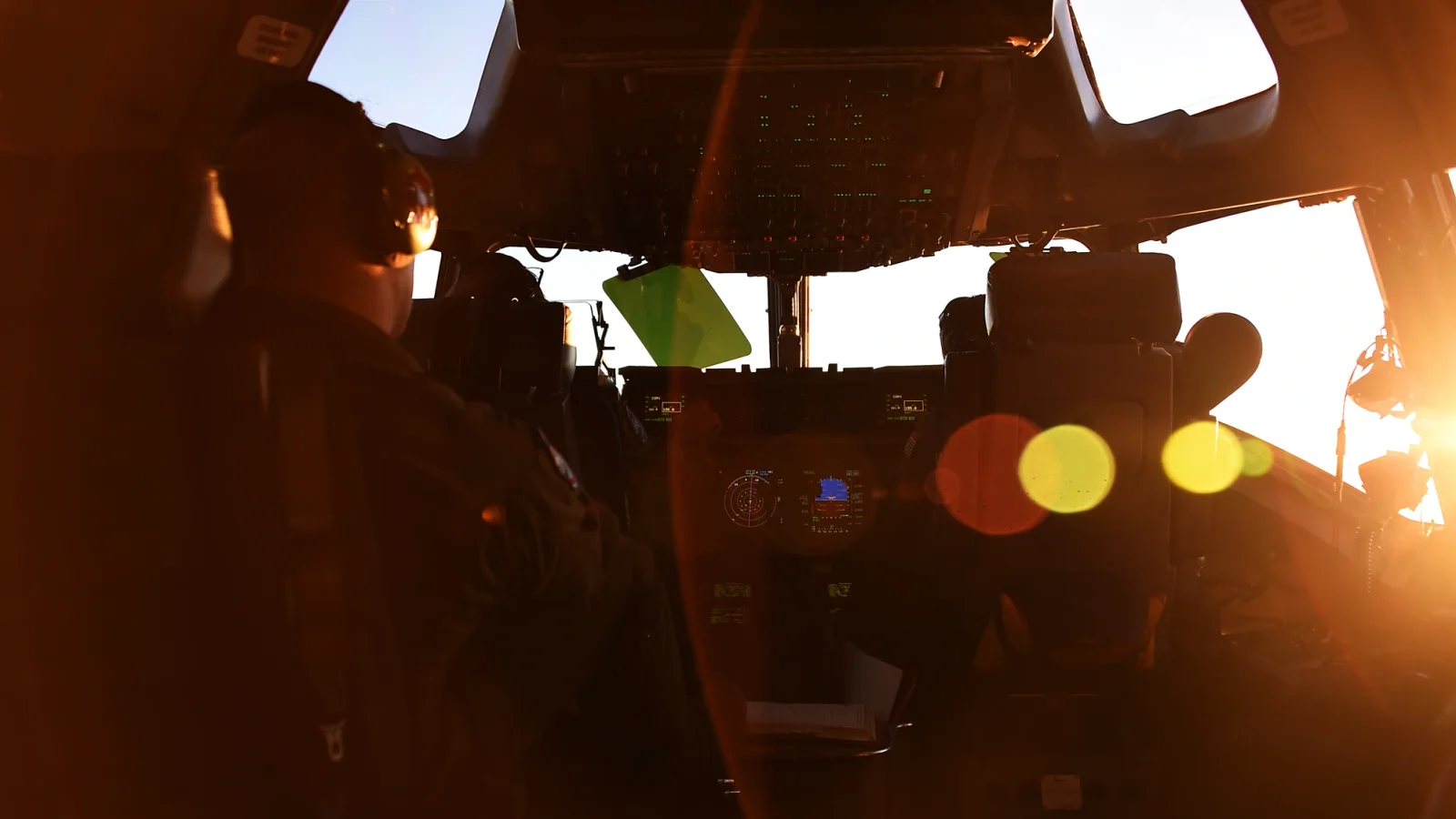
- NORAD / DVIDS: Amalgam Dart 20-5: C-17 flight deck (opens in a new tab)Direct record · Historical heading photograph and caption; Arctic airlift context only
Avalon’s new $5.6-million phase connects defence investment with wider applications
A renewed Lockheed Martin contract supports Canadian display development; the $11.7-million headline combines the new work with an earlier phase.
Lockheed Martin Canada’s September 9 release commits a new C$5.6-million contract to Avalon Holographics, following an earlier C$6.1-million phase. Together they make the C$11.7-million headline. The work supports tabletop prototypes and larger flat-panel light-field displays, with development in St. John’s and Edmonton. It contributes to Lockheed Martin’s Industrial and Technological Benefits commitments associated with the River-class destroyer and Victoria-class submarine command-and-control programs.
Avalon’s technology aims to let people view three-dimensional digital objects without headsets or glasses. The companies identify training, simulation and mission planning alongside industrial and medical applications. The release also reports an Avalon display installed at Lockheed Martin’s Lighthouse innovation facility. It does not announce fleet-wide installation on Canadian ships.
TNM’s assessment is that this is a useful example of defence-related spending supporting technology with several possible customer markets. Engineers examining a complex design and teams reviewing a shared operational picture both need to understand spatial relationships. The commercial opportunity depends on whether a display makes that work easier enough to justify its cost and integration. The next persuasive evidence would be a user trial measuring decisions, errors or training outcomes against existing displays. The new contract creates development work; operational benefit remains something to demonstrate.
Evidence and assessment for Avalon’s new $5.6-million phase connects defence investment with wider applications
What the sources establish
The issuer identifies a new C$5.6-million contract within C$11.7 million across two phases, supporting holographic-display development.
Original source (1)
- Lockheed Martin Canada: Lockheed Martin Canada invests $11.7 million in Avalon Holographics (opens in a new tab)Attributed statement · Opening paragraphs, Why It Matters and development scope
RBC puts dual-use defence inside a broader growth-capital strategy
The proposed US$1-billion fund targets scaling Canadian technology companies, with an important distinction between the fund ambition, RBC’s maximum participation and its initial commitment.
RBC’s September 9 announcement proposes a US$1-billion growth fund—approximately C$1.4 billion at the release’s stated conversion rate—to make direct equity investments in Canadian technology companies. Its priorities explicitly include aerospace, dual-use defence, quantum and advanced computing, alongside software, health, energy and agriculture. RBC says it will invest up to US$300 million; a footnote identifies its initial commitment to portfolio companies as US$200 million. Those are distinct amounts, and the announcement does not establish that the full target fund has closed or been invested.
BetaKit’s reporting explains that RBC plans to raise the balance from outside investors. That places the development at the fund-formation stage. It is a growth-capital initiative, rather than a grant program or a procurement award to a defence supplier.
TNM’s assessment is that the explicit inclusion of dual-use defence matters because businesses serving civilian and military customers can need substantial capital before either market provides predictable scale. A domestic lead investor may help management build at home while pursuing international customers. The useful test will be the companies backed, the terms and follow-on capacity available to them, and the productive work retained in Canada. Fund size alone cannot answer those questions. For a scaling company, the immediate task is to establish whether its maturity and expansion plan fit RBCx’s investment mandate.
Evidence and assessment for RBC puts dual-use defence inside a broader growth-capital strategy
What the sources establish
RBC announced a US$1-billion fund initiative, participation up to US$300 million and an initial portfolio-company commitment of US$200 million in footnote 2.
Original sources (2)
- RBCx: RBC to mobilize $1.4 billion for Canadian technology champions (opens in a new tab)Attributed statement · Investment priorities and footnotes 1–2
- BetaKit: RBC launches billion-dollar Canadian tech growth fund (opens in a new tab)Original reporting · Fundraising structure and growth-stage focus
SpaceQ surfaces a new space career path—and a revealing civilian-sensor question
A reported new military occupation addresses the people behind space capability; discussion of WildfireSat illustrates how civilian sensing could acquire a second mission.
Independent journalist Marc Boucher’s September 9 SpaceQ article reports that the Canadian Armed Forces created a space-professional occupation for non-commissioned members this summer. Boucher draws on Brigadier-General Christopher Horner’s appearance on CGAI’s Defence Deconstructed podcast. The reported change would let members enter a space career directly, rather than arrive through another trade. It is a newly reported development, not an occupation announced as starting today.
The same report contains a particularly useful dual-use example. Horner says DND is discussing WildfireSat with the Canadian Space Agency: a sensor intended to measure fire-related heat could also be of interest for detecting heat signatures in the Arctic. This establishes interest and discussion. It does not establish a military tasking agreement, detection performance or a contracted defence version of WildfireSat.
TNM’s reading is that Canada’s space opportunity includes the skills to interpret and act on data, alongside the spacecraft producing it. A civilian sensor becomes useful to a second customer through requirements, access arrangements and operational testing. The staffing development and the WildfireSat discussion address different parts of that process. For Canadian sensing and analytics firms, understanding the user’s decisions—and the training and data access those decisions require—may be as valuable as demonstrating another sensor.
Evidence and assessment for SpaceQ surfaces a new space career path—and a revealing civilian-sensor question
What the sources establish
Boucher reports Horner’s account of the new occupation and DND–CSA discussions concerning possible military utility of WildfireSat.
Original source (1)
- SpaceQ — Marc Boucher: Canadian Armed Forces creates new space professional occupation (opens in a new tab)Original reporting · New space trade and WildfireSat sections; report of Horner’s podcast remarks
EarthDaily gains a route from government need to imagery order
A federal standing offer lowers purchasing friction for EarthDaily imagery; actual orders and commercial service delivery determine the business outcome.
EarthDaily’s September 9 announcement says it has secured a National Master Standing Offer for commercial satellite imagery. Eligible federal organizations can use the arrangement to buy on an as-needed basis under established terms. The company explicitly states that the standing offer is neither a contract nor a guarantee of purchases.
Marc Boucher’s SpaceQ report places the news in the existing procurement system, distinguishing companies with direct standing offers from those represented through a Canadian reseller. EarthDaily joins the direct suppliers. The CEO’s statement says the constellation is preparing to enter commercial operations, so procurement readiness and service readiness should be followed separately.
TNM’s assessment is that a reusable purchasing route can matter greatly for dual-use Earth observation. Environmental monitoring, emergency response and security users may need repeat observations without rebuilding a procurement every time. The next question becomes whether a specific imagery product meets the customer’s area, timing and analytical requirements. Standing-offer access makes that conversation easier; it does not itself answer it. For potential Canadian integration partners, the opportunity lies in turning recurring observations into a service the department can order, use and evaluate.
Evidence and assessment for EarthDaily gains a route from government need to imagery order
What the sources establish
EarthDaily announces a federal imagery standing offer while explicitly distinguishing it from a purchase contract or guaranteed revenue.
Original sources (2)
- EarthDaily Analytics: EarthDaily awarded Government of Canada National Master Standing Offer (opens in a new tab)Attributed statement · Procurement mechanism and commercial-operation statement
- SpaceQ — Marc Boucher: EarthDaily joins Canada’s satellite-imagery standing offer (opens in a new tab)Original reporting · Direct suppliers and reseller context
Seaspan’s six-year extension protects work on the fleet Canada has
The Victoria-class subcontract extension sustains a specialized workforce and supplier network through 2032; it is separate from future submarine acquisition.
Seaspan confirmed on September 9 that Babcock Canada has extended its Victoria In-Service Support Contract subcontract for six years, through 2032. Babcock remains the prime and Seaspan Victoria Shipyards the shipyard supporting the existing submarine fleet. Seaspan reports more than 300 workers dedicated to submarine sustainment and a direct Canadian supply chain exceeding 480 companies. The announcement does not disclose the subcontract’s value.
This is a consequential counterpoint to the edition’s developing technologies. Canada must preserve the ability to maintain its current submarines while decisions and work on their successors proceed. Skills in complex maintenance are held by people and supplier relationships that need continuing work to remain available.
TNM’s assessment is that the extension provides industrial continuity across that transition. It should not be read as a future-fleet support award or as evidence of a particular submarine’s availability. For suppliers, the nearer opportunity is to understand the existing sustainment program’s work packages, qualification needs and delivery pressures. For public buyers, the result worth following is whether continuity of people and facilities translates into reliable maintenance throughput and serviceable boats.
Evidence and assessment for Seaspan’s six-year extension protects work on the fleet Canada has
What the sources establish
Seaspan announces a six-year Babcock subcontract extension under VISSC, with no value stated in the release.
Original source (1)
- Seaspan: Seaspan awarded submarine maintenance contract extension through 2032 (opens in a new tab)Attributed statement · Subcontract scope, prime/shipyard roles and workforce figures
Vention creates room for manufacturing research beyond the next release
A Montréal research lab targets the practical deployment of robotics, with a longer horizon than the company’s regular product cycle.
BetaKit’s interview with Vention CEO Etienne Lacroix describes a new physical-AI lab staffed by 16 of the company’s 120 research and development employees. Its work looks roughly a year ahead, while much of the wider team concentrates on nearer product releases. Cohere’s Joelle Pineau will advise part-time on the research agenda. The investment amount was not disclosed.
The development is relevant to defence through manufacturing capability rather than a newly announced military contract. Vention combines software and hardware used to design and deploy automated equipment. A lab able to work with real machinery can investigate the messy tasks that determine whether automation is useful on a factory floor.
TNM’s assessment is that the valuable output would be more reliable deployment across varied parts and processes. For a Canadian industrial supplier, a promising demonstration becomes economically interesting when changeovers, interruptions and operator effort are manageable. The lab creates capacity to work on those problems; it does not yet establish a productivity improvement for a particular defence production line. Watch the resulting applications and operating evidence, rather than treating a research-team announcement as a finished capability.
Evidence and assessment for Vention creates room for manufacturing research beyond the next release
What the sources establish
BetaKit reports a dedicated 16-person Vention physical-AI lab, its longer research horizon and Pineau’s advisory role.
Original source (1)
- BetaKit: Vention opens new physical AI lab to put more R into its R&D (opens in a new tab)Original reporting · CEO interview: staffing, research horizon and advisor
Carry the signal forward
Continue in True North Map
Follow the edition into the organizations, technologies, Defence needs and Mission areas already connected to its record.