
Canadian Defence Signals
Operating proof is opening new defence pathways
Editorial briefing snapshot
The Bottom Line
The common decision is where to build evidence before the next gate closes. A platform, factory or partnership gains strategic weight when it can show delivery, integration, sustained operations and a credible path into the buyer's industrial model. Organizations should map those proof points to the named watchpoints rather than treating each announcement as market access.
In context
Defence markets are moving from broad capacity claims toward visible operating proof. Canada is exercising an Arctic task group, paying for sovereign launch infrastructure, funding quantum production capacity and testing satellite-enabled border awareness, while allied programs are opening shipbuilding access and advancing uncrewed systems through real missions.
In this edition
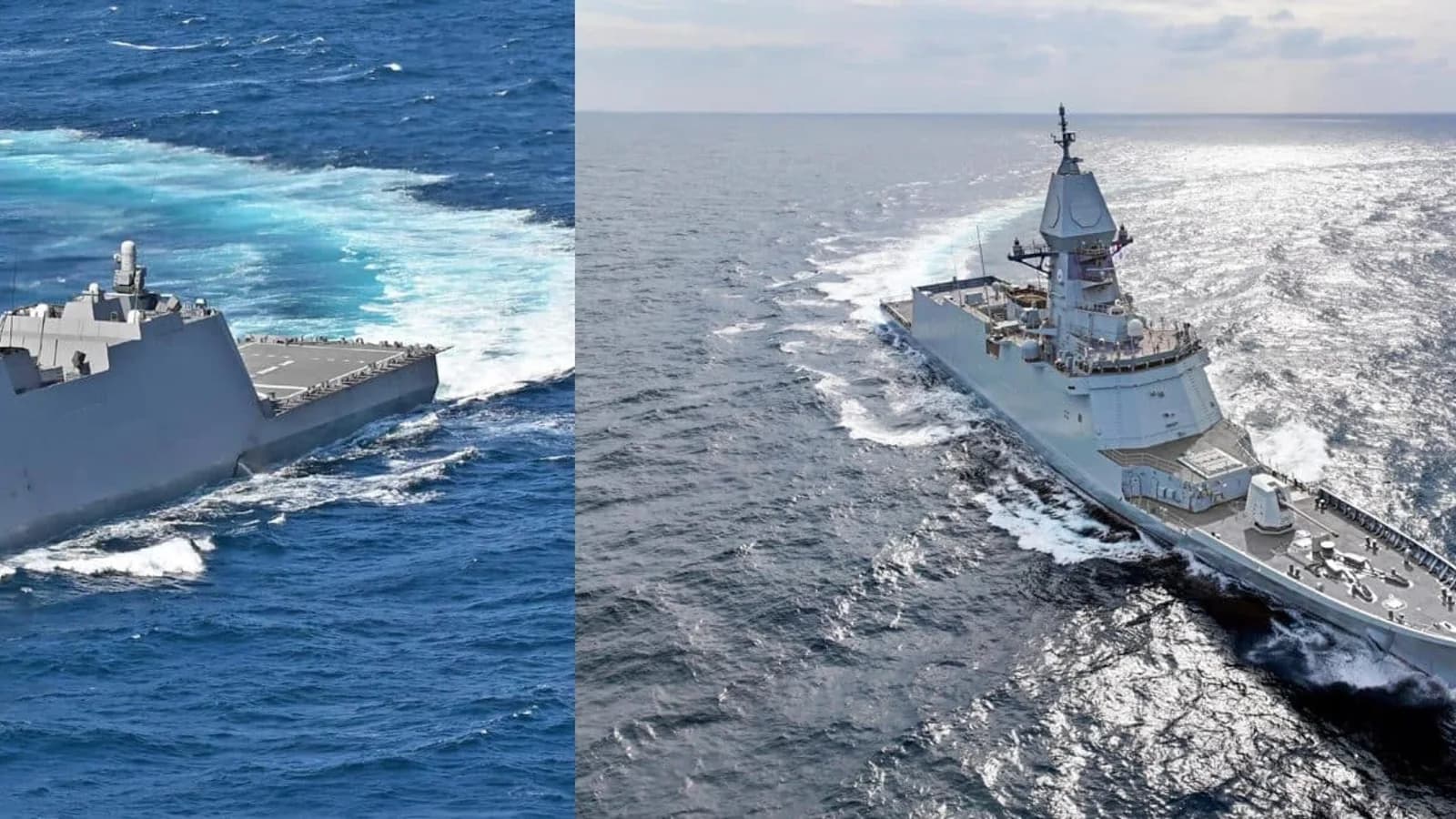
Foreign shipbuilding gets a U.S. entry rule
A White House memorandum directs a 90-day plan for allied parent-design warships that begin production abroad and shift follow-on construction to the United States.
A ninety-day procurement clock now gives allied shipbuilders a route into a U.S. Navy light-combatant competition. The White House framework allows initial hulls abroad, then requires capital, technology transfer and follow-on construction in the United States. That shifts the differentiator from presenting a platform to proving a complete industrial transfer package.
For Canadian yards and design partners, the opening is a benchmark before it is an opportunity. A credible response needs a proven parent design, delivery evidence, investment authority and a U.S. production plan that survives the ban on iterative customization. The watchpoint is the acquisition plan due within 90 days, when eligibility and workshare should become clearer.
What the public record says
Naval News reports that the presidential memorandum directs an international competition for a light multi-mission surface combatant, permits initial foreign construction and requires subsequent U.S. investment, technology transfer and domestic production.
Why this may matter
The framework makes industrial transfer and delivery evidence part of the product, opening an allied route while setting a higher bar than a platform demonstration alone.
Evidence limits
The acquisition plan, eligible countries, vessel quantities, competition terms, Canadian participation and final workshare are not yet public.
Practical next step
Track the 90-day acquisition plan, then compare Canadian parent designs, delivery records and U.S. investment options with the final eligibility rules.
Original source (1)
- Naval News: U.S. Open to Foreign-Built Warships Under New White House Shipbuilding Order (opens in a new tab)Finland Model section and 90-day acquisition-plan requirement
Arctic presence becomes an allied operating test
Operation NANOOK-TUUGAALIK puts a Canadian Arctic and Offshore Patrol Vessel into months of surveillance, patrol, refuelling and allied integration across the Arctic Archipelago.
Canada's Arctic posture now rests on a months-long operating sequence, not a single exercise date. HMCS Robert Hampton Gray will work with the Coast Guard, other departments and naval forces from the United States, France and Denmark on patrols, surveillance, community engagement and refuelling through October.
The practical opportunity sits in the friction exposed by sustained remote operations: maritime awareness, communications, replenishment, maintenance and support to northern communities. Participation does not prove that any supplier can enter the program. It creates a defined window to inspect which systems remain reliable across government and allied interfaces, and which constraints emerge before the operation closes.
What the public record says
National Defence says Operation NANOOK-TUUGAALIK runs from August through October with HMCS Robert Hampton Gray, Canadian partners and naval forces from the United States, France and Denmark conducting Arctic patrols, surveillance, engagement and refuelling.
Why this may matter
The operation turns Arctic sovereignty into an integration test across ships, departments, allies and remote support, creating stronger evidence than an isolated demonstration.
Evidence limits
The release does not identify participating suppliers, system-level performance, readiness gaps, contracted support or procurement decisions that follow the operation.
Practical next step
Map capabilities to surveillance, communications, sustainment and refuelling tasks, then watch the October close for documented operating gaps and follow-on requirements.
Original source (1)
- National Defence: Canadian Armed Forces launch Operation NANOOK-TUUGAALIK in Canada's Arctic (opens in a new tab)Operation scope, participants and August-to-October schedule
Spaceport revenue tests sovereign launch economics
Maritime Launch Services reported its first operating profit after a Department of National Defence lease generated a full quarter of revenue at Spaceport Nova Scotia.
A defence lease has turned sovereign launch infrastructure into operating revenue. SpaceQ reports that Maritime Launch Services recorded $5.6 million in quarterly revenue and $3.2 million in net income, with DND's ten-year pad lease providing the anchor while commercial launch and ground-station agreements develop around it.
The decision now shifts from whether Canada needs a spaceport to whether the airport-style model can deliver repeatable orbital service. The proof points are permanent construction, Isar Aerospace's dedicated complex and the first successful orbital campaign. Cash received in advance strengthens the build plan, but accounting profit does not establish launch reliability or a complete domestic supply chain.
What the public record says
SpaceQ reports $5.6 million in second-quarter revenue and $3.2 million in net income for Maritime Launch Services, supported by the first full quarter of revenue from DND's ten-year Spaceport Nova Scotia pad lease.
Why this may matter
The DND lease converts a national launch ambition into an anchor-customer model, but the strategic value now depends on construction and orbital execution rather than financing alone.
Evidence limits
Orbital launch timing, completed-facility cost, long-term margins, Canadian supplier participation and the operational terms of DND access remain unresolved.
Practical next step
Track permanent construction and the Isar launch complex, then verify the first orbital campaign before treating the spaceport as dependable sovereign capacity.
Original source (1)
- SpaceQ: Maritime Launch Services Q2 2026 results: spaceport turns a profit (opens in a new tab)Quarterly results, DND lease economics and construction watchpoints
Border monitoring enters an integrated pilot
DRDC contracted EarthDaily to integrate daily satellite data, AI change detection and operational alerting into a Canadian border-monitoring pilot ending with a 2027 demonstration.
Border monitoring has entered an end-to-end technology pilot instead of another component study. EarthDaily will combine daily satellite imagery, AI change detection, an analyst alert centre, ArcGIS and the Tactical Awareness Kit for DRDC and the RCMP, carrying nearly a decade of prior research into a demonstration platform.
The integration burden is now the opportunity and the test. Value depends on whether alerts survive analyst review, fit established field tools and improve coordination from national operations to simulated users. The 2027 demonstration is the next decision gate. Until then, the contract proves funded evaluation and a government relationship, not adoption or operational accuracy.
What the public record says
Canadian Defence Review reports that EarthDaily received a DRDC contract for the multi-year SMATAK project, with DRDC and the RCMP evaluating an integrated satellite, AI, geospatial and alerting platform through a final 2027 demonstration.
Why this may matter
SMATAK moves Canadian space analytics toward a complete operational workflow, making alert quality, familiar interfaces and human interpretation the decisive evidence.
Evidence limits
The contract value, datasets, performance thresholds, security controls, field locations and procurement path after the 2027 demonstration are not disclosed.
Practical next step
Map one capability to imagery, change detection, alert triage or TAK integration, then watch the 2027 demonstration for measured user and accuracy results.
Original source (1)
- Canadian Defence Review: EarthDaily Wins Contract for AI-Enabled Border Monitoring Platform (opens in a new tab)SMATAK contract scope, partners, platform components and 2027 demonstration
Quantum tools move toward production scale
A $1.95 million repayable federal contribution will expand Femtum's laboratories and production of laser tools used to manufacture photonic and quantum chips.
Quantum manufacturing capacity is moving upstream into the tools that make photonic chips. Federal support will let Quebec-based Femtum fit out laboratories, expand production and accelerate international commercialization of laser systems used by quantum and conventional semiconductor manufacturers. The project also targets more than 20 specialized jobs.
For defence and dual-use teams, the decision is whether a domestic process-tool supplier closes a real dependency in sensing, communications or secure computing supply chains. Funding and export ambition establish capacity-building intent, not qualified defence production. Evidence should focus on customer adoption, throughput, export-control exposure and the manufacturing standards Femtum can meet as the new laboratories come online.
What the public record says
Canada Economic Development for Quebec Regions announced a $1.95 million repayable contribution for Femtum to expand manufacturing laboratories, increase production capacity, commercialize laser systems and create more than 20 photonics and quantum jobs.
Why this may matter
The investment treats semiconductor process equipment as a strategic layer of Canada's quantum ecosystem, where domestic capacity can reduce dependence before end products are selected.
Evidence limits
The release does not identify defence customers, production volumes, laboratory completion dates, export-control conditions, qualification standards or private co-investment.
Practical next step
Identify defence-relevant photonic chip dependencies, then verify Femtum's customer qualifications, production throughput and laboratory commissioning milestones.
Original source (1)
- Canada Economic Development for Quebec Regions: Government of Canada invests close to $2M in quantum sector with support for Femtum (opens in a new tab)Funding amount, laboratory expansion, production capacity and job target
Calian growth exposes the backlog watchpoint
Calian raised its annual outlook after Defence and Space revenue reached $149.8 million in the quarter, while realizable backlog declined from roughly $1.5 billion to $1.448 billion.
Revenue growth is masking a more useful planning signal: Calian's Defence and Space unit expanded while the company's realizable backlog moved lower. Quarterly revenue rose 20 per cent, Defence and Space produced about two-thirds of sales, and management lifted its annual outlook, but some work arrived earlier than expected from the next quarter.
The distinction matters when judging Canadian mission-system capacity. Current execution supports scale, while bookings and backlog determine how durable that capacity becomes. The next decision is to compare new awards, organic growth and margins after timing effects unwind. A strong quarter establishes delivery momentum; it does not establish an accelerating order base.
What the public record says
SpaceQ reports quarterly revenue of $230.4 million, Defence and Space revenue of $149.8 million, raised annual guidance and a realizable backlog of $1.448 billion compared with roughly $1.5 billion in the prior quarter.
Why this may matter
Calian's quarter separates delivery performance from future demand, making award intake and backlog conversion the stronger watchpoints for sustained Canadian defence capacity.
Evidence limits
The reporting does not isolate Canadian defence revenue, program-level margins, timing of pending awards or the share of backlog exposed to schedule and funding changes.
Practical next step
Compare fourth-quarter organic growth, new contract signings and backlog conversion, then verify which Canadian Defence and Space programs support the outlook.
Original source (1)
- SpaceQ: Calian Q3 2026 results: raised outlook, lighter order book (opens in a new tab)Quarterly revenue, segment performance, outlook and backlog analysis
Multinational drones move into one task force
U.S. Central Command is forming Task Force Falcon Strike to integrate allied one-way attack drones operating above, on and below the sea under a multinational staff.
A multinational attack-drone unit moves allied autonomy from parallel experiments into one operating structure. Task Force Falcon Strike will combine aerial, surface and undersea one-way systems with personnel from the United States and regional partners, building on a U.S. squadron that has already launched from a warship and used uncrewed vessels in operations.
The benchmark for Canada is integration under command authority, not the specific Middle East mission. Systems need shared procedures, communications, training and legal control before national platforms become a unified deterrent. Formal partner invitations and the first combined deployment are the next proof points. The announcement establishes intent and a staff model, not performance across domains.
What the public record says
U.S. Central Command says Task Force Falcon Strike will employ one-way aerial, surface and undersea uncrewed systems with a staff drawn from U.S. and regional partners, led by Special Operations Command Central personnel.
Why this may matter
Falcon Strike makes multinational command integration the capability gate, showing that autonomy at scale depends on common procedures and accountable operational control.
Evidence limits
Partner nations, force size, platforms, communications standards, rules of engagement, testing schedule and measures of effectiveness have not been disclosed.
Practical next step
Track formal partner participation and the first combined deployment, then compare Canadian command, communications and training requirements with the operating model.
Original source (1)
- U.S. Central Command: Centcom Launches First-Ever Multinational Attack Drone Task Force (opens in a new tab)Task-force composition, operating domains and partner-invitation process
Orca proves long-range uncrewed undersea transit
A U.S. Navy Orca XLUUV completed a first 1,000-nautical-mile Pacific transit as the program prepares payloads for surveillance, mining and other undersea missions.
A thousand-nautical-mile unmanned transit replaces range claims with mission evidence. The U.S. Navy's Boeing and HII-built Orca crossed the eastern Pacific in July, marking the program's first long-range mission while the service develops payloads for surveillance, mine warfare, seabed operations and expeditionary support.
For Canada's undersea surveillance choices, endurance is only the first gate. The more consequential questions are navigation, communications, payload integration, recovery and maintenance across remote waters. The transit justifies deeper comparison with Arctic and Atlantic mission needs, but it does not establish reliability in ice, a Canadian procurement path or readiness of the Hunter payload and torpedo system.
What the public record says
Naval News reports that a U.S. Navy Orca XLUUV completed a July transit of more than 1,000 nautical miles across the eastern Pacific, the program's first long-range mission.
Why this may matter
The transit turns endurance into public evidence and shifts the undersea-autonomy decision toward payloads, support concepts and performance in mission-specific environments.
Evidence limits
Transit duration, intervention rate, energy use, navigation accuracy, payload performance, ice capability, unit cost and Canadian program relevance remain unstated.
Practical next step
Compare the transit evidence with Canadian Arctic and Atlantic endurance needs, then track Hunter integration and repeat missions for reliability and support data.
Original source (1)
- Naval News: U.S. Navy Orca XLUUV Completes 1,000-Mile Pacific Transit (opens in a new tab)Long-range transit and mission-payload discussion