
Canadian Defence Signals
Operating advantage is moving into the enabling layer
Editorial briefing snapshot
The Bottom Line
Allied programs make architecture, rather than a single platform, the thing to watch. Silent Anvil defines an air-launched anti-submarine prototype envelope, the US Marine Corps has accepted a shallow-draft logistics prototype, and Ocius has selected two acoustic systems for Bluebottle fleets. Toronto's Kepler has meanwhile opened its first commercial optical-relay service tranche.
In context
Eight developments point in the same direction: advantage is moving into the layers that connect suppliers, training grounds, readiness data, networks, sensors and platforms. Canada's Lead Nation role at MSPO creates a scheduled access point for 180 enterprises, construction at Gagetown starts a new range-infrastructure cycle, and ARES and NETCOM make readiness data and cross-theatre continuity more inspectable.
In this edition
Canada makes MSPO a 180-enterprise market-access test
Canada will enter Poland's September MSPO expo as Lead Nation with 180 Canadian enterprises, creating a concentrated test of whether visibility converts into durable buyer and partner relationships.
Canada's Lead Nation role at MSPO turns a large trade-show presence into a specific market-access watchpoint. Canadian Defence Review says 180 Canadian enterprises are expected at the September 8–11 event, inside an expo with more than 1,000 exhibitors from 40 countries. The scale can concentrate introductions to Polish and allied buyers, primes and program teams.
The decision is what each participant needs to prove after the pavilion closes: a qualified buyer conversation, a technical follow-up, a partner pathway or a procurement next step. The source establishes the planned delegation and event position, not attendance, demand, contracts, revenue or export approvals. Those outcomes require post-event evidence.
What the public record says
Canadian Defence Review reports that Canada is Lead Nation for MSPO 2026 and that 180 Canadian enterprises are expected at the September 8–11 defence expo in Poland.
Why this may matter
A concentrated national presence can reduce discovery friction, but its value becomes visible only when participating firms can trace introductions into qualified technical, partnership or procurement follow-up.
Evidence limits
The report does not establish final attendance, named buyer meetings, export permits, Polish requirements matched to each firm, partnership terms, contracts or revenue.
Practical next step
Verify the final exhibitor roster and track named buyer meetings, technical evaluations, teaming agreements and procurement follow-ups after the event.
Original source (1)
- Canadian Defence Review: MSPO 2026: Canada Leads Record-Breaking Defence Expo (opens in a new tab)Opening event overview, Canada Lead Nation section and Canadian participation count
Construction starts on Gagetown's next training layer
Canada has started Phase 1 within an approximately $871-million Gagetown range-and-training-area project, combining road and facility work with bridge and firebreak-road design.
The Gagetown project has crossed from announcement into execution. National Defence says Phase 1 is starting under a contract awarded to K-Line Construction in June, with work spanning roads, design for two replacement bridges and firebreak roads, an anti-armour range, medical and administrative facilities, and the Austere Village training site. Phase 2 is expected to begin in 2028.
For operators and suppliers, the opportunity is the training system around the base: safe access, range availability, realistic facilities and later sustainment. The source gives an overall project value, a Phase 1 contract and a start milestone, but it does not prove schedule, cost control, completed facilities, training throughput or the timing of individual work packages.
What the public record says
National Defence marked the Phase 1 start within the approximately $871-million Gagetown Range and Training Area project and says K-Line Construction received the Phase 1 contract in June.
Why this may matter
A visible construction start makes training infrastructure an active delivery question and creates concrete watchpoints for sequencing, local capacity, range availability and later operational use.
Evidence limits
The release does not publish a detailed construction schedule, individual work-package values, acceptance criteria, disruption plan, final cost exposure or measured training benefits.
Practical next step
Track bridge, road, range and Austere Village milestones against the Phase 1 schedule, then verify acceptance and training use before treating construction as readiness gained.
Original source (1)
- National Defence: Canada marks start of major infrastructure upgrades at 5th Canadian Division Support Base Gagetown (opens in a new tab)Project scope, Phase 1 construction start, K-Line contract and Phase 2 timing
ARES moves readiness data into one production stack
The U.S. Air Force has awarded VivSoft a production agreement for ARES, a readiness platform intended to consolidate six legacy systems used by more than 149,000 Airmen.
ARES has moved from operator testing into a production other-transaction agreement. Air Education and Training Command says the platform brings scheduling, training, waivers and readiness data into one system for more than 149,000 Airmen, with Zero Trust controls, degraded-operations support and rollout expected over the next year.
The Canadian benchmark is not the software brand; it is the consolidation test. A readiness stack should reduce duplicate entry while remaining usable when connectivity degrades and while preserving trusted data across units. The award proves a production decision, not successful migration, user adoption, availability, cybersecurity performance or retirement of the six legacy systems.
What the public record says
Air Education and Training Command says VivSoft received a production agreement for ARES after operator testing, with rollout planned over the next year across a population exceeding 149,000 Airmen.
Why this may matter
A production decision makes readiness-data consolidation a measurable operating benchmark for Canada: migration quality, user adoption, degraded-mode continuity and legacy-system retirement now matter more than feature claims.
Evidence limits
The release does not disclose agreement value, migration results, availability, cybersecurity testing, user adoption, data-quality change or a confirmed retirement date for each legacy system.
Practical next step
Track rollout, migration and legacy-system retirement, then look for user, availability, degraded-operations and audit evidence before treating consolidation as readiness improvement.
Original source (1)
- U.S. Air Education and Training Command: Air Force awards production contract for next-gen Aerospace Readiness Enterprise System (opens in a new tab)Production agreement, six-system consolidation, user scale, architecture and rollout sections
NETCOM rehearses a cross-theatre digital handoff
U.S. Army NETCOM says it transferred network and command-and-control support between theatres for the first time, exposing continuity as a service-handoff problem rather than only a hardware problem.
NETCOM's first cross-theatre “digital passage of lines” makes continuity concrete. DefenseScoop reports that the Army moved configuration privileges, bandwidth allocations, cloud services and personnel support from Southwest Asia to Europe before Operation Epic Fury. Leaders described the work as preparation for a regional node becoming unavailable or compromised.
That creates a precise Canadian and NATO assurance question: can workloads, privileged configurations, bandwidth and cloud services move between hubs without losing command support? The report documents the handoff and named sources, but it does not establish that the redundant network was used during the war, identify supporting vendors or prove interoperability with Canadian systems.
What the public record says
DefenseScoop reports that U.S. Army NETCOM completed its first cross-theatre digital passage of lines, transferring network and command-and-control support from Southwest Asia to Europe.
Why this may matter
The disclosed handoff turns network resilience into an inspectable operating drill and gives Canadian teams a concrete way to test whether Arctic and deployed command services can move between hubs.
Evidence limits
The report does not confirm wartime use of the redundant network, publish performance results, identify vendors, show classified architecture or establish Canadian and NATO interoperability.
Practical next step
Map which Canadian workloads, privileges, bandwidth allocations and cloud services can transfer between hubs, then test the handoff and record recovery time and service loss.
Original source (1)
- DefenseScoop: Before Iran war, Army NETCOM transferred network and C2 services between theaters for first time (opens in a new tab)Commander and spokesperson descriptions of the digital passage of lines and transferred services
Silent Anvil defines an air-launched ASW envelope
A U.S. Navy request for information defines an 18-month prototype path for an air-launched anti-submarine weapon or glide kit paired with a government-furnished lightweight torpedo.
Silent Anvil turns stand-off anti-submarine warfare into a bounded prototype question. The U.S. Navy's August 25 sources-sought notice asks industry about an integrated air-launched weapon or glide-wing kit using a government-furnished lightweight torpedo, with a prototype expected within 18 months and roughly 180 prototype rounds contemplated over three years. Responses are due September 29.
For Canada, the useful question is architectural: how might a P-8A or uncrewed carrier extend torpedo reach while preserving targeting, release safety and undersea effectiveness? The notice is market research, not a solicitation, award, selected design, fielded capability or statement that Canada will participate or adopt the result.
What the public record says
The U.S. Navy's Silent Anvil sources-sought notice requests information on an air-launched lightweight-torpedo system or glide kit, an 18-month prototype and an estimated 180 prototype rounds over three years.
Why this may matter
A defined prototype envelope gives Canadian maritime-air teams a concrete allied architecture to examine before P-8A integration choices harden, while preserving the distinction between market research and procurement.
Evidence limits
No solicitation, award, contractor, final design, carrier integration, test result, fielding decision, Canadian role or export pathway is established by the notice.
Practical next step
Track the September response window, any prototype solicitation and award, then examine carrier integration, targeting, range and test evidence before inferring Canadian utility.
Original sources (2)
- U.S. Naval Air Systems Command: SILENT ANVIL air-launched lightweight torpedo prototype (N00019-27-RFI-PMX201-SILENTANVIL) (opens in a new tab)Sources sought notice, prototype schedule, estimated round quantity and response deadline
- DefenseScoop: Navy seeks to prototype air-launched torpedo system for Silent Anvil program (opens in a new tab)Program overview, notice requirements and prototype schedule
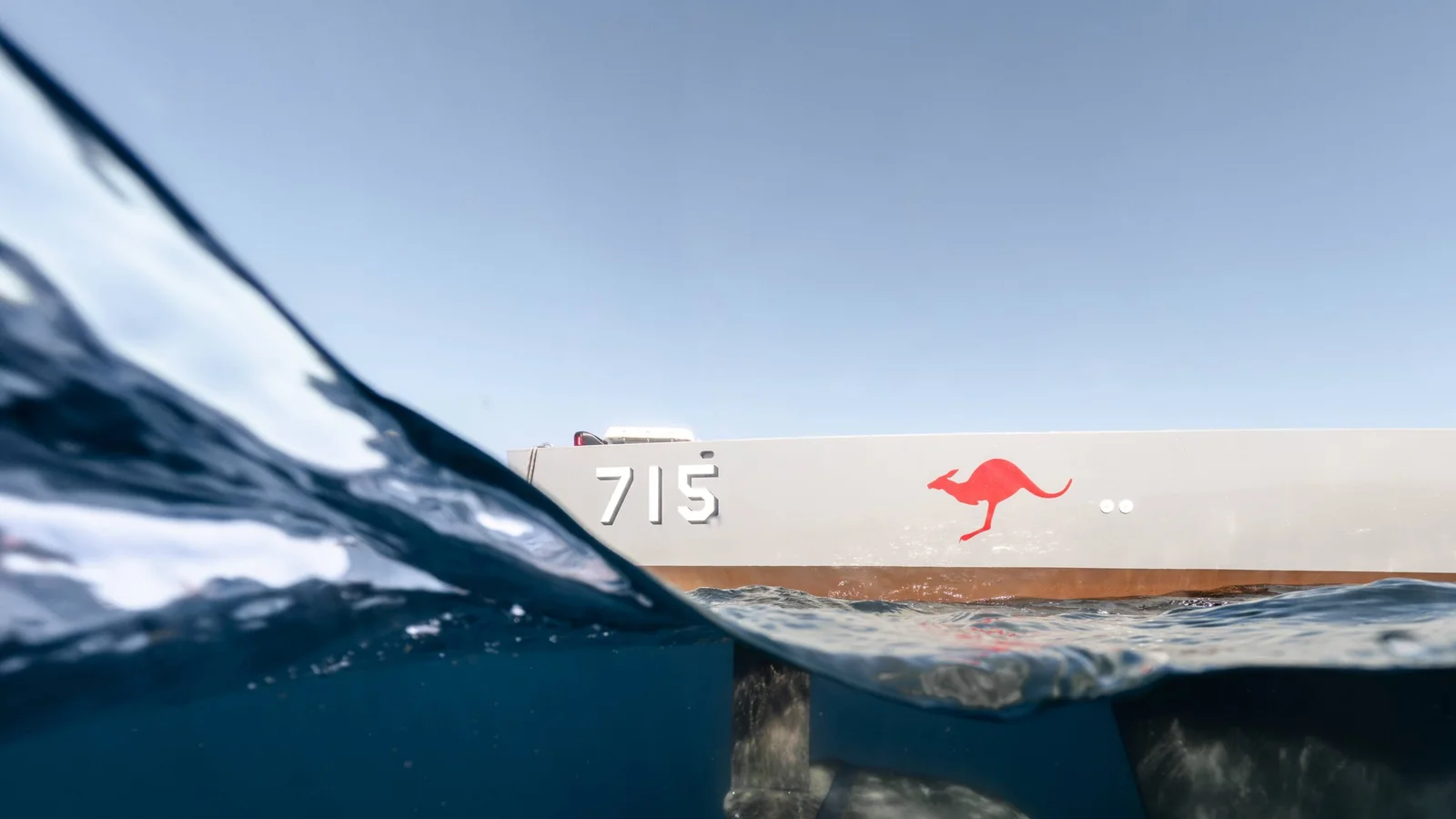
Marines accept a shallow-draft logistics prototype
The U.S. Marine Corps has technically accepted the first Ancillary Surface Craft prototype, moving a roughly 150-foot shallow-draft connector into limited technical assessment.
Technical acceptance moves the first Ancillary Surface Craft from build into evaluation. The Marine Corps Warfighting Laboratory describes a roughly 150-foot roll-on/roll-off vessel designed to operate in Sea State 5, survive Sea State 7, carry 46 tons and 40 combat-loaded Marines, and use forward-looking sonar for austere coastal access. Limited technical assessments come next.
The Canadian relevance is a requirements benchmark for shallow-draft coastal and northern sustainment: cargo, people, beach access, sensing, crewing and survivability appear in one craft. The milestone does not prove test performance, operational acceptance, a production decision, Arctic suitability or a Canadian requirement. It establishes the prototype that those questions can now be tested against.
What the public record says
The Marine Corps Warfighting Laboratory records technical acceptance of the first Ancillary Surface Craft prototype and says limited technical assessments will follow.
Why this may matter
The accepted prototype provides a concrete allied benchmark for connecting shallow-draft lift, unimproved-shore access and sustainment without mistaking a technical handover for proven operational performance.
Evidence limits
No limited-assessment result, operational acceptance, production quantity, unit cost, Arctic test, Canadian requirement or procurement path is public.
Practical next step
Track the limited technical assessments for sea-state, cargo, sonar and shore-access results, then compare those results with Canadian coastal and northern operating requirements.
Original sources (2)
- Marine Corps Warfighting Laboratory via DVIDS: U.S. Marine Corps Accepts First Australian-Designed Ancillary Surface Craft Prototype (opens in a new tab)Technical acceptance milestone, vessel characteristics and limited-assessment plan
- Naval News: USMC Accepts First Australian-Designed Ancillary Surface Craft Prototype (opens in a new tab)Technical acceptance milestone, vessel characteristics and next-assessment section
Ocius scales Bluebottle acoustic sensing
Ocius has selected ThayerMahan and Thales Australia acoustic systems for Bluebottle fleets, including 40 Outpost payloads under the Royal Australian Navy's SEA 1200 program.
Ocius has moved persistent undersea sensing from a platform claim into a scaled integration decision. The company says 40 ThayerMahan Outpost acoustic-intelligence payloads with TransparenSea processing are contracted under SEA 1200, while Thales Australia BlueSentry thin-line arrays were selected for Bluebottles supporting Maritime Border Command operations.
The Canadian decision is whether long-endurance uncrewed surface vessels could extend maritime and northern sensing while preserving modular payload competition and independent validation. Ocius says the selections followed operational testing and Navy-controlled comparison among four array providers. The issuer account establishes no Canadian trial, procurement, partnership, independently reported field performance or share of the stated program value.
What the public record says
Ocius says Bluebottle fleets will integrate 40 ThayerMahan Outpost payloads and Thales Australia BlueSentry arrays after operational testing and provider comparison.
Why this may matter
Two selected acoustic paths on one long-endurance uncrewed platform create a concrete allied model for modular, distributed anti-submarine sensing that Canadian teams can compare with northern coverage needs.
Evidence limits
The release does not publish independent performance data, delivery schedule, per-system value, operational availability, Canadian activity or confirmation that every payload is already deployed.
Practical next step
Track payload delivery, operational availability and Navy-reported performance, then test whether Canadian sensing requirements favour a similar modular competition and validation model.
Original sources (2)
- Ocius Technology: Ocius Selects ThayerMahan and Thales Australia Thin-Line Arrays for Bluebottle Fleets (opens in a new tab)SEA 1200 payload quantity, BlueSentry selection, testing and provider-comparison sections
- Naval News: Ocius Selects ThayerMahan and Thales Australia Thin-line Arrays for Bluebottle Fleets (opens in a new tab)SEA 1200 payload quantity, BlueSentry selection, testing and provider-comparison sections
Kepler opens commercial optical-relay service
Toronto-based Kepler says the first tranche of its optical data-relay constellation is commercially available, moving a 33-satellite network from deployment into a service-uptake test.
Kepler's first tranche is now a commercial service rather than only deployed infrastructure. The Toronto company says its 33-satellite network offers optical inter-satellite relay, edge computing and hosted payloads for commercial and government users, including ISR, space-domain awareness and defence workflows. It plans a second tranche in 2028 with links up to 100 gigabits per second.
The strategic question is service evidence: which operators can shorten data delivery, how reliably, and under what security and integration conditions? Commercial availability creates a customer and operating-performance watchpoint, not proof of adoption. The company release does not name customers, disclose service-level results, publish pricing or establish government accreditation, Canadian defence use or the next tranche's financing and schedule.
What the public record says
Kepler says the first tranche of its 33-satellite optical data-relay network is commercially available worldwide for commercial and government users.
Why this may matter
A live commercial tranche gives Canada a commercially available optical-relay service from a Canadian company to evaluate against latency, resilience, security and integration needs instead of assessing a future constellation only on specifications.
Evidence limits
Kepler does not name customers, publish latency or availability results, disclose pricing, establish defence accreditation or prove the funding and schedule for its planned 2028 tranche.
Practical next step
Track named customers, service-level evidence, security accreditation and integration results, then compare them with Canadian ISR and space-domain-awareness data-delivery requirements.
Original source (1)
- Kepler Communications: Kepler Delivers Optical Infrastructure for Real-Time Space Operations (opens in a new tab)Commercial-service announcement, first-tranche capabilities, constellation count and 2028 plan