
Canadian Defence Signals
Glider data, engine tests and a completed industrial sale
Editorial briefing snapshot
The Bottom Line
The common practical question is what makes the next stage possible: interpretable sensor data, a full-power test location or usable capital. Each announcement reaches a different stage of that work.
In context
A Canadian acoustic team connects glider measurements to mission planning while allied trials test the wider sensing chain. At home, a rocket-engine site and Calian’s completed divestiture address different industrial constraints.
In this edition
REPMUS puts gliders and drones into an allied sensing chain
The Royal Navy’s October 1 report distinguishes ocean-measuring gliders, acoustic sentinels, sensor-carrying boats and airborne drones within one anti-submarine experiment.
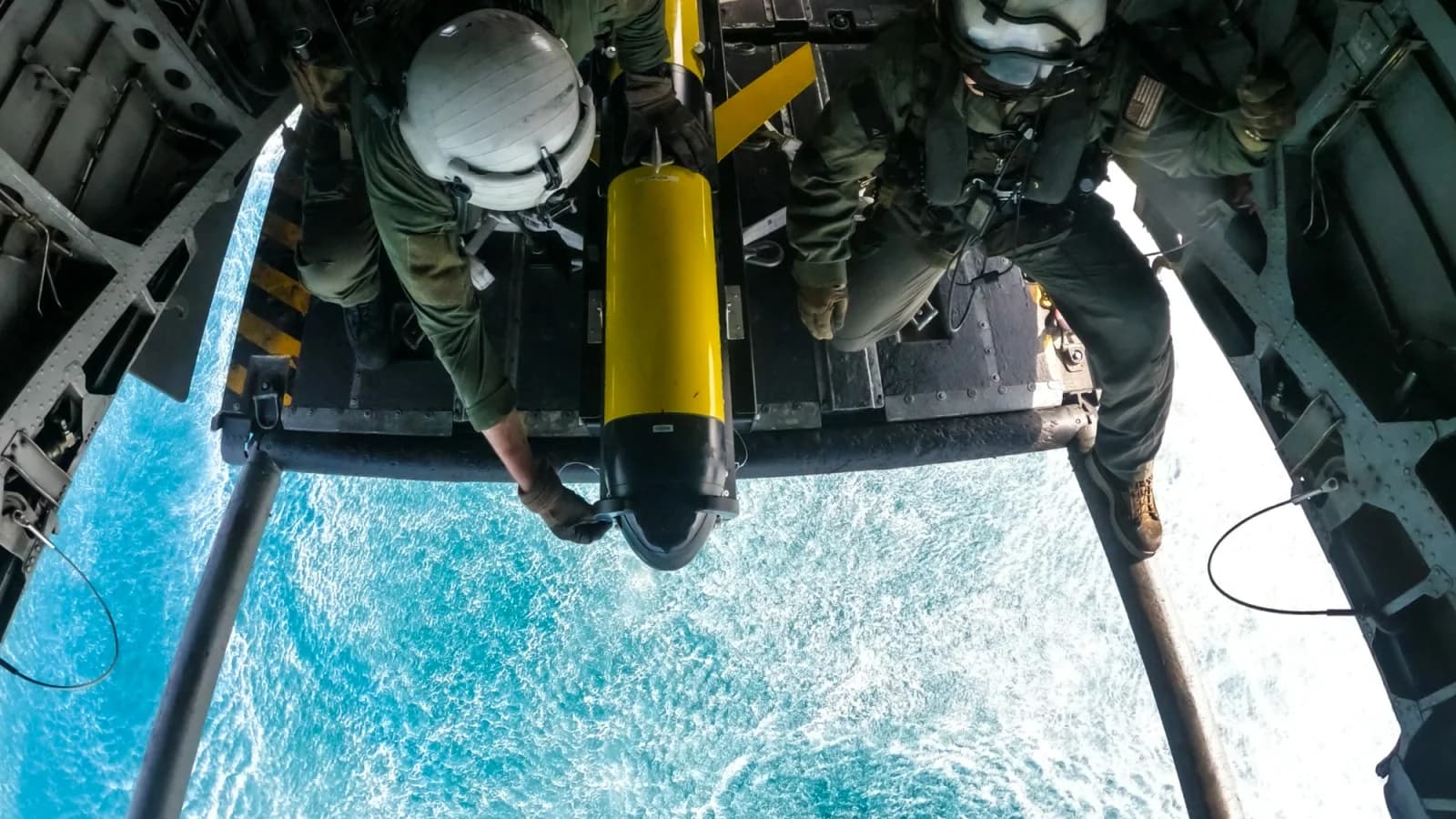
A glider measuring ocean conditions and a glider listening for a submarine serve different purposes. The Royal Navy’s October 1 REPMUS report puts both in the same experiment: environmental observations describe the water through which sound travels, while larger sentinel gliders carry long acoustic arrays. Surface craft gathered acoustic data and reported submarine contacts.
The deployment chain extended above the water. Autonomous boats, 12 and 17 metres long, were tested towing sonar, deploying sonobuoys and launching gliders. Swedish reconnaissance drones and Portuguese airborne sonobuoy deployment and relay added other sensing paths. The UK led ASW scenarios with about 200 sailors, scientists and industry personnel, working with ten NATO and partner nations.
The Royal Navy describes the experiments as a way to evaluate emerging technologies, including potential industry offerings not yet formally adopted, and inform future Atlantic Bastion options. For Canada’s Atlantic and Arctic sensing ambitions, the useful benchmark is the division of labour: environmental prediction, acoustic collection, deployment and reporting each require a working handoff. A fleet of vehicles alone does not establish that chain.
Evidence and assessment for REPMUS puts gliders and drones into an allied sensing chain
What the sources establish
The Royal Navy reports environmental and acoustic gliders, surface-vessel sensor deployment and airborne sonobuoy trials under UK-led allied ASW scenarios.
True North Map assessment
Different vehicles perform different parts of the sensing chain; usefulness depends on the data and operating handoffs between them.
Original source (1)
- Royal Navy: Uncrewed and autonomous technology tested against underwater threats in NATO exercise (opens in a new tab)Direct recordOriginal report dated 1 October 2026; full article body in web capture, including prototype/adoption boundary. Exact publication time unavailable.
JASCO’s glider trials connect acoustic detections to mission planning

REPMUS26 reporting identifies a Canadian contribution beyond the vehicle: glider measurements fed detection-range models and a named operator planning interface.
JASCO’s REPMUS26 account connects Slocum glider measurements to a named operator planning tool. In its September 22 account, the company says conductivity-temperature-depth and ambient-noise measurements from Slocum gliders supported its Detection Range Modelling capability. Directional acoustic detections, environmental measurements and model outputs were integrated and visualized in Tacteris Chorus, a planning and situational-awareness platform. That puts sensing and predicted sensor coverage in the same operator environment.
JASCO’s October 1 wrap-up describes trials against uncrewed underwater vehicles carrying representative acoustic signatures. The company reports tracking those targets through transient signals and narrowband tones, with the gliders remaining active through the final experimentation period before recovery. These are participant-reported trial results; the posts do not publish detection probabilities, ranges or false-alarm performance.
There is a concrete Canadian test chain behind this work. In a June 5 report on DRDC-led CATS-M trials in Conception Bay, JASCO describes three directional Slocum gliders, two acoustic-monitoring buoys and a towed array on Open Ocean Robotics’ DataXplorer. The team tested sensor integration with General Dynamics’ Undersea Data Management System ahead of planned REPMUS26 experimentation. JASCO analysts and Ocean Tracking Network glider pilots supported the Canadian trial from Dartmouth.
JASCO’s product description adds a useful operating constraint: onboard detections are sent ashore when the Slocum surfaces at set intervals. Continuous sensing therefore need not mean a continuously current shore picture. The public REPMUS posts identify the receiving software, but do not disclose the reporting latency or sensor-performance envelope.
What remains open
The public trial posts omit detection ranges, probabilities, false-alarm results and end-to-end reporting latency.
What comes next
A trial report pairing detections with environmental conditions, target ground truth and operator decisions would make performance easier to judge.
Evidence and assessment for JASCO’s glider trials connect acoustic detections to mission planning
What the sources establish
JASCO reports Slocum sensing, environmental detection-range modelling, integration in Tacteris Chorus and target-tracking trials at REPMUS26. Its earlier CATS-M report identifies related Canadian platforms and UDMS integration.
True North Map assessment
Combining detections with environmental and coverage estimates can help an operator interpret gaps in a distributed underwater sensing network.
Original sources (4)
- JASCO Applied Sciences: REPMUS26 — Experimentation Week 2 Update (opens in a new tab)Attributed statement · Original September22 public post body and JSON-LD; CTD/noise modelling and Chorus integration.
- JASCO Applied Sciences: REPMUS26 — Wrap-Up (opens in a new tab)Attributed statement · Original October1 public post body and JSON-LD; target signatures, tracking, recovery and model sharing.
- JASCO Applied Sciences: JASCO marks successful CATS-M trial (opens in a new tab)Attributed statement · June5,2026 Canadian CATS-M background; sensors, data path, Dartmouth remote support and UDMS integration.
- JASCO Applied Sciences: JASCO OceanObservers integrated into Teledyne Webb Research Slocum Gliders (opens in a new tab)Attributed statement · April30,2021 platform backgrounder; onboard processing and periodic surfacing distinguish continuous sensing from shore reporting.
Canada Rocket’s London site addresses a ground-test bottleneck

A planned C$30 million engine test facility gives Canada Rocket Company a domestic route to full-power static firing before its orbital-launch ambition can be tested.
Canada Rocket Company is building a test site on 50 acres leased at London International Airport. BetaKit’s October 1 reporting describes a 12,000-square-foot engineering and assembly building and up to three vertical and horizontal test stands for engines exceeding one meganewton of thrust. CRC expects full operations in 2028 and about 40 skilled jobs within 18 months.
The significant industrial addition is a place to run large engines on the ground. CRC told BetaKit that Canadian work at this scale would otherwise have to go abroad, and that the site would be available to others in the ecosystem. That could support domestic propulsion development beyond one vehicle if the access model materializes. The medium-lift rocket, its funding and its flight qualification remain separate milestones; a groundbreaking does not establish sovereign orbital launch.
What remains open
Public reporting does not establish operating access terms, test pricing or qualification of a flight engine.
What comes next
The first full-power engine firing and commissioned stand capacity will distinguish construction progress from demonstrated test capability.
Evidence and assessment for Canada Rocket’s London site addresses a ground-test bottleneck
What the sources establish
BetaKit reports CRC’s C$30 million planned London engine test site, stands, expected2028 operations and CEO-described ecosystem access.
True North Map assessment
A shared domestic test location could retain propulsion iteration, specialist jobs and test evidence in Canada.
Original source (1)
- BetaKit / Josh Scott: Canada Rocket Company breaks ground on large engine test facility in London (opens in a new tab)Original reporting · Original October1 reporting and CEO email interview, lines9–31; full article inspected.
Calian closes its U.S. IT sale, separating cash from assumed liabilities
Calian’s completed disposal brings approximately C$43 million in upfront proceeds; another C$17 million represents liabilities assumed by the buyer.
Calian completed the sale of its Houston-based U.S. commercial IT business to Trace3 on October 1. The Ottawa company reports roughly C$43 million in upfront cash proceeds and the purchaser’s assumption of approximately C$17 million in net liabilities, on the previously announced terms. Adding those amounts together as cash received would overstate the liquidity created.
The transaction changes the perimeter of a Canadian company active in defence, space, healthcare and critical infrastructure. Management says it will give Calian greater focus for its next growth phase. The statement does not allocate the proceeds to a particular defence acquisition or programme. Readers assessing Canadian industrial capacity can now treat the disposal as completed and distinguish available cash from the separate balance-sheet relief.
What remains open
The release does not specify how the proceeds will be deployed.
What comes next
Calian’s next financial reporting can show disposal accounting and the resulting cash/debt position.
Evidence and assessment for Calian closes its U.S. IT sale, separating cash from assumed liabilities
What the sources establish
Calian announced completion, approximately C$43 million upfront cash and C$17 million in assumed net liabilities.
True North Map assessment
The completed transaction can release capital and management attention for Calian’s remaining businesses; the buyer-assumed liabilities are a different benefit from cash.
Original source (1)
- Calian: Calian completes sale of U.S. commercial IT business to Trace3 (opens in a new tab)Attributed statementOctober1,2026 completion release: terms, buyer-assumed liabilities, management statement; full substantive body inspected.
Carry the signal forward
Continue in True North Map
Follow the edition into the organizations, technologies, Defence needs and Mission areas already connected to its record.