
Canadian Defence Signals
Connected counter-drone defence and smarter satellite access
Editorial briefing snapshot
The Bottom Line
The value of a connection depends on what survives the journey: timely operational information in one case, a remote device’s limited power in the other.
In context
NATO’s counter-drone experiment tests whether useful systems can form a larger defence. Photon-IV’s Canadian development award addresses a quieter connectivity problem: how remote devices avoid spending scarce energy searching for unavailable satellites.
In this edition
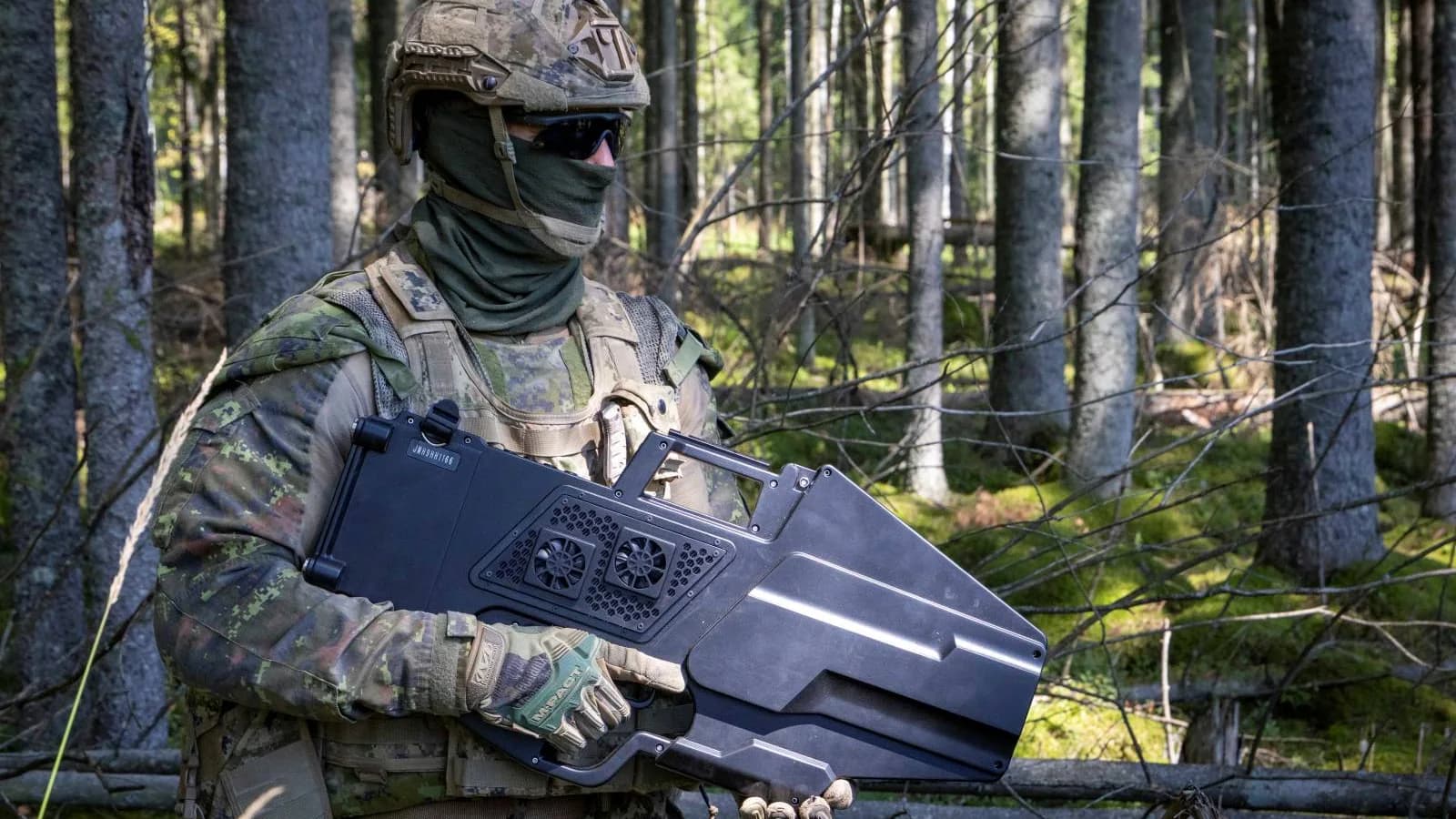
NATO takes counter-drone cells toward a larger connected defence
Crucible 4-26 connects sensors, command systems and effectors across more distance and formations; the October 16 account describes an experiment, with results still ahead.
NATO’s next counter-drone problem is the space between otherwise useful systems. ACT’s October 16 account describes Crucible 4-26, part of Digital Backbone Experimentation 2026 in Latvia, extending the Layered Counter-UAS Initiative from individual cells to connected formations. A cell combines sensors, command and control, and effectors; the experiment asks how those elements share information beyond their own cell.
Earlier 2026 events established a progression: integration within a cell in Romania, connections between cells in Finland, then tactical-formation and NATO command integration in Latvia. The fourth event extends distance and organizational complexity. Its data will also stress the DiBaX network and support Next Generation Targeting experiments, exposing whether information remains useful as it moves into a wider operational system.
ACT expected more than 100 entities from over 30 Allies and Partners later in October. That is planned participation, rather than a completed result. For Canadian buyers and developers, the consequential output will be evidence about integration failures, procedures and requirements. The article invokes NATO standards and architectures but does not establish compliance with a named STANAG or award a national procurement contract.
What remains open
No final fourth-event performance dataset, named-STANAG certification or procurement selection is supplied.
What comes next
A published evaluation of cross-cell information exchange and operating procedures would show what scale changed.
Evidence and assessment for NATO takes counter-drone cells toward a larger connected defence
What the sources establish
ACT describes the sequence of increasingly complex tests and the planned fourth-event integration and participation.
True North Map assessment
A connected defence must preserve useful information across suppliers and command boundaries; a successful standalone component does not establish that result.
Original source (1)
- NATO Allied Command Transformation: NATO Scales Counter-UAS Experimentation (opens in a new tab)Direct record · Full original October 16 article recovered through exact-domain search and browser. Later-month participation remains planned; no final Crucible 4 result inferred.
Photon-IV targets the power wasted looking for a satellite
A CSA technology-development contribution supports more efficient satellite connections for remote IoT devices; field demonstration is part of the planned work.
A remote sensor can exhaust its power budget looking for a connection that is not there. Photon-IV’s October 16 announcement identifies that practical problem behind a new non-repayable Canadian Space Agency contribution under the Space Technology Development Program. The work aims to reduce unnecessary radio activity and gaps in data delivery as devices connect through proliferated low-Earth-orbit networks.
The company identifies Arctic environmental monitoring and other remote sensing as applications. That makes communications scheduling part of the endurance problem alongside batteries, energy harvesting and the sensor itself. Better decisions about when to use the radio could help a remote installation remain useful between maintenance visits; the announcement supplies no quantified battery-life improvement.
The contribution supports technology advancement and a future field demonstration. Photon-IV also reports earlier independent validation at an O-RAN Alliance Plugfest at Virginia Tech’s xG testbed with Keysight. That claim remains attributed to the company here: the issuer release does not publish the test record, field results or contribution amount. A laboratory interoperability milestone and an Arctic operating result answer different questions.
What remains open
The release discloses neither funding value nor measured energy savings or northern field performance.
What comes next
Field evidence relating connection availability, energy use and delivered data would make the planned benefit assessable.
Evidence and assessment for Photon-IV targets the power wasted looking for a satellite
What the sources establish
The company announces the CSA contribution and field-demonstration purpose, and reports prior Plugfest validation.
True North Map assessment
Connection scheduling can be a meaningful part of remote sensor endurance when repeated unsuccessful radio searches consume limited energy.
Original source (1)
- Photon-IV: Photon-IV Awarded Canadian Space Agency STDP to Advance Connectivity for Proliferated LEO Networks (opens in a new tab)Attributed statement · Full October 16 issuer original. Contribution confirmed by company; amount not disclosed. Company-attributed prior Plugfest validation separated from planned field demonstration.