
Canadian Defence Signals
Weekend follow-through tests financing and integration assumptions
Editorial briefing snapshot
The Bottom Line
The U.S. Navy’s refit notice is from October 22, the Telesat offer was reported earlier in the week, and Belgium’s research document is January background. They are revisited here for distinct technical and commercial questions, without implying fresh October 24 announcements.
In context
This weekend edition follows three consequential interfaces: a destroyer radar and its support plant, a reported satellite creditor proposal and a completed refinancing, and a standards reference and the demonstrator a buyer actually wants.
In this edition
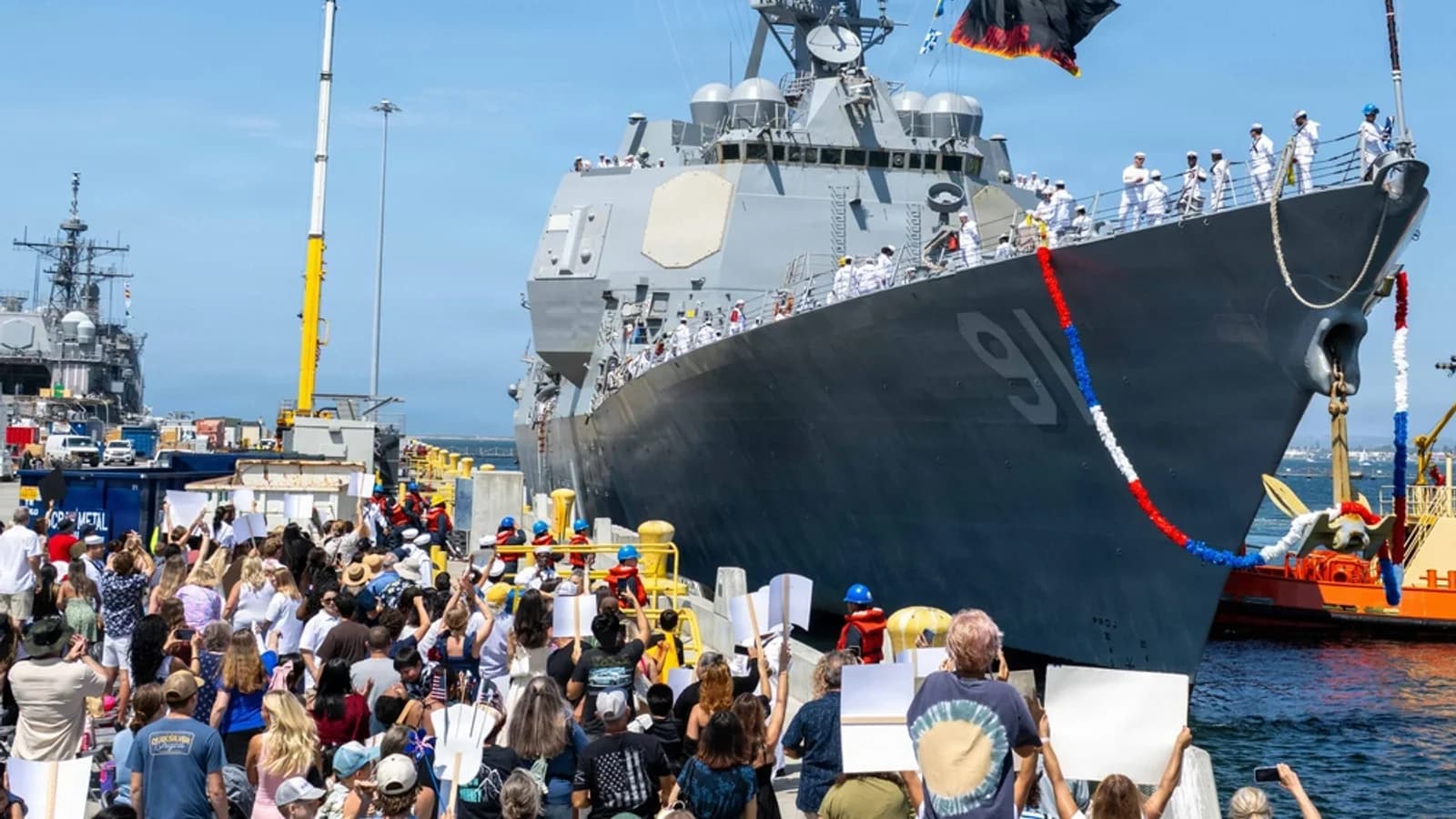
Pinckney’s radar upgrade includes the cooling plant and the time away
The first second-phase DDG MOD2.0 refit pairs SPY-6 and Aegis changes with new high-capacity cooling, while later ships are intended to combine the work in one availability.
The October 24 programme reporting follows the U.S. Navy’s October 22 notice that USS Pinckney has begun its second modernization period. The radar work brings SPY-6(V)4 and Aegis Baseline 10 together with high-efficiency, high-capacity air conditioning. The Navy explicitly links the cooling installation to the electrical and thermal demands of the combat-system upgrade.
Naval News adds the availability lesson: the first ships split electronic-warfare and radar installations, while later modernizations are intended to combine them into one yard period. That is a useful Canadian comparison for long-lived warships. A more capable sensor changes power, cooling, structure and software dependencies; the installation sequence also determines how long a hull is unavailable. The weekend follow-through is on those engineering and fleet-availability interfaces, rather than a claim that the ship has completed its upgrade.
What remains open
The announced installation has not completed acceptance trials; the later combined-availability approach is prospective.
What comes next
Completion and acceptance results will show how the new sensor and support plant perform together after the yard period.
Evidence and assessment for Pinckney’s radar upgrade includes the cooling plant and the time away
What the sources establish
The Navy reports radar and cooling installation beginning; Naval News describes the planned move from split modernization to one availability for later ships.
True North Map assessment
Canadian refit and new-build discussions can use the example to examine growth margins and schedule interfaces around sensors.
Original sources (2)
- U.S. Navy / DVIDS: USS Pinckney begins second Depot Modernization Period under DDG MOD2.0 (opens in a new tab)Direct record · Radar, Aegis Baseline 10 and HESC cooling integration
- Naval News: First US Navy destroyer enters phase two of DDG MOD2.0 modernization (opens in a new tab)Original reporting · Original programme follow-through: split availability and later single-availability approach
Telesat’s reported rescue offer leaves the financing outcome unresolved
Weekend follow-through separates a reported creditor proposal from an agreed refinancing of Telesat’s GEO debt.
Earlier-week reporting remains consequential for Canada’s satellite sector. SpaceQ’s October 20 account, drawing on the Wall Street Journal and Globe and Mail, describes a C$3.2 billion package involving new equity and debt. It reports that the proposal was delivered October 14 and that lenders want repayment of obligations coming due in December. Telesat’s CFO says the company is seeking a negotiated resolution in good faith.
This is an offer in a contested financing process. It should not be counted as capital raised, debt retired or proof that a default has been prevented. The distinction also matters when discussing a company with an older GEO business and a separate developing LEO constellation: an enterprise-level resilience claim needs to identify the actual obligor and operating dependency. The first reported payment date, December 6, makes a completed agreement the material next evidence. This weekend treatment does not assert a new October 24 offer or an accepted rescue.
What remains open
The report does not establish agreed terms, completed refinancing or the ultimate allocation of dilution and risk.
What comes next
A formal agreement and funded closing before the December obligation would resolve the central question raised by the reported offer.
Evidence and assessment for Telesat’s reported rescue offer leaves the financing outcome unresolved
What the sources establish
SpaceQ reported a C$3.2 billion creditor proposal, delivered October 14 and reported earlier in the week, alongside Telesat’s continuing search for negotiated refinancing.
True North Map assessment
Canadian users and suppliers need to distinguish the GEO financing obligation from broad claims about the future satellite business.
Original source (1)
- SpaceQ: Telesat lenders offer C$3.2 billion rescue ahead of December default (opens in a new tab)Original reporting · Reported offer terms and company CFO statement; first debt payment December 6
A Belgian research call shows what a useful interoperability demonstration must contain
Historical technical follow-through: DEFRA 2026 asks for a validated mixed-domain demonstrator, resilient control and integration with existing systems, while limiting foreign funding access.
Belgium’s January 2026 DEFRA call provides a concrete buyer comparison for Canadian autonomy teams. Theme 7 seeks coordinated unmanned systems across land, air and sea, integrated into existing Belgian command infrastructure, with human control of final decisions and resilience against cyber and electronic interference. Its desired output is a validated TRL 5–6 demonstrator.
The document refers to STANAG 4586 interoperability and future scalability toward 4817; it explicitly describes4817 as being in the STANREQ phase in that January document. This is evidence of how that buyer framed a research requirement, rather than a claim about NATO’s current ratification status. The eligibility section is equally useful: Canadian organizations could join as non-funded NATO-country partners, with a commitment letter, while funded partners and subcontractors needed Belgian registration. The call’s application deadlines had passed by this edition date. It is a historical design and partnership benchmark, not an open Canadian funding opportunity.
What remains open
The document does not establish the current NATO status of 4817 or disclose the subsequent project selection and test results.
What comes next
Canadian teams comparing future allied calls should check foreign-partner eligibility and the required demonstrator interfaces before treating the programme as an addressable funding route.
Evidence and assessment for A Belgian research call shows what a useful interoperability demonstration must contain
What the sources establish
The January 15 DEFRA 2026 document specifies a TRL 5–6 integrated unmanned demonstrator, identifies its standards assumptions and restricts foreign organizations to non-funded partnership.
True North Map assessment
A standards reference becomes useful when tied to the actual command infrastructure, operator authority, resilience and demonstration environment.
Original source (1)
- Belgian Ministry of Defence / BELSPO: DEFRA call for proposals2026 information document v1 (opens in a new tab)Direct record · pp4–5 eligibility; pp13–14 sensing and unmanned integration; document modified January 15