
Canadian Defence Signals
Container trials and industrial inputs reveal integration work
Editorial briefing snapshot
The Bottom Line
A container footprint, primary metal capacity and a faster model each solve a bounded part of a larger problem. The useful next evidence concerns host-platform acceptance, qualified products and the accuracy of decisions made with an approximation.
In context
An NSM container trial gives ship and land integrators more precise questions about launch effects and mission planning. NVD’s October 22 industrial memorandum reached the public just after midnight Atlantic on October 23. Canadian aluminum investment and Mila’s wildfire surrogate add process capacity and faster preventive hazard scenarios.
In this edition
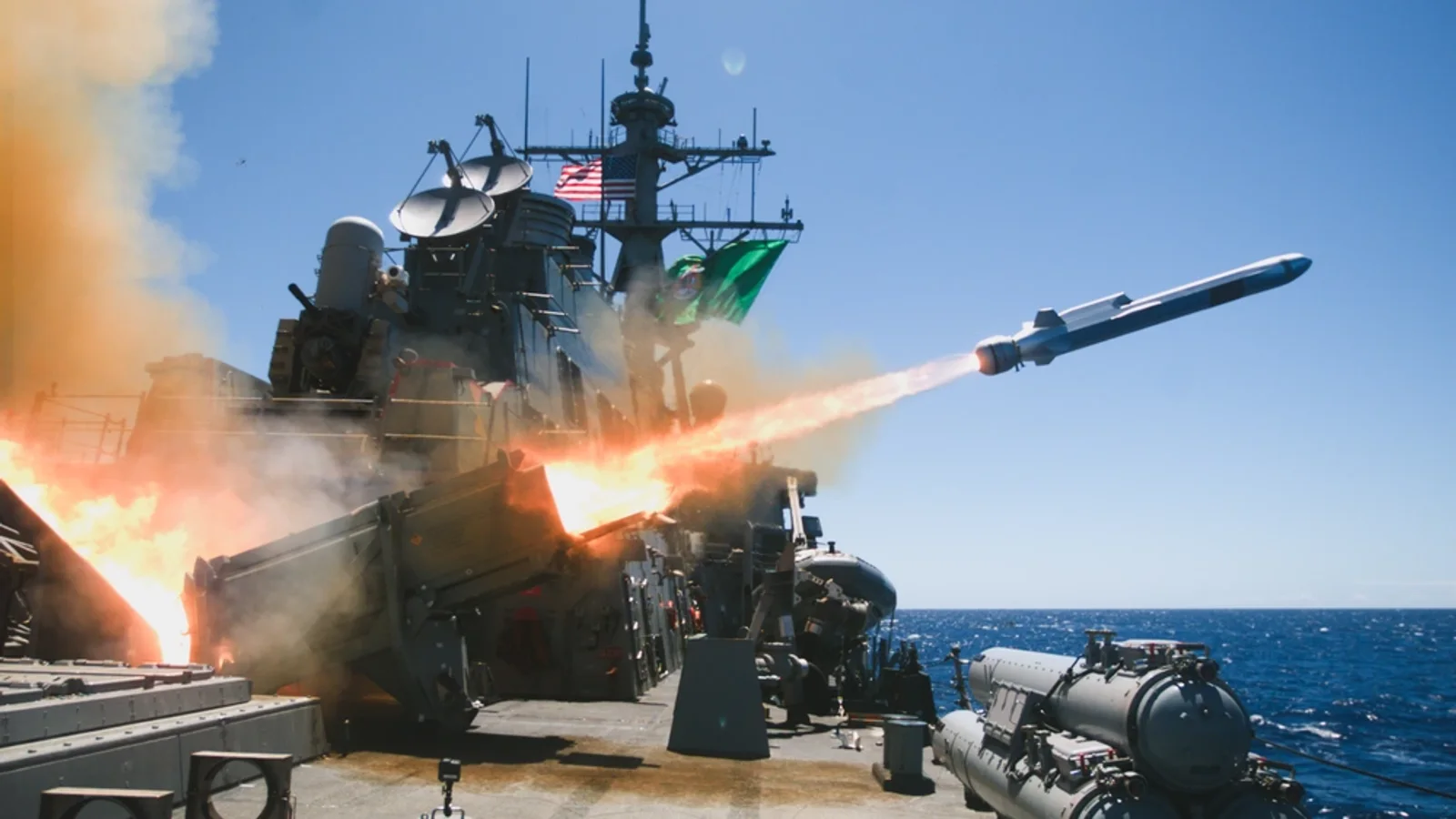
A container launch trial narrows the engineering question around NSM
Kongsberg’s company-funded trial tests handling and launch effects inside an ISO container, giving platform integrators more specific evidence to work with.
The important detail in Naval News’ October 23 interview is the test article and the integration scope. Kongsberg launched an NSM Ballistic Test Vehicle from a 20-foot container on October 1, then conducted a restrained firing to examine blast management. The prototype houses four canisters, an elevating mechanism, generator and electronics; mission planning remains outside it.
This is risk reduction for a module that could move among ground sites, trucks and maritime platforms. It does not demonstrate that every host can accept it unchanged. Securing points, handling, launch clearances and topside effects remain questions for the platform designer. Canadian naval and coastal-defence readers can use the trial as a comparison for modular capability proposals: transport compatibility is one interface, safe launch and mission-system integration are others. The company is investing ahead of potential customers, with no Canadian purchase announced in the report.
What remains open
No platform-specific acceptance results or Canadian contract are reported.
What comes next
A named host integration and its safety/handling evidence would move the proposition beyond the self-funded module demonstration.
Evidence and assessment for A container launch trial narrows the engineering question around NSM
What the sources establish
Naval News reports a ballistic test vehicle launch and a blast-management firing from Kongsberg’s prototype four-canister container module.
True North Map assessment
The trial creates evidence around a deployable launcher, while the host platform still needs its own physical and command-system integration case.
Original source (1)
- Naval News: Kongsberg demonstrates containerised NSM in a box (opens in a new tab)Original reporting · Original interview: October 1 ballistic test vehicle launch, restrained firing and external mission planning
NVD and CSG explore a European production route while retaining Canadian design authority

An October 22 MOU, published October 23 Atlantic time, moves an investment relationship into manufacturing and integration exploration for the CM-70 interceptor.
In an issuer post published just after midnight Atlantic on October 23, North Vector Dynamics reports that it and CSG signed an October 22 memorandum. The proposed work covers European manufacturing and supply chains for NVD products, and integration of the CM-70 counter-drone interceptor into CSG systems. NVD says intellectual property remains Canadian-owned and controlled, with design and engineering authority in Canada. The agreement follows CSG’s earlier strategic investment.
That allocation separates the location of potential production from control of the design. It is a useful distinction for Canadian firms seeking allied scale: overseas manufacturing can coexist with retained domestic engineering authority, but the contracts governing it must make that real. This memorandum does not name a factory, identify the host systems, set output or place an order. NVD’s descriptions of cost and integration suitability remain company claims. The next industrial milestone is a specified production or systems agreement that gives the collaboration an executable scope.
What remains open
No manufacturing site, volume, host system or delivery schedule is announced.
What comes next
A named integration programme or binding manufacturing agreement would establish how the MOU becomes production activity.
Evidence and assessment for NVD and CSG explore a European production route while retaining Canadian design authority
What the sources establish
NVD reports an MOU with CSG covering potential European manufacturing and CM-70 integration, with Canadian IP ownership and design authority retained.
True North Map assessment
The agreement offers a potential allied industrial route while making the intended Canadian control boundary explicit.
Original source (1)
- North Vector Dynamics: North Vector Dynamics and CSG sign MOU on strategic cooperation (opens in a new tab)Attributed statement · October 22 MOU; issuer post published October 23 03:36:03.773Z (00:36 Atlantic); European manufacturing/integration and Canadian design authority
Aluminum support reaches the process steps behind defence supply chains
C$193.3 million of federal support goes into casting, furnace and electrolysis projects, rather than a dedicated defence output allocation.
ISED’s new aluminum package directs C$164.8 million toward Rio Tinto projects costing C$818.5 million and C$28.5 million toward Alouette’s C$135 million modernization. The work includes an Alma billet casting centre, Grande-Baie anode baking furnace upgrades and improved Alouette electrolysis operations. The government connects the sector to downstream aerospace and defence as well as other industrial customers.
The relevance to defence is upstream process capacity and reliability. A new casting route can support value-added products, while furnace and electrolysis work protect the economics of continued domestic production. The announcement does not establish that military-qualified material has been ordered or allocate output to a defence programme. Suppliers should carry that distinction through their own capacity claims: support for an industrial input is valuable, but qualification, conversion and customer demand still sit between primary metal and a delivered defence component.
What remains open
The release does not allocate output to military programmes or specify downstream qualification milestones.
What comes next
Project commissioning and the resulting billet/product capacity will clarify the concrete addition to downstream supply options.
Evidence and assessment for Aluminum support reaches the process steps behind defence supply chains
What the sources establish
ISED announced C$193.3 million for Rio Tinto and Alouette projects modernizing aluminum casting, anode furnaces and electrolysis.
True North Map assessment
Keeping upstream production competitive supports the material base used by Canadian aerospace and defence manufacturers.
Original source (1)
- Innovation, Science and Economic Development Canada: Canada invests C$193.3 million in aluminum industry projects (opens in a new tab)Direct record · Rio Tinto casting/furnace projects and Alouette electrolysis modernization
Mila’s wildfire model speeds hazard planning by emulating a slower simulator
A Canadian AI surrogate accelerates preventive hazard scenarios; its benchmark describes model emulation, rather than tracking an active fire.
October 23 reporting brings a Mila–Natural Resources Canada project into view. The researchers trained a surrogate on outputs from BurnP3+, Canada’s computationally intensive wildfire simulator, to estimate burn probability, intensity and spread rate. Mila reports acceleration of roughly 800–3,400 times, depending on hardware. Its primary explanation compares a 130,000 km² region taking 38.9 hours in the physical simulator with 174 seconds on a standard CPU or 41 seconds on a GPU. Those are reported project benchmarks, not independently verified operational results.
The distinction matters for Canadian emergency planning and infrastructure resilience. This tool can make many land-use, fuel and weather scenarios easier to explore before an incident. It approximates a simulator’s outputs; it should not be described as a new real-time observation of an active fire. Mila identifies dissemination to BurnP3+ users and further testing of operational limits as next steps. Open code and models offer an inspectable route for researchers and public agencies to evaluate where the speedup remains useful.
What remains open
Independent operational accuracy, performance on changed conditions and the resulting planning benefit remain unestablished.
What comes next
Tests by BurnP3+ users should compare the surrogate’s error and decision consequences across regions and interventions, alongside elapsed time.
Evidence and assessment for Mila’s wildfire model speeds hazard planning by emulating a slower simulator
What the sources establish
Mila describes a BurnP3+ surrogate and publishes hardware-specific regional benchmarks; BetaKit’s October 23 account supplies the dated reporting event.
True North Map assessment
Faster scenario exploration could improve preventive planning if users understand approximation errors and where the model generalizes.
Original sources (2)
- Mila: Accélérer la cartographie de l’aléa des feux de forêts au Canada grâce à l’IA (opens in a new tab)Direct recordProject explanation and FAQ: BurnP3+ surrogate, preventive planning, regional CPU/GPU comparison and operational-limit testing
- BetaKit: Mila, federal researchers develop AI tool to better predict wildfire behaviour (opens in a new tab)Original reporting · Dated original reporting: hazard mapping partnership and reported hardware-dependent acceleration
Carry the signal forward
Continue in True North Map
Follow the edition into the organizations, technologies, Defence needs and Mission areas already connected to its record.