
Canadian Defence Signals
Canada’s northern partnerships take institutional and practical shape
Editorial briefing snapshot
The Bottom Line
Northern cooperation has both a political framework and a practical operating cost: common planning, deployable support and responsibility for the whole mission.
In context
JEF ministers move Canada’s application toward a leaders’ recommendation. An earlier Danish detachment aboard a Canadian ship supplies a concrete example of what sharing a maritime capability involves.
In this edition
Canada’s JEF application meets an existing northern operating framework
JEF ministers advance a membership recommendation for Canada while setting out operational and industrial work that already links the northern region.
The Joint Expeditionary Force ministers’ October 2 joint statement, published October 3, takes Canada’s application one step into a political process: ministers say they advanced work on a shared recommendation to JEF leaders. Canada’s own October 2 readout confirms the application and existing cooperation, including CF 188 participation in TARASSIS 2025. Neither document announces Canadian membership.
The framework Canada seeks to join is active below the threshold of NATO Article 5 as well as aligned with NATO regional plans. Ministers connect the Baltic, North Atlantic and High North; they also ask for concrete defence-industrial cooperation proposals after two National Armaments Directors meetings. That is a defined route toward collaboration, although no Canadian workshare or new purchase is assigned.
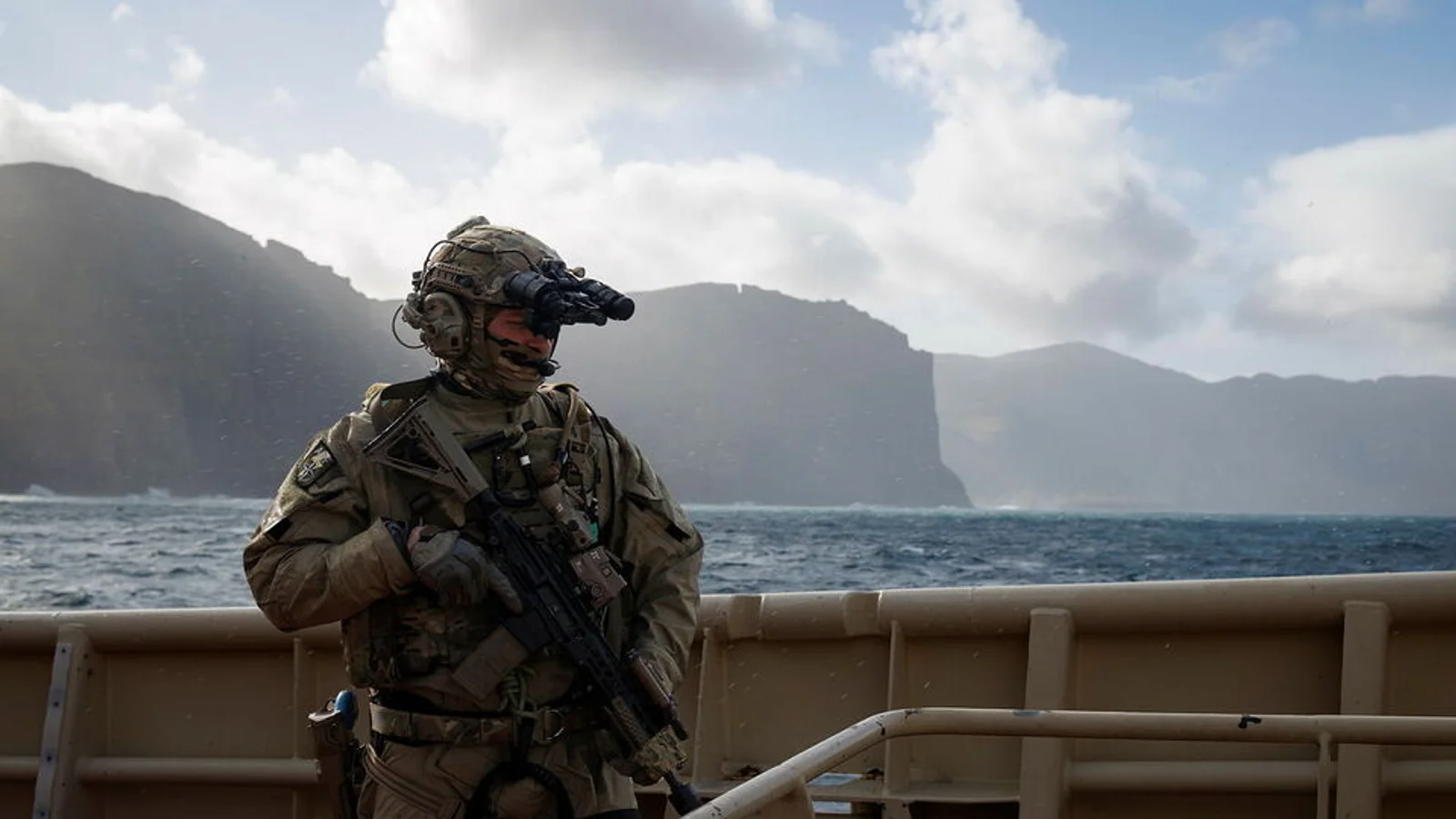
Operational activity gives the geography practical shape. The UK’s October 2 Lion Protector account describes a multinational equipment escort along the Baltic, a command headquarters deployed north of the Arctic Circle and British-Danish activity in the Faroes. The ministers’ statement adds the first Ukrainian mine-countermeasure vessel participation in Lion Protector. Canada’s earlier TARASSIS participation already demonstrates cooperation with members. Membership discussions concern how to organize that relationship, with the leaders’ decision still outstanding.
What remains open
No accession date, Canadian force commitment or industrial allocation is disclosed.
What comes next
A JEF leaders’ membership decision would establish the next formal stage; concrete armaments proposals would clarify the industrial work.
Evidence and assessment for Canada’s JEF application meets an existing northern operating framework
What the sources establish
The joint ministerial statement advances a shared recommendation on Canadian membership; the Canadian readout confirms an application, not accession.
True North Map assessment
The JEF’s regional plans, exercises and industrial director meetings provide named mechanisms where northern Canadian cooperation could deepen.
Original sources (3)
- UK Ministry of Defence / JEF ministers: Joint Statement from Defence Ministers of the Joint Expeditionary Force:02 October 2026 (opens in a new tab)Direct recordFull joint statement published October 3: Canadian application, industrial work, Ukraine MCM participation, five-year exercise plan and below-ArticleV role.
- National Defence: Minister McGuinty participates in Joint Expeditionary Force Defence Ministers’ Meeting in Iceland (opens in a new tab)Direct record · Full October 2 readout, application and existing TARASSIS 2025 cooperation; captured with web after HTTP timeout.
- UK Ministry of Defence: UK leads major Joint Expeditionary Force Exercise as defence ministers meet in Iceland (opens in a new tab)Direct recordOctober 2 official Lion Protector 26 report: maritime escort, Faroe activity, command post north of Arctic Circle; full body inspected.
A Canadian host ship shows what modular mine warfare requires
An August Danish deployment report supplies a practical Canadian example: a containerized command module, remotely operated sonar vehicles and clearance divers work as a package.
A 20-foot command container can move between shore, military ships and civilian vessels. Danish Defence’s August 19 account describes that arrangement aboard HMCS Moncton, where a Danish mine-countermeasures and diving detachment was scheduled to serve until early September. This is background to the autumn discussion of autonomous mine warfare; it does not establish the detachment’s position on October 3.
The report also preserves the sequence that a modular package must perform. Sonar finds suspected objects, a diving team or camera-carrying underwater vehicle inspects them, and a charge placed by divers or drones disposes of a confirmed mine. Portability therefore includes command facilities, sensor interpretation, identification and a safe disposal method. Buying a search vehicle covers only part of that chain.
For Canadian teams building stand-off mine-warfare components, the host-ship example exposes useful integration questions: deck space and interfaces, launch and recovery, shared data and the transfer from a mine-like contact to an authorized disposal action. The Danish account demonstrates a deployable allied package and host relationship; it publishes no comparative clearance rate or autonomy performance.
What remains open
The report supplies neither clearance-rate measurements nor an October deployment update.
Evidence and assessment for A Canadian host ship shows what modular mine warfare requires
What the sources establish
Danish Defence described a mobile 20-foot command module and sonar/inspection/disposal sequence during an August detachment aboard HMCS Moncton.
True North Map assessment
A transportable mine-warfare offering still needs a complete operational chain and a host arrangement; its physical portability is only one part.
Original source (1)
- Danish Defence: Mine Counter Measures Denmark departs on Canadian ship (opens in a new tab)Direct recordAugust 19, 2026 original account; Danish detachment aboard Moncton scheduled until earlySeptember. Full report inspected; historical background, not current location.