
Canadian Defence Signals
Autonomy, Arctic access and the work behind readiness
Editorial briefing snapshot
The Bottom Line
Look for a defined role in making a capability usable: local delivery, mission testing, integration, secure operations or long-term support. The strongest commercial interpretation starts with the actual stage of the agreement, test, financing or contract.
In context
Canada’s defence opportunity is becoming more specific about the work around an operational capability. Today’s developments range from a new Arctic agreement to a Canadian flight-control milestone, but the useful questions are tangible: who can deliver locally, what has actually been tested, and which supporting systems keep a capability available?
The Greenland agreement is the clearest example. Its provisions for defence areas and unmanned installations could shape demand for power, communications, logistics and maintenance. Its preference for Greenlandic suppliers is equally important. Canadian experience may be valuable through complementary partnerships, with local delivery built into the offer. Canada’s first Nordic-Baltic Eight ministerial meeting adds a wider channel for cooperation without itself creating a procurement program.
Volatus’s initial GPS-denied flights and Britain’s new Space Effects Squadron bring different kinds of progress: one is a reported technical milestone, the other an organizational step toward operational capability. Both make integration and testing consequential. A recovered U.S. contract notice adds a more immediate example of funded work: repairable-parts transportation whose stated geography includes Canada.
The edition also follows launch-service distribution, analog-chip design, enterprise AI and the infrastructure needed for dependable power. These are potential routes into the defence economy with their own customers and maturity levels. Finally, new community-support grants keep the people behind readiness in view. The industrial picture is incomplete if it counts equipment and facilities while overlooking the services needed by those who work around them.
In this edition
Greenland’s defence agreement makes local delivery a central condition
Expanded Arctic access could create substantial support work, but the agreement gives Greenlandic suppliers a preference and still requires parliamentary procedures.
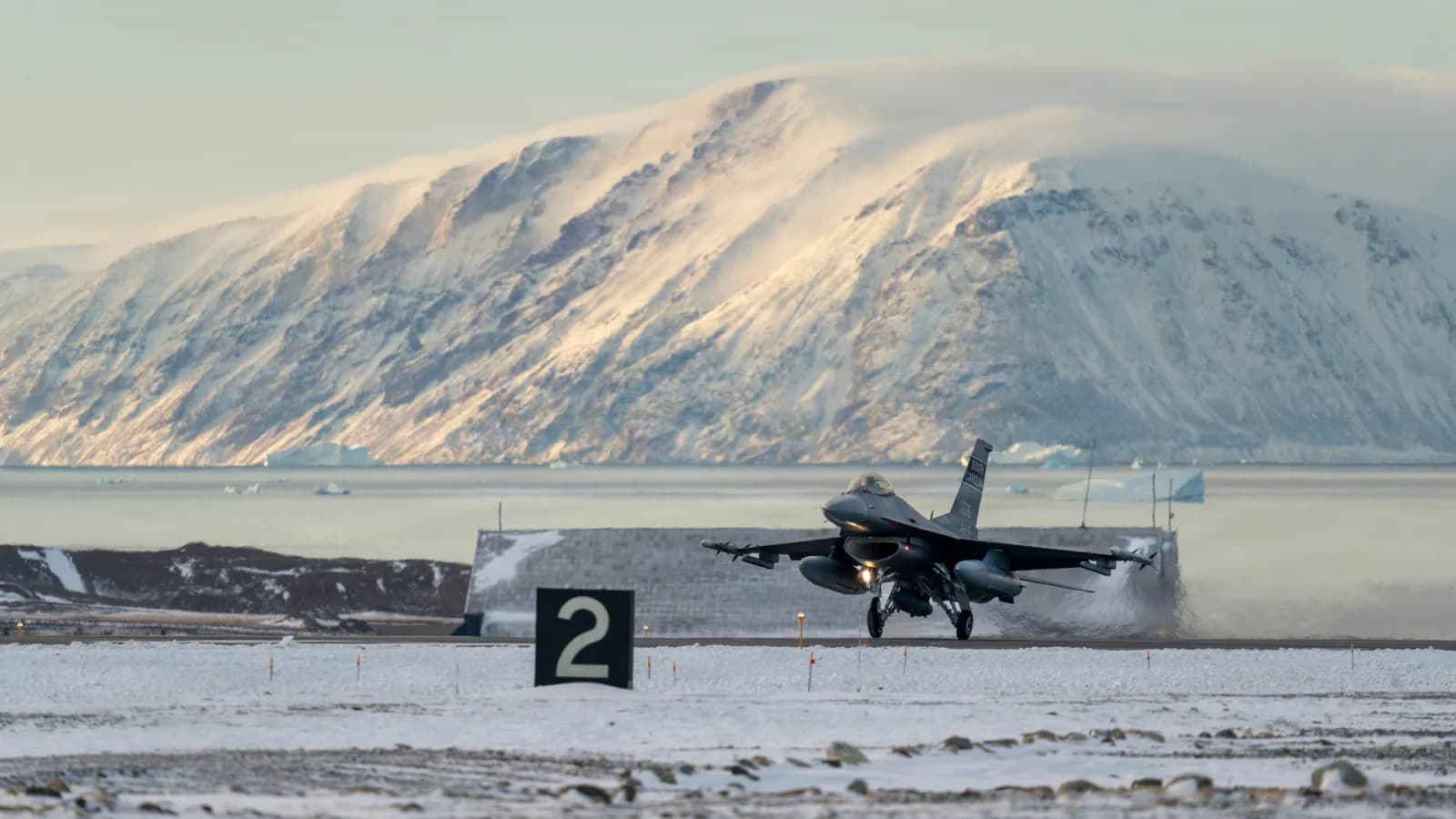
The agreement signed by the United States, Denmark and Greenland on September 22 is more commercially specific than a general promise to strengthen Arctic defence. It provides for modernizing and expanding Pituffik and establishing defence areas at Narsarsuaq and Mestersvig, with implementation details to be agreed. It also provides accelerated government consideration of requests for unmanned military installations elsewhere.
One clause deserves attention from Canadian industry. Article IV directs relevant commercial contracts toward Greenlandic sources to the maximum extent possible, taking account of capability and feasibility. Article V extends that provision to unmanned installations. The text also reaffirms Danish territorial integrity and Greenlandic self-determination. This is a framework for allied activity with local obligations, rather than an unrestricted new market. Article XII makes entry into force dependent on a diplomatic note confirming completion of necessary parliamentary procedures.
Tim Martin’s reporting for Breaking Defense places the signature in the context of efforts to reduce allied tensions over Greenland. The operational question now is how diplomatic agreement becomes a workable presence: which sites, which missions, what infrastructure, and who maintains it through a difficult operating season?
For Canadian suppliers, TNM sees a plausible route through partnerships that complement local capability. A remote installation may need dependable power, communications, sensors, airfield support, maintainable buildings and a supply chain that can survive interruptions. A technically strong product can still be a poor offer if it requires frequent specialist visits or leaves a local partner carrying all the maintenance risk. Training, spare holdings, remote diagnostics and an agreed division of responsibilities should be part of the proposition from the beginning.
Canada is also widening the diplomatic setting for that work. The first Canada–Nordic-Baltic Eight ministerial meeting, held September 22, connected security in the Arctic, North Atlantic and Baltic and called for practical cooperation, including defence industry and critical infrastructure. That is a relationship-building channel; it does not itself establish a purchasing fund or supplier entitlement.
The useful watchpoint is the transition from these agreements to named implementation bodies, funded projects and sourcing notices. Canadian firms should identify a service they can deliver alongside Greenlandic partners, while distinguishing an attractive regional need from a contract they can actually pursue.
What remains open
Site implementation details, funded work packages, procurement eligibility and the timing of entry into force are not established by the signed agreement.
What comes next
Track the implementation decisions and sourcing notices, then map a specific technical contribution against Greenlandic delivery capacity and local contracting obligations.
Evidence and assessment for Greenland’s defence agreement makes local delivery a central condition
What the sources establish
The signed text provides for expanded defence areas and a Greenlandic contracting preference. Entry into force requires confirmation of parliamentary procedures; Canada separately joined its first Nordic-Baltic Eight ministerial meeting.
True North Map assessment
Canadian Arctic experience could be valuable in local partnerships around power, communications, sensing and sustainment, especially where a supplier can reduce the burden of operating a remote site.
Original sources (3)
- The White House: United States, Denmark and Greenland: agreement amending the Greenland defence arrangements (opens in a new tab)Direct record · Signed September 22; Articles IV(i–iv), V, X and XII. Contracting preference, implementation details and entry into force.
- Breaking Defense — Tim Martin: Trump signs Greenland security agreement, defusing allied tensions (opens in a new tab)Original reporting · September 22 original report; signature, diplomatic context and allied reaction
- Global Affairs Canada: Joint statement on the Canada–Nordic-Baltic Eight meeting (opens in a new tab)Direct record · September 22 ministerial statement; Arctic, North Atlantic, Baltic and practical cooperation
Volatus takes GPS-denied autonomy into initial flight testing
A Canadian flight-control milestone points to valuable software and integration work; the next evidence should show how it performs when navigation and communications become difficult.
Volatus reported initial flight tests of its V-Cortex controller and autonomy operating system on September 22. The company says the aircraft navigated without GNSS using its default onboard sensors. It describes a Canadian-developed, modular autonomy layer intended for different aircraft, with further demonstrations planned during 2026. NRC IRAP’s Defence Industry Assist initiative supports development.
The most consequential possibility is a reusable control system. If an autonomy layer can transfer reliably between aircraft, engineering knowledge and mission behaviour need not be rebuilt from scratch for every airframe. That could make software integration, configuration control, testing and operator support important parts of Canadian industrial value. It could also let civil inspection or public-safety experience inform defence development, provided the relevant operating conditions are tested.
The release establishes a company-reported initial milestone. It supplies no flight-duration, accuracy, drift or environmental results, and does not demonstrate performance under active jamming, spoofing or Arctic conditions. Losing a navigation signal and surviving a deliberate attempt to mislead a system are different tests. The result should also remain separate from Volatus’s earlier tactical-drone contract: this announcement does not establish customer acceptance of V-Cortex under that award.
An allied comparison helps define the next step. A September 22 U.S. Army account of Exercise Scarlet Dragon describes soldiers and companies testing sensors, electronic warfare, command systems and defensive fires together during September 11–17. Its relevance is the method: assess the system inside an operational task, including how components interact and fail.
For a Canadian buyer or integration partner, a useful demonstration would specify the mission, the degraded conditions, the aircraft’s safe response and the data available afterwards. Can an operator recognize a bad position estimate? What happens when navigation and communications both degrade? Can a maintainer reproduce the software configuration that passed the test? Answering those questions would turn a promising flight into stronger evidence for adoption.
What remains open
Accuracy, duration, spoofing resistance, cold-weather performance and customer acceptance remain unestablished in the examined release.
What comes next
Seek a mission-specific test record with measured error, failure behaviour, configuration details and operator workload; distinguish signal loss from active electronic attack.
Evidence and assessment for Volatus takes GPS-denied autonomy into initial flight testing
What the sources establish
Volatus reports initial GNSS-denied navigation using default onboard sensors. Further testing is planned; detailed performance measurements and independent results are not supplied.
True North Map assessment
A reusable Canadian autonomy layer could create enduring work in software integration, assurance and support across different aircraft and civil or defence missions.
Original sources (2)
- Volatus Aerospace via GlobeNewswire: Volatus Aerospace successfully achieves GPS-denied flight milestone with V-Cortex (opens in a new tab)Attributed statement · September 22 company release; initial flights, onboard sensors and further demonstrations. No independent test results supplied.
- U.S. Department of War / XVIII Airborne Corps: America’s Contingency Corps trains against drone threat, prepares for future battlefields (opens in a new tab)Direct record · Browser-recovered article; September 11–17 Scarlet Dragon exercise. Cached snapshot contains observed relevant excerpts.
Britain’s new space unit puts operational needs behind the strategy
The new Space Effects Squadron makes protection and response a clearer customer problem for an industry in which Canadian firms already have a presence.
Britain announced No. III Space Effects Squadron today, a unit intended to counter hostile activity against satellites. Its remit includes electronic warfare and both offensive and defensive space operations. The Ministry of Defence says it will grow as capabilities enter service. Establishing the unit is a concrete organizational step; it is not evidence that every planned capability is already fielded.
The announcement gives an operational counterpart to the UK Space Strategy published September 8. That strategy sets out £7.8 billion through 2029/30, including £880 million for space-based intelligence, surveillance, reconnaissance and space control. These are existing strategy figures, not additional funding announced with today’s squadron. Satellite communications, space-domain awareness, in-orbit servicing and assured launch are among its accelerated priorities.
Marc Boucher’s September 22 SpaceQ analysis examines the Canadian industrial connection, including MDA Space’s British presence and Spaceflux’s observatories in Canada. These relationships provide concrete places to investigate capability and customer fit. They do not establish contracts with the new squadron. The official strategy also identifies Canada as a space partner, giving that industrial discussion an explicit policy foundation.
TNM’s interpretation is that the opportunity extends beyond building another satellite. An operational unit needs usable information about threats, reliable communications, command software, training and ways to test a response without disrupting friendly services. Companies that can explain where their product fits in that sequence will be more useful than those presenting an undifferentiated space capability.
The strategy’s emphasis on being able to operate critical capability independently also changes the commercial conversation. Buyers may need clarity about software updates, data access, command authority and reliance on foreign ground infrastructure. Canadian suppliers should be ready to explain those dependencies as carefully as technical performance. Allied cooperation can create a route to market while still requiring a customer to retain control of the service it depends on.
What remains open
The announcement does not identify a complete equipment inventory, supplier competition or Canadian work allocation for the squadron.
What comes next
Match a specific product to an operational function and monitor the responsible procurement route; prepare a clear account of data, software and infrastructure dependencies.
Evidence and assessment for Britain’s new space unit puts operational needs behind the strategy
What the sources establish
The UK announced a space-effects unit on September 23. The earlier strategy includes £880 million for ISR and space control within its £7.8 billion total through 2029/30.
True North Map assessment
Canadian firms with relevant British relationships may find demand around sensing, communications, operational software and assurance as the UK converts strategy into usable capability.
Original sources (3)
- UK Ministry of Defence: RAF launches first ever space squadron dedicated to defending Britain’s satellites (opens in a new tab)Direct record · September 23 announcement; No. III Space Effects Squadron, electronic warfare and growth as capabilities enter service
- UK Government: UK Space Strategy (opens in a new tab)Direct record · September 8 strategy; total investment, accelerated sectors, sovereign operation and cooperation with Canada
- SpaceQ — Marc Boucher: UK’s new space strategy leans on Europe: where Canada fits (opens in a new tab)Original reporting · September 22 independent analysis; existing Canadian industrial presence. Budget totals checked against UK strategy.
Repairable-parts logistics puts Canada inside a less visible defence business
An actual transport modification includes Canadian work geography, while the F-35 parts investigation shows why accountable return logistics matters.
The September 22 U.S. contract bulletin reports a US$14.4 million modification for 1st Coast Cargo to continue transporting repairable parts for the Navy’s Advanced Traceability and Control Program. Its stated work geography includes Canada, and completion is expected in March 2027. This is an existing program’s continuation, not an open Canadian competition; the notice does not break out Canadian revenue or subcontracting.
That mundane-sounding activity deserves attention alongside Michael Marrow’s Breaking Defense reporting on missing Australian F-35 parts. Components being returned for repair reportedly ended up in Hong Kong. Australian minister Richard Marles said his understanding was that they were not sensitive; the Joint Program Office described investigation and recovery efforts. The examined reporting does not establish that Canadian parts were affected or that sensitive technology was compromised.
The two developments are separate. Together, they show why the return journey is part of military readiness. A defective component still has an identity, a destination, handling requirements and a place in a repair plan. Losing visibility can mean additional inspections, delayed repairs and uncertainty about whether the right item has returned to service.
For Canadian logistics, maintenance and software businesses, TNM sees a useful industrial question: can the movement of an item be reconciled with its condition and authorized custody at every handover? Freight tracking alone may not answer that. The valuable service may combine transport, serialized inventory, repair status, exception handling and audit records. The current award demonstrates funded demand in this area; any available role for a Canadian supplier still needs to be established with the actual delivery chain.
What remains open
The bulletin gives no Canadian workshare or supplier opening. The F-35 investigation’s route, responsibility and final findings remain unresolved.
What comes next
Identify the contracted service interfaces and Canadian delivery requirements, then test how custody records, repair status and freight exceptions are reconciled.
Evidence and assessment for Repairable-parts logistics puts Canada inside a less visible defence business
What the sources establish
A US$14.4 million repair-parts transport modification lists Canada within its work geography. Separately, officials are investigating the diversion of Australian F-35 repairable parts.
True North Map assessment
Readiness depends on accountable movement back through repair and return-to-service, creating potential value in logistics, inventory controls and maintenance information systems.
Original sources (2)
- U.S. Department of War: Contracts for September 22, 2026: repairable-parts transportation (opens in a new tab)Direct record · USTRANSCOM; 1st Coast Cargo, HTC71121DR039/P00013. Browser-observed excerpt snapshot; geographic scope includes Canada.
- Breaking Defense — Michael Marrow: Aussie defense chief confirms missing F-35 parts, says none are sensitive (opens in a new tab)Original reporting · September 22 reporting; Australian minister, Joint Program Office and Lockheed statements on diverted repairable parts
RSAT’s INNOSPACE agreement adds a launch option to investigate
The Canadian distribution arrangement is a market-access step; launch reliability and a deliverable schedule will determine its value to satellite customers.
Marc Boucher reports in SpaceQ that Montréal’s RSAT Space has signed a nonexclusive Canadian distribution agreement with South Korea’s INNOSPACE, following an April memorandum. RSAT is to develop customers and negotiate launch-service business for the HANBIT rocket family. Yonhap’s September 21 account also reports the agreement and its intended Canadian expansion.
The commercial distinction is useful: a Canadian sales and customer interface can make a foreign launch service easier to evaluate and buy. It does not create Canadian launch sovereignty or identify a Canadian launch site. Nor does the announcement establish that a satellite customer has placed an order.
Boucher adds the operational context a buyer needs. HANBIT-Nano’s first orbital attempt in December 2025 failed, and a firm date for a second attempt was not available in the reporting. That makes demonstrated flight performance and schedule credibility central to evaluating the new route.
TNM sees potential value in having more options, particularly when a satellite’s desired orbit and timing do not fit another provider’s schedule. But the comparison should be made at mission level: payload accommodation, integration support, approvals, insurance, schedule risk and what happens after a launch delay or failure. A useful distribution partner can help resolve those questions. The next substantial signal will be a successful flight, a named customer commitment or a sufficiently firm mission offering that a Canadian operator can compare against alternatives.
What remains open
The examined reports establish neither a Canadian launch location nor a firm second orbital-attempt date, customer manifest or service price.
What comes next
Compare a proposed mission’s orbit, payload, schedule and failure provisions with alternatives, and revisit the offer after the next flight result.
Evidence and assessment for RSAT’s INNOSPACE agreement adds a launch option to investigate
What the sources establish
RSAT has nonexclusive Canadian distribution rights for INNOSPACE launch services. The arrangement follows an April MOU; no Canadian customer order is identified.
True North Map assessment
A local commercial interface could widen the options available to Canadian satellite operators and create work in mission preparation and customer integration.
Original sources (2)
- SpaceQ — Marc Boucher: RSAT Space and INNOSPACE sign Canadian distribution agreement (opens in a new tab)Original reporting · September 22 original report; nonexclusive agreement, launch history and unresolved second-attempt schedule
- Yonhap — Kim Eun-jung: Innospace signs deal with Canadian firm to expand launch services (opens in a new tab)Original reporting · September 21 report; distribution agreement and April MOU
Astrus targets the design work that slows new chips
Fresh financing for analog-chip design software adds Canadian capability upstream of fabrication, with a product launch planned for October.
Astrus has closed a US$12 million Series A, co-founder Brad Moon told BetaKit’s Alex Kinsella. Caffeinated Capital led the round. The Canadian company is developing reinforcement-learning software for the physical layout of analog chips and plans an October product launch.
The important distinction is where the tool sits. This is engineering software intended to automate difficult design work, rather than a new semiconductor fabrication plant. Astrus’s product description identifies high-speed SERDES—interfaces that move data between chips—as an initial focus. The relevance is therefore to the time and specialist effort needed to translate a circuit into a manufacturable layout.
For Canada’s defence ecosystem, TNM sees a possible enabling capability rather than an announced military product. Communications equipment, sensing and computing all depend on the behaviour of physical electronics. Better design tools may help a smaller engineering team explore options or revise a component more quickly. That does not remove fabrication dependencies or prove a resulting chip meets a demanding operating environment.
The adoption test should follow the engineering work: which foundry design rules are supported, whether layouts pass verification, how engineers review and alter the result, and whether manufactured silicon performs as expected. Funding can accelerate that work; customer use and measured outcomes will establish the product’s value. There is no disclosed defence qualification or defence customer in the sources examined for this signal.
What remains open
Named customer results, supported production processes, measured design-cycle savings and defence qualification are not established in the examined material.
What comes next
At product launch, examine supported foundry rules, verification results and evidence from fabricated chips, rather than relying only on generated-layout demonstrations.
Evidence and assessment for Astrus targets the design work that slows new chips
What the sources establish
BetaKit reports a closed US$12 million Series A and a planned October launch. Astrus is developing AI-assisted analog layout software, initially addressing high-speed chip interfaces.
True North Map assessment
The company could strengthen Canadian semiconductor design capability and reduce a specialist engineering bottleneck upstream of manufacturing.
Original sources (2)
- BetaKit — Alex Kinsella: With new funding, Astrus prepares to automate one of the biggest bottlenecks in chip design (opens in a new tab)Original reporting · September 22 founder interview; closed Series A, analog layout, reinforcement learning and planned October launch
- Astrus: Astrus: automated analog chip design (opens in a new tab)Attributed statementCompany product description; initial high-speed SERDES focus. Homepage funding headline describes an earlier round.
Data-centre growth and defence readiness meet at dependable power
An expanded Canadian industry commitment and an allied energy demonstration both make infrastructure integration a more tangible part of the opportunity.
Ottawa added 19 signatories to its responsible data-centre principles on September 22, bringing the total to 42. New names include NVIDIA, AMD, Intel, IBM, Schneider Electric, EllisDon and Enwave. The news is broader industrial participation in a framework introduced earlier this month; these are not 19 newly approved construction projects.
The principles themselves make several delivery expectations explicit: protect electricity ratepayers from attributable infrastructure costs, address reliability and environmental impacts, and create value and dependable access for Canada. They also address cooling, waste heat and the security of sensitive facilities. For suppliers, those details connect a compute investment to concrete engineering and operating work.
An allied defence development reinforces the relevance of the supporting systems. At the Pentagon’s September 22 energy expo, officials linked tactical power with installation resilience and described work on microgrids, storage and cyber protection. The event presented technologies and priorities, not proof that every exhibited system is operational or a new Canadian award.
TNM sees a useful overlap in the problems to solve: manage variable demand, keep critical loads operating, recover useful heat and make power controls secure and maintainable. The same underlying expertise can serve an industrial site, a data centre or a defence installation, although each customer has different requirements. A supplier’s strongest offer may be an integrated service with measurable availability and clear operating responsibilities, rather than a stand-alone component.
The next commercial evidence should be attached to a named site: its power arrangement, grid upgrades, construction schedule and accountable operator. Signing principles indicates intent. A project that has resolved those dependencies begins to show where contracts and sustained Canadian work could follow.
What remains open
The signatory announcement identifies no new approved projects, construction awards or demonstrated compliance at an individual site.
What comes next
For a named development, examine the grid connection, cost allocation, critical-load requirements and operating responsibilities before estimating a supplier opportunity.
Evidence and assessment for Data-centre growth and defence readiness meet at dependable power
What the sources establish
Nineteen organizations joined Canada’s data-centre principles, for 42 total. The framework addresses power costs, reliability, environmental effects, security and Canadian value.
True North Map assessment
Electrical integration, storage, cooling, heat recovery and secure controls can enable both commercial compute growth and defence infrastructure resilience.
Original sources (3)
- Innovation, Science and Economic Development Canada: Government of Canada welcomes 19 additional signatories to responsible data-centre development principles (opens in a new tab)Direct record · September 22; 19 new signatories, 42 total. An expanded commitment, not 19 project approvals.
- Innovation, Science and Economic Development Canada: Canada’s responsible data-centre development principles (opens in a new tab)Direct recordFive principles; electricity costs, infrastructure, cooling, security and Canadian access
- U.S. Department of War — C. Todd Lopez: Pentagon showcases dozens of advanced energy projects (opens in a new tab)Direct record · September 22 Energy Sentry coverage; Marks on tactical microgrids, storage and installation security. Browser-observed excerpt snapshot.
Community support is part of the defence-capacity picture
New grants for people affected by sexual misconduct provide a concrete reminder that a larger defence effort also needs accessible human support.
The Defence Community Support and Resource Centre announced C$3.175 million for 19 community-led projects. The September 22 update includes projects serving the North and expanded support for male and non-binary survivors, alongside counselling, crisis assistance and other services. These are funding allocations, not a newly opened supplier competition.
This is a distinct kind of capacity from the platforms, software and facilities elsewhere in today’s edition. People need a practical route to support, including when they live far from a large service centre. The existence of a funded organization and the ability of an individual to obtain timely, appropriate help are related but different measures.
Tadiwa Nyashanu and Megan MacKenzie’s CDA Institute commentary argues for a broader human-security approach to northern defence policy. Their argument is useful context, rather than an evaluation of this particular grant announcement. It invites a question often lost in an industrial discussion: what capacity must exist in the community alongside an expanded defence presence?
TNM’s assessment is that service access belongs in planning for a sustainable defence workforce and its surrounding communities. This announcement does not quantify a retention or readiness effect, and it should not be presented as doing so. The practical follow-through is to understand which populations and locations each project can serve, how referrals work, and whether support can continue beyond a funding period. Those details determine whether an allocation becomes an accessible service.
What remains open
The announcement alone does not establish waiting times, service capacity in every location, long-term funding continuity or measured readiness effects.
What comes next
Use the recipient and service information to check geographic reach, eligibility, referral routes and continuity of support; distinguish funded activity from demonstrated access.
Evidence and assessment for Community support is part of the defence-capacity picture
What the sources establish
DCSRC announced C$3.175 million for 19 community projects supporting people affected by sexual misconduct, including northern and expanded survivor services.
True North Map assessment
Accessible community services are a necessary consideration when planning a larger, geographically dispersed defence workforce and presence.
Original sources (2)
- Department of National Defence: Expanding support services for the wider Defence community (opens in a new tab)Direct record · September 22; DCSRC grants, community projects, northern services and support for survivors of sexual misconduct
- CDA Institute — Tadiwa Nyashanu and Megan MacKenzie: Why human security must be part of Canada’s northern strategy (opens in a new tab)Attributed statement · September 22 commentary; human security and community wellbeing in northern defence policy