
Canadian Defence Signals
Allied respect and the power behind persistent sensing
Editorial briefing snapshot
The Bottom Line
Professional relationships deserve space in defence intelligence, while technical claims still need the right scale and evidence.
In context
A taxiway salute in Sacramento honours the Snowbirds and the people behind the Tutor era. A Dutch company’s REPMUS account turns attention to another kind of persistence: the small power source that keeps offshore sensing and communications running.
In this edition
A taxiway salute honours the Snowbirds’ Tutor era
The Thunderbirds’ farewell gesture gives allied professional respect a visible, human expression.
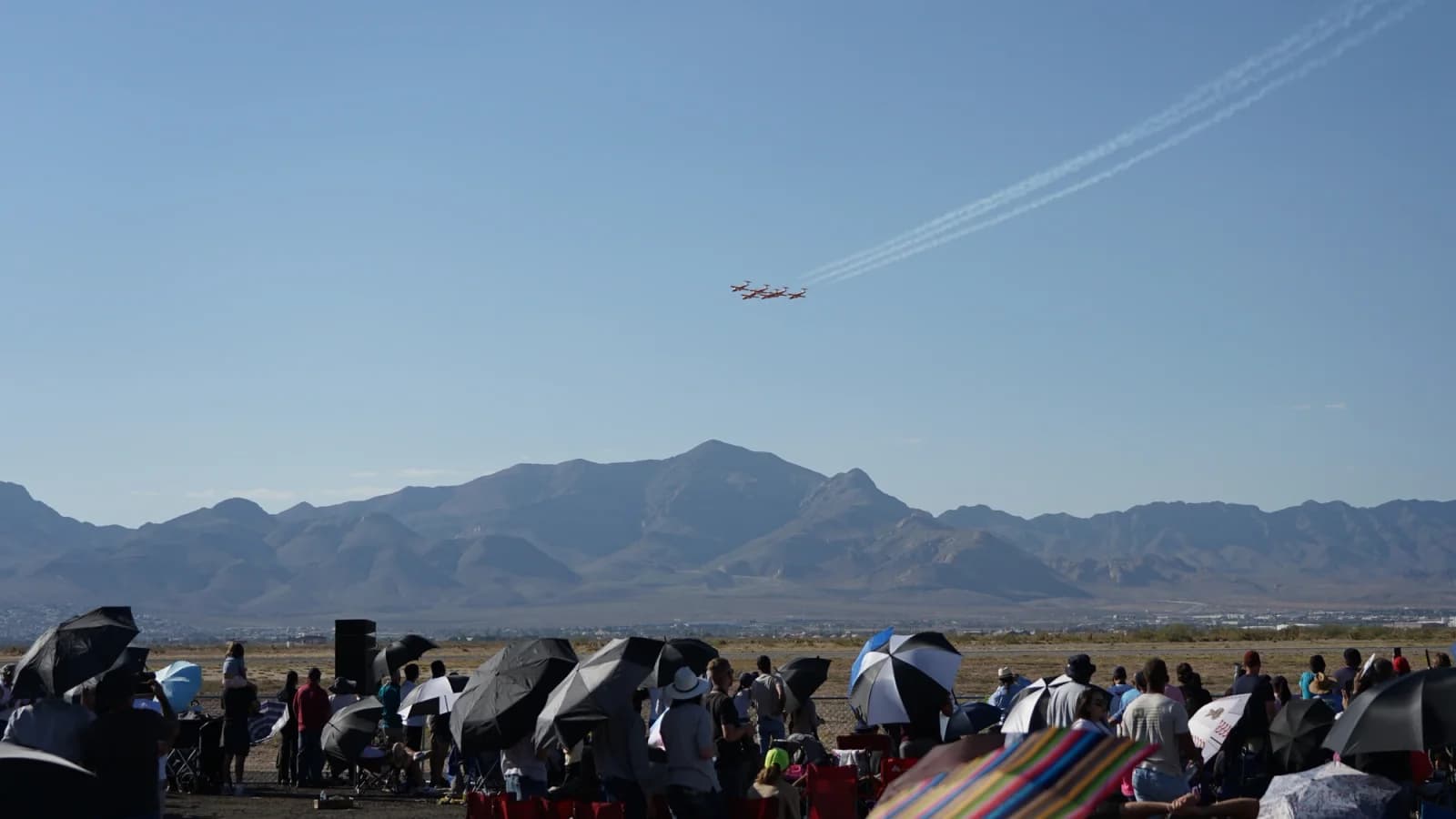
The Thunderbirds lined the taxiway as the Snowbirds taxied in after their final full public demonstration in the CT-114 Tutor, Airshow News reported in an October 12 post from the Sacramento airshow weekend. The original video post presents a simple gesture: one national demonstration team standing to acknowledge another at the close of a long chapter.
The gesture honours more than a display routine. Canada’s aviators and the crews who sustain them have represented the country for generations. Recognition from their American counterparts speaks to the skill, discipline and shared professional life behind the performance. That is a grounded reading of the reported salute, without pretending to measure the state of the wider political relationship.
The transition itself was already announced in May. National Defence identified 2026 as the Tutor fleet’s final season and committed to a future Snowbirds capability using the CT-157 Siskin II, expected in the early 2030s. The taxiway moment honours the people and the Tutor era; it does not establish completion of that future fleet or mean every remaining ceremonial appearance has already occurred.
What remains open
The public salute does not establish the future fleet’s detailed acquisition or entry-into-service schedule.
Evidence and assessment for A taxiway salute honours the Snowbirds’ Tutor era
What the sources establish
The October 12 original public post describes the taxiway salute; DND’s May release establishes the planned aircraft transition.
True North Map assessment
Visible recognition between allied professionals can carry meaning alongside the equipment and readiness stories.
Original sources (2)
- Airshow News: Airshow News taxiway salute to the Canadian Forces Snowbirds (opens in a new tab)Original reporting · Original public post freshly read in in-app browser; visible8:49PM Oct12; earlier original DOM UTC retained. Later replies excluded.
- National Defence: Government of Canada to procure new aircraft for the iconic Canadian Forces Snowbirds (opens in a new tab)Direct record · Full May19 original; final Tutor season, future SiskinII and expected early2030s capability; older background explicitly labelled.
Wave power supplies the small sensing nodes around drones
Weco’s REPMUS demonstration concerns low-power sensing and communications: its advertised Denshi output is 5–20 W.
Weco reported on October 12 that its Denshi buoy supplied wave-generated power during REPMUS 26 with Dutch Ministry of Defence support and work alongside the Royal Dutch Navy and TNO. Inside the approximately one-metre buoy, wave motion drives a rack-and-pinion generator. Battery storage, computing and cellular communications turn it into a potential sensor and relay node.
The accessible product specification puts the scale in view: advertised continuous output is 5–20 watts and mass under 100 kg. That output suits low-power monitoring and communications electronics. The exercise account describes deployment from a small vessel on a single-point mooring. Its future mesh-network and underwater-infrastructure protection applications remain proposed uses.
Persistent sensing also needs persistent power. For Canadian ocean-monitoring developers, a wave-powered node offers a concrete alternative to repeated battery servicing, subject to the payload’s load and local sea conditions. The reported exercise demonstration does not by itself establish the product page’s 99.9 percent uptime claim or uninterrupted operation through an Atlantic winter.
What remains open
The inspected pages give no exercise energy budget, payload load or validation of advertised uptime.
What comes next
A measured payload energy budget and seasonal site data would clarify which Canadian monitoring missions fit the advertised output.
Evidence and assessment for Wave power supplies the small sensing nodes around drones
What the sources establish
Weco reports a wave-powered REPMUS demonstration; its separate current product page advertises 5–20 W continuous output.
True North Map assessment
Matching payload demand to energy harvested at the site can reduce battery-service trips for small offshore sensing and communications nodes.
Original sources (2)
- Weco: Weco’s wave-powered Denshi buoy proves itself at NATO’s REPMUS 2026 (opens in a new tab)Attributed statement · Full October 12 original exercise account; wave-generation mechanism, support, deployment and proposed mesh use.
- Weco: E-sea power: Denshi (opens in a new tab)Attributed statementFull substantive product page; advertised output, dimensions and uptime; no exercise-validation claim inferred.