
Canadian Defence Signals
Drone training and port protection find development pathways
Editorial briefing snapshot
The Bottom Line
People, test environments and a buyer’s staged evaluation help move autonomy toward use. The Canadian gift funds a foundation; the French shortlist funds a development path whose fleet outcome remains open.
In context
SAIT receives a substantial gift for autonomous aviation and student access. France narrows a surface-drone competition to three teams after evaluating existing systems against port-protection and escort needs.
In this edition
SAIT’s $30 million gift builds a drone training and testing pathway
David Bissett’s gift supports a planned aviation park and student access, building on SAIT’s current RPAS education and applied research.
Six million dollars of David Bissett’s C$30 million gift to SAIT is earmarked for student awards. The October 8 announcement therefore addresses access to drone education alongside a planned Bissett Autonomous Aviation Park intended to bring training, applied research and industry together.
There is an existing base to expand. SAIT says it launched an RPAS certificate in 2023 and a diploma this fall. Its CIRUS research centre already works on heavy-lift and beyond-visual-line-of-sight applications and trains medium-lift pilots and technicians. The gift can connect that research base with a larger training environment and more student access, rather than starting a drone programme from zero.
The defence relevance is people and development infrastructure that Canadian drone manufacturers and operators could use. The dated announcement does not identify a military customer or a defence production commitment, and it does not establish an operating park or regulatory certification authority. Partners still need the construction and authorized operating plan to know when and how the proposed environment can support their work.
What remains open
The dated announcement does not establish a park opening date, authorized airspace/testing envelope or a military customer.
What comes next
SAIT’s published construction and operating plan would clarify when partners can use the new park and which airspace and testing activities will be authorised.
Evidence and assessment for SAIT’s $30 million gift builds a drone training and testing pathway
What the sources establish
SAIT’s October 8 announcement reports a C$30 million gift, C$6 million for student awards, existing RPAS programmes and the planned aviation park.
True North Map assessment
A training and research environment can connect drone developers with pilots, technicians and field-validation work in Canada.
Original source (1)
- Southern Alberta Institute of Technology: Future of autonomous aviation launches at SAIT (opens in a new tab)Attributed statementOctober 8, 2026 full announcement: C$30 m gift, C$6 m student awards, existing certificate/diploma/CIRUS and planned park.
France moves three surface-drone teams into prototype development
DANAE has passed its first buyer evaluation and narrowed to three teams; serial production remains a later phase.
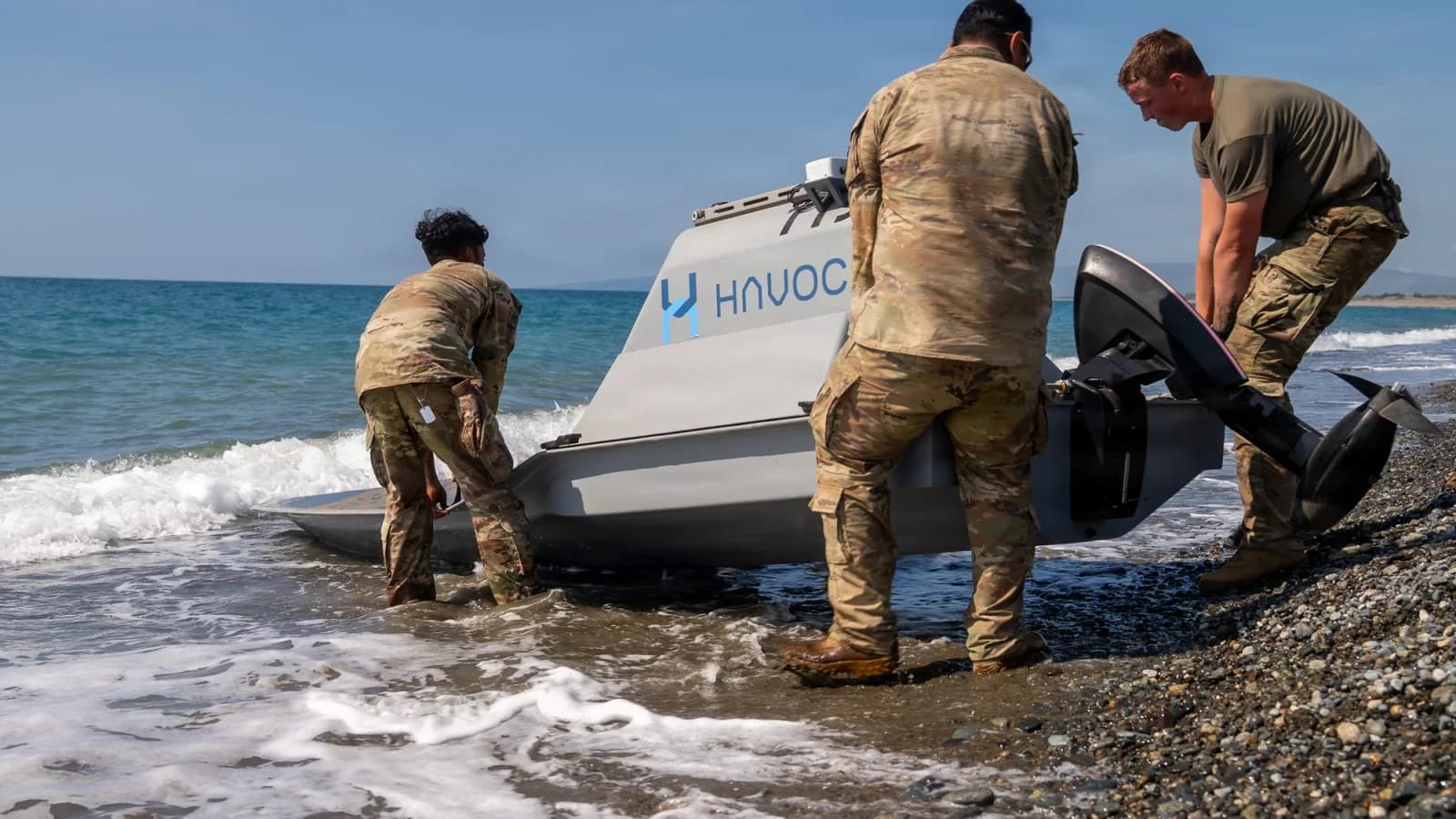
France’s Defence Innovation Agency named three DANAE teams on October 8 after evaluating seven existing surface-drone solutions for navigation, endurance and decision autonomy. The selected partners are SeaOwl; SEAir with ÆGIR, MBDA and Diades Marine; and SIREHNA with Couach and Naval Group. Their systems address port protection and ship escort.
The official notice distinguishes selection from fielding. A second phase began in September 2026 and runs through the end of 2027. The teams have 12 months to improve prototypes before evaluation with DGA Techniques navales. Series production, entry into service and initial support follow in a third phase for the selected solution. Final weapon decisions remain with the operator.
The differing designs show what the buyer is comparing: a frigate-deployable hydrofoil USV, SeaOwl’s optionally crewed NEMEZIS with a non-lethal deterrence turret, and the purpose-built nine-metre Seaquest S. For Canadian surface-drone developers, DANAE is a useful example of a customer testing mature starting platforms against a common operational need before funding the transition toward a fleet configuration. The official announcement discloses neither production quantities nor a final acquisition award.
What remains open
The official notice does not state a final winner, acquisition quantity or development-funding amount.
What comes next
The evaluation through end 2027 and subsequent production decision will show which configuration the French Navy accepts.
Evidence and assessment for France moves three surface-drone teams into prototype development
What the sources establish
AID’s October 8 announcement identifies the three selected teams, prototype-development schedule and subsequent evaluation, production and support stages.
True North Map assessment
A buyer-led comparison can put navigation, energy, payload control and human authority into one development pathway before choosing a fleet system.
Original source (1)
- French Ministry of Armed Forces / Defence Innovation Agency: Sécurité maritime des ports : l’AID et la Marine nationale sélectionnent les drones de surface les plus prometteurs (opens in a new tab)Direct recordOctober 8, 2026 original French announcement: shortlist, team names, prototype phase,12-month development, evaluation through 2027 and operator authority; entire article inspected.