
At a glance
The first keel-laying matters because it begins a long industrial cycle of construction, integration, testing, delivery, and through-life support.
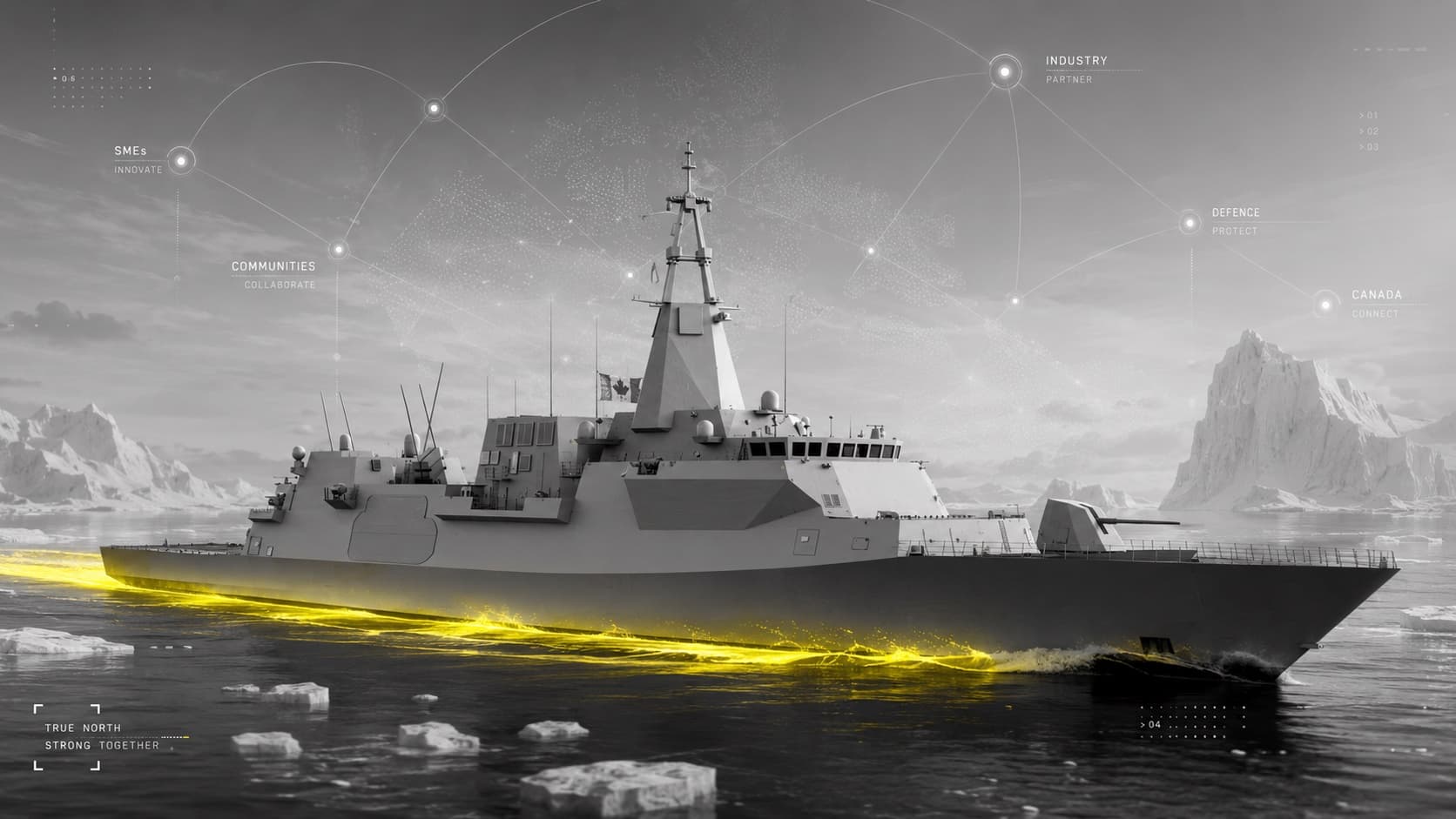
The keel-laying confirms that the program has moved into physical ship production at Halifax Shipyard. For Canadian industry, the important signal is not a single ceremony or contract. It is the long sequence of construction, systems integration, workforce, testing, delivery, training, maintenance, upgrades, and supply-chain work required to turn a class of ships into sustained naval capability.
Executive takeaways
What matters most
- The first ship is in physical production
- The official procurement page remains the source for disclosed program status and scope
- A milestone does not itself confirm a new supplier opportunity
- Map the capability to a specific platform, mission, integration, or support function
The program has moved into physical production
The official June 2026 keel-laying marked a visible transition in the first ship's construction at Irving Shipbuilding's Halifax Shipyard. It gives suppliers and ecosystem partners a concrete program milestone to assess against the official procurement record.
- The first ship is in physical production
- The official procurement page remains the source for disclosed program status and scope
- A milestone does not itself confirm a new supplier opportunity
The broader industrial work extends far beyond the hull
A modern warship program combines ship construction with combat, platform, communications, sensor, software, training, logistics, and support systems. Canadian companies should assess where their evidence fits a defined system, integration, production, or through-life need rather than relying on a general association with shipbuilding.
- Map the capability to a specific platform, mission, integration, or support function
- Show delivery evidence and the interfaces the company can manage
- Consider the long support and modernization period after construction
How companies should act on the signal
Companies can use the milestone to sharpen their understanding of the program, identify relevant prime and subsystem relationships, review official procurement information, and prepare evidence that explains where their technology or service can reduce risk or improve an outcome.
- Follow official program and shipyard updates
- Identify the correct system owner or integration path
- Lead with a specific contribution and current supporting evidence
Analysis
What this means
The milestone increases the value of practical ecosystem visibility. As production advances, companies need to understand not only who is building the ship but how specialist technology, integration, testing, and sustainment work connect around it.
This is True North Map’s interpretation of the linked public record, not a statement from the source organization or a confirmed procurement opportunity.
Recommended next step
Turn the insight into a specific decision
Map your capability to a named system, integration, production, testing, or support function and approach the organization that owns that interface with current delivery evidence.
Limits of this analysis
This article is based on reviewed public sources. It does not indicate procurement eligibility, endorsement, classified demand, or a confirmed commercial opportunity.
Follow the evidence
Public sources
- 1Keel laying for the first River-class Destroyer (opens in a new tab)
National Defence · June 26, 2026
The official National Defence release confirms the first keel-laying milestone and production at Halifax Shipyard.
- 2River-class Destroyer procurement (opens in a new tab)
National Defence
The official procurement page provides the current program description, disclosed contract values, capabilities, design progress, and construction context.
Continue the analysis