
At a glance
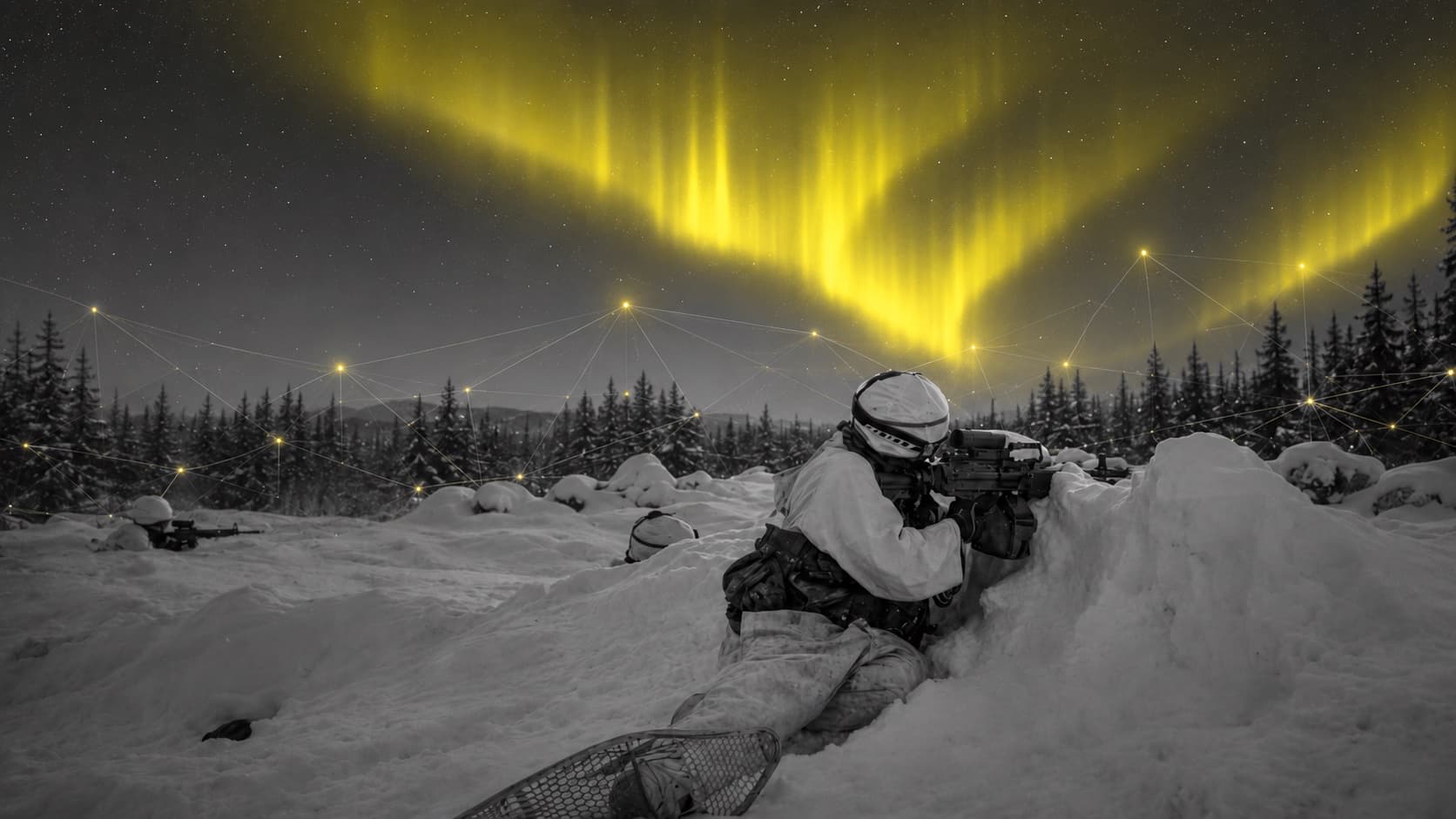
Arctic operations depend on a resilient system of space, ground, power, user equipment, training, and support, not one network or terminal.
Arctic operations depend on people, sensors, vehicles, aircraft, facilities, and decision-makers staying connected across enormous distances and limited terrestrial infrastructure. Resilient communications help units maintain awareness, coordinate movement, share data, and call for support when weather, geography, or disruption removes the easy option.
Executive takeaways
What matters most
- Coverage has to reach far beyond southern infrastructure
- Equipment must remain usable by dispersed teams in demanding conditions
- Connectivity must support operations, logistics, safety, and command
- Treat communications as part of the operating system around each hub and node
The operating conditions that make connectivity difficult
Distance, sparse infrastructure, severe weather, limited local support, and the movement of small teams across remote terrain create coverage and sustainment challenges. A useful communications system must keep working across those constraints and connect the user to the larger operating picture.
- Coverage has to reach far beyond southern infrastructure
- Equipment must remain usable by dispersed teams in demanding conditions
- Connectivity must support operations, logistics, safety, and command
Canada's emerging northern communications direction
Canada is developing Northern Operational Support Hubs to improve presence, mobility, response, logistics, and year-round operations. Telesat has also announced an agreement in principle for secure Arctic satellite connectivity, including terminals, control infrastructure, training, and support.
- Treat communications as part of the operating system around each hub and node
- Plan for terminals, ground infrastructure, training, and in-service support
- Connect infrastructure investment to the people and missions it must serve
The evidence industry needs to demonstrate
A credible solution should show how it performs in the North, how users interact with it, what other systems it depends on, and how it will be supported. Field evidence can be especially useful when it shows coverage, reliability, operator feedback, and adaptation under real conditions.
- Show performance in relevant terrain and weather
- Explain how data reaches the people who need to act
- Make deployment, power, training, and support requirements explicit
Analysis
What this means
The Arctic communications opportunity is not one network or terminal. It is the resilient combination of space, ground, local infrastructure, software, user equipment, power, training, and support that keeps a distributed force connected.
This is True North Map’s interpretation of the linked public record, not a statement from the source organization or a confirmed procurement opportunity.
Recommended next step
Turn the insight into a specific decision
Demonstrate the complete operating chain in relevant northern conditions, including deployment, power, coverage, data flow, training, and in-service support.
Limits of this analysis
This article is based on reviewed public sources. It does not indicate procurement eligibility, endorsement, classified demand, or a confirmed commercial opportunity.
Follow the evidence
Public sources
- 1Northern Operational Support Hubs (opens in a new tab)
National Defence · March 13, 2026
The NOSH program page establishes the public operating objective for improved Arctic presence, reach, mobility, logistics, and year-round support.
- 2Canadian Armed Forces selects Telesat Lightspeed for Arctic military communications program (opens in a new tab)
Telesat · July 8, 2026
Telesat's announcement describes the proposed secure Mil-Ka service, terminals, ground infrastructure, training, and in-service support.
- 3AuraNet in the High Arctic during Operation NANOOK-NUNALIVUT (opens in a new tab)
Dominion Dynamics · April 16, 2026
Dominion Dynamics provides company-published field evidence from an eight-week High Arctic engagement with Canadian Rangers.
Continue the analysis